Better trains are coming

Add Axios as your preferred source to
see more of our stories on Google.

We're entering a boom time for American rail — including bona fide high-speed trains.
Why it matters: Train travel can be faster, more convenient and cleaner than driving or flying.
- But hurdles — ranging from a lack of investment to geographic and political challenges — have held trains back in the U.S. compared with global peers.
Driving the news: Brightline West, which calls itself the nation's only private intercity train service provider, recently broke ground on a 218-mile route that'll provide high-speed service between Las Vegas and Rancho Cucamonga, California (just east of Los Angeles).
- The company aims to run "zero emission, fully electric trains capable of speeds of 200 miles per hour," with total route times of two hours — about half the driving time.
- A station at Rancho Cucamonga will let riders transfer to other transit networks that'll bring them to L.A.
State of play: There's already Brightline service in Florida, which, as of last fall, connects Miami and Orlando — with hopes to expand to Tampa.
- The Florida line isn't high-speed, but it's "pleasant," "comfortable" and "a vastly more relaxing experience" than driving, Axios' Jeff Weiner writes in his Axios Miami review.
Yes, but: While Brightline's ridership is growing, it recently lowered its estimates for passenger growth in the Sunshine State.
- It's now forecasting 4.9 million riders this year, down from around 7 million, per Bloomberg — which also points out that the Florida service "lost $192 million in the first nine months of 2023."
Meanwhile, tried-and-true Amtrak is hoping to double ridership by 2040 through service improvements, train upgrades, infrastructure projects and more.
- New "Borealis" service connecting Chicago and the Twin Cities launches this month, marking "the first time in 45 years there will be twice-daily service" on that route, per the Star Tribune.
- Faster service is also planned for the vital Northeast Corridor, while new trains, called Airo, are also on the way for several lines.
- Airo trains will offer "modern comfortable seating, spacious restrooms and a contemporary food service experience," Amtrak says.
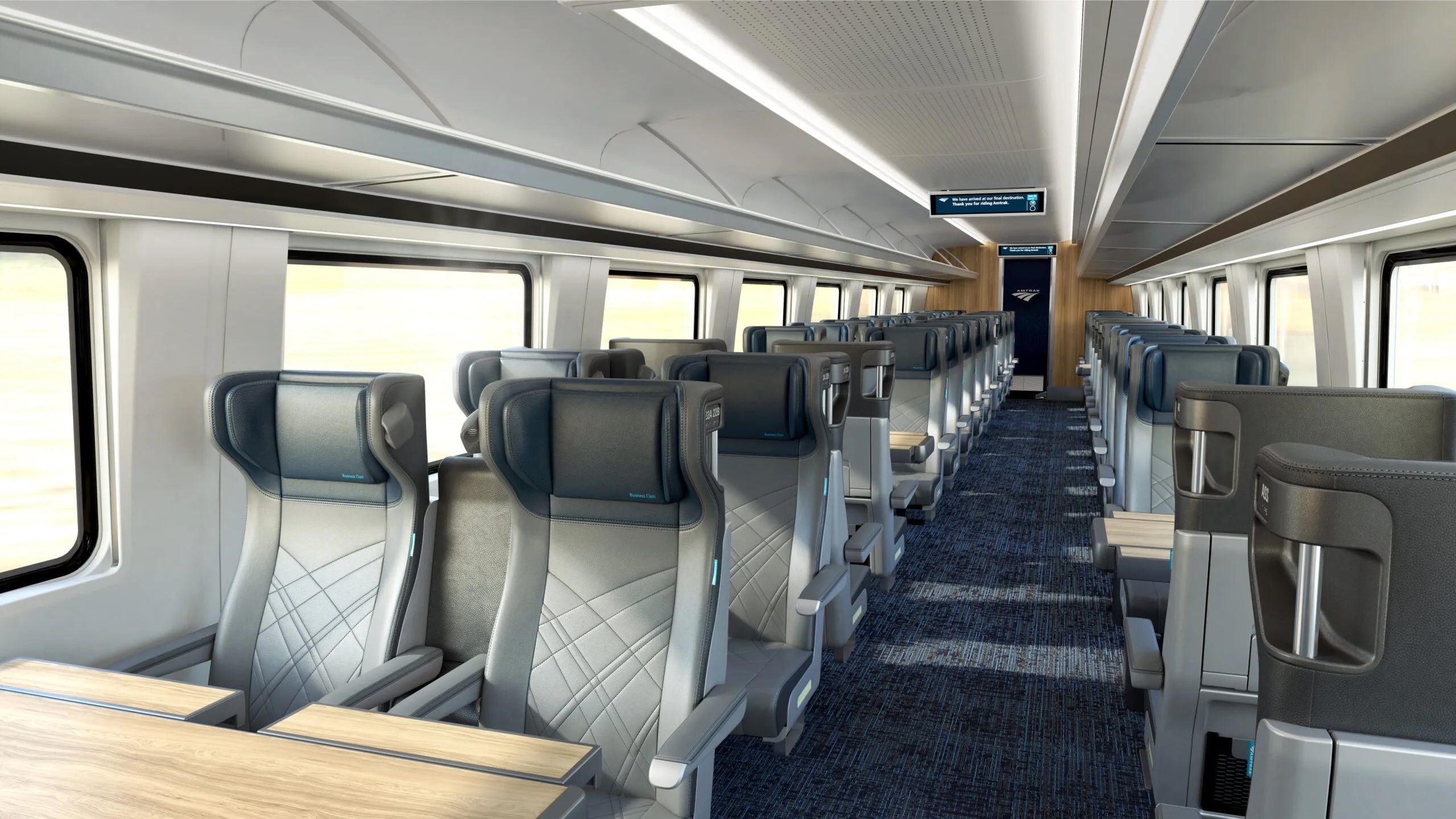
What they're saying: "There are plans in place with funding to basically replace the Amtrak fleet in the next decade, and that has never happened before," Amtrak president Roger Harris tells Axios.
- That's a "huge transformational opportunity, especially from a customer experience point of view," he said. "People will have modern trains with modern amenities and comfort."
Amtrak is also taking the reins on a long-envisioned high-speed rail project linking Dallas and Houston, CNBC reports.
- The project still faces major hurdles but could help connect and support the region's booming population.
Meanwhile, in California, a publicly funded project aims to connect Sacramento and San Diego — but it has faced big delays.
- The proposed California High-Speed Rail is up against serious right-of-way and financial challenges.
Between the lines: Almost all of these projects are getting huge financial boosts from the 2021 infrastructure law.
Reality check: The great rail line of history is littered with ambitious train projects that never saw the light of day, or emerged as a shadow of their proposed selves.
