Report: Arctic experienced warmest summer on record

Add Axios as your preferred source to
see more of our stories on Google.
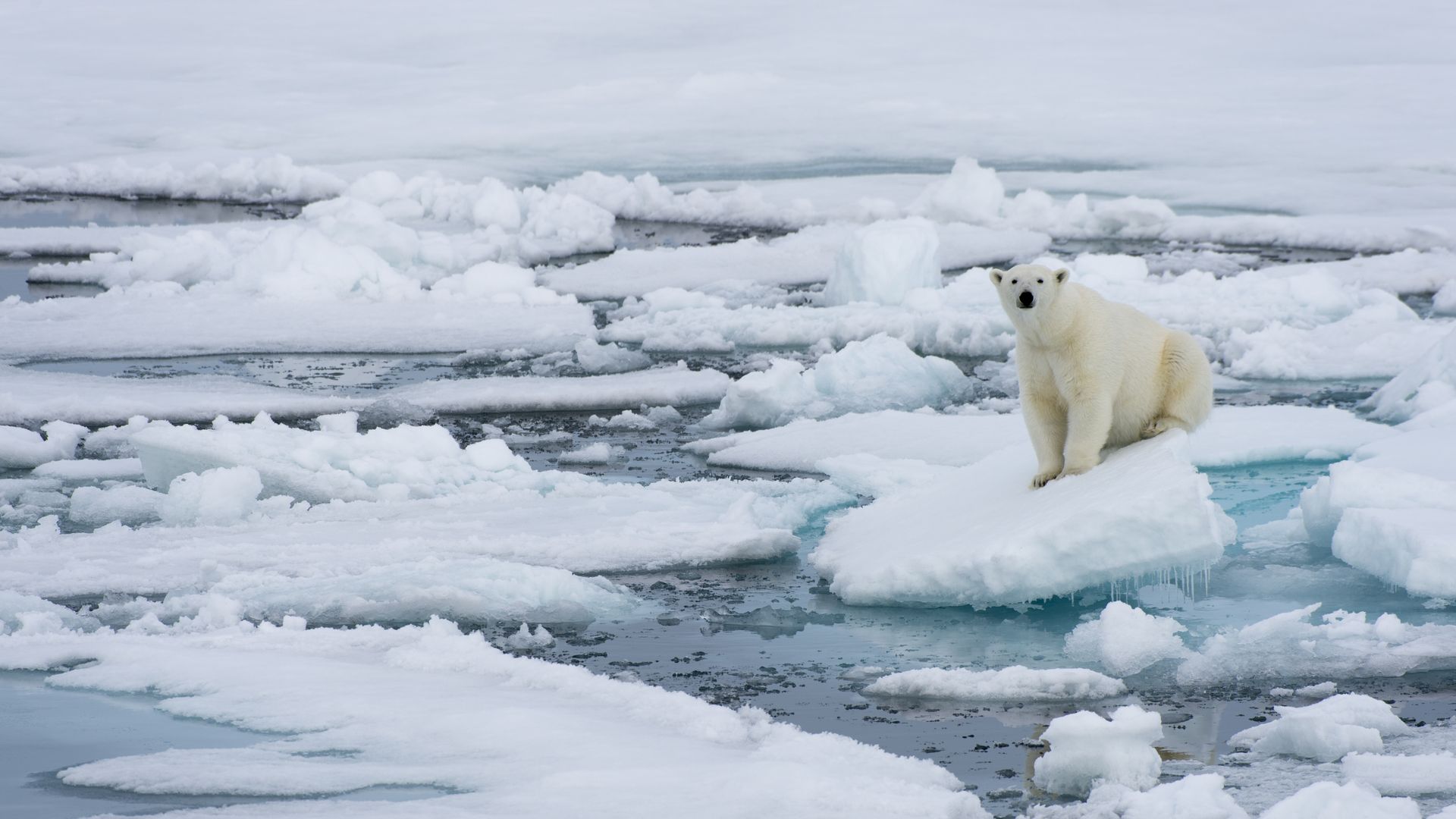
A polar bear on the pack ice in the Arctic Ocean, north of Svalbard, Norway. Photo: Wolfgang Kaehler/LightRocket via Getty Images
The average temperature in the Arctic this summer was the warmest on record, per a report released by the National Oceanic and Atmospheric Administration on Tuesday.
The big picture: The peer-reviewed 2023 Arctic Report Card, which is the work of 82 authors from 13 countries, found that it was the Arctic's sixth-warmest year on record overall and sea ice extent continued to decline.
Driving the news: The average surface air temperature in the Arctic this past year was 20 degrees Fahrenheit – the sixth warmest since 1900.
- The summer average temperature was 43 degrees Fahrenheit.
Yes, but there were significant regional differences, including a colder-than-normal spring in Alaska that slowed snowpack and sea-ice melt.
- Meanwhile, parts of Canada experienced the highest spring average temperatures on record.
Why it matters: "Extreme weather and climate events during the past year in the Arctic and elsewhere have brought unambiguous, climate change-supercharged impacts to people and ecosystems," the report states.
- "The presence or absence of sea ice and the timing of Arctic sea ice cover are major factors in modulating ecosystem and human activity."
Meanwhile, the highest point on Greenland's ice sheet experienced melting for only the fifth time in the 34-year record.
- North American snow cover saw a record low in May this year, while snow accumulation during the 2022-2023 winter was above average in both North America and Eurasia, per the report.
- Precipitation also broke existing records across different parts of the Arctic, which is on trend toward a wetter Arctic.
- There were, however, some variations such as a dry summer in northern Canada, contributing to record wildfires.
By the numbers: Since 1940, the annual average temperatures have risen .45 of a degree Fahrenheit per decade and average summer temperatures have risen .31 of a degree Fahrenheit per decade.
What they're saying: "The overriding message from this year's report card is that the time for action is now," NOAA administrator Rick Spinrad said in a statement. "We as a nation and global community must dramatically reduce greenhouse gas emissions that are driving these changes."
Between the lines: "These changes that are happening, they're more than the graphs and the figures that we see," Susan Natali, a senior scientist at the Woodwell Climate Research Center who was not involved in the NOAA report, told the New York Times.
- "They're having a very severe impact on people's health and ability to travel and ability to access subsistence resources and Indigenous ways of living," added Natali, who also leads the Permafrost Pathways initiative.
Go deeper: UN report: 2023 "virtually certain" to be hottest year on record
