Honeyguide birds respond to distinct calls of local human honey hunters

Add Axios as your preferred source to
see more of our stories on Google.
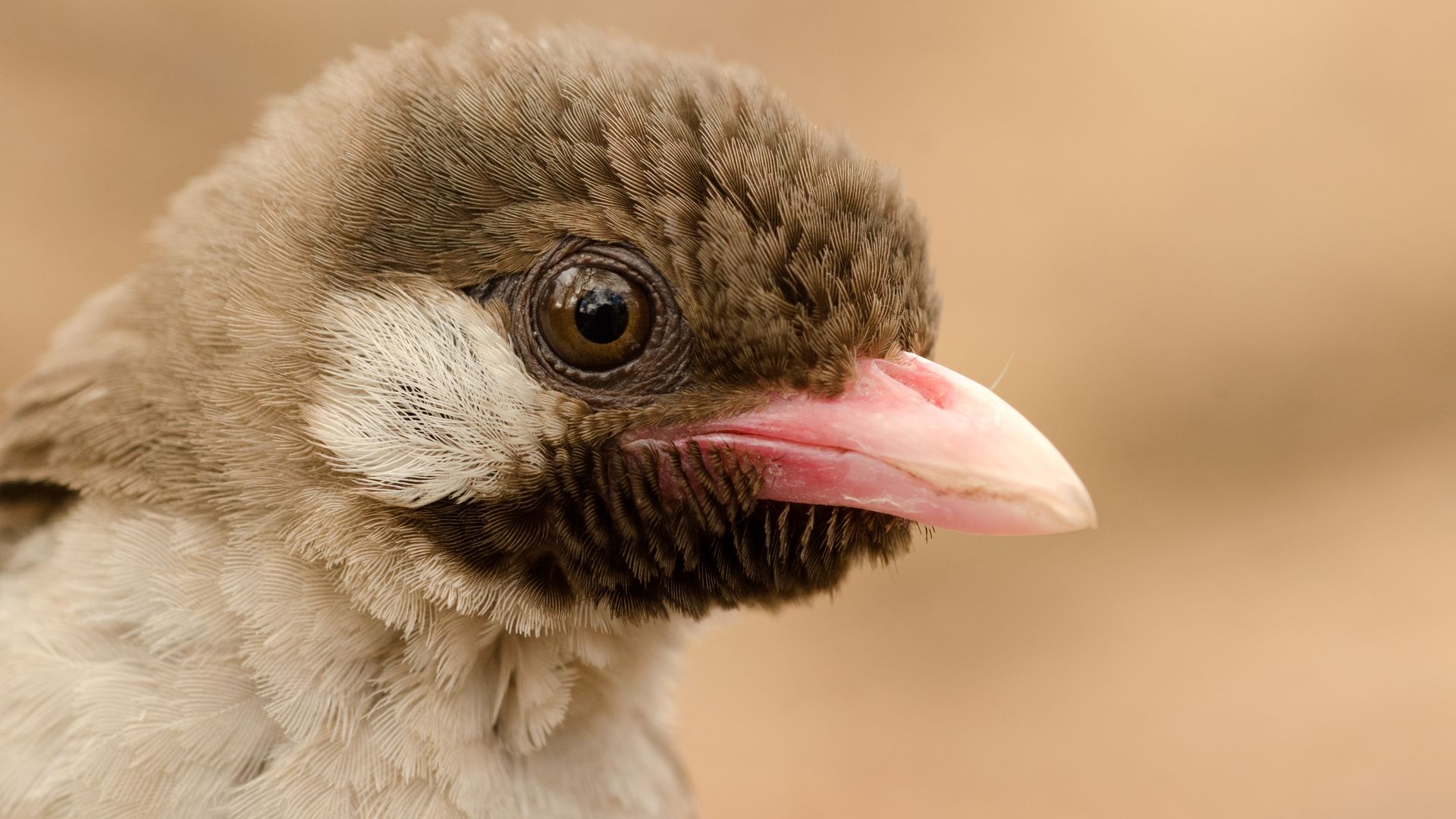
Greater Honeyguide (male) in Niassa Special Reserve, Mozambique. Photo: Claire Spottiswoode/University of Cambridge
Honeyguide birds respond differently to the distinct calls of groups of human honey hunters, according to new research.
Why it matters: Humans have a huge impact on other species. Understanding how other animals cope with their presence could provide insights about the potential for humans and other species to coexist.
- Some research suggests "the growing footprint of humanity and the transformation of the landscape is selecting for certain traits in other species," says Brian Wood, an evolutionary anthropologist at University of California Los Angeles and a co-author of the new study.
- "One of them is a heightened ability for learning," he adds.
- The new findings suggests honeyguide birds, through learning, are capable of adjusting to differences in human culture.
How it works: Human honey hunters use different calls to communicate with honeyguide birds (Indicator indicator) that then lead humans to bees' nests. The hunters open the nests to collect honey while the honeyguides get a meal of beeswax.
- In Tanazania, the Hadza cultural group uses a whistle to communicate with honeyguides.
- The Yao cultural group in Mozambique instead uses a loud trill followed by a grunt to find the birds.
What they found: Honeyguides respond more readily to the calls of their local human partners, researchers recently reported in the journal Science.
- Wood and Claire Spottiswoode, an evolutionary biologist at the University of Cambridge, followed honey hunters in both locations and played recordings of the signals of each group as well as the sound of a honey hunter just calling their name as a control for the study.
- In Tanzania, honeyguides responded about 80% of the time to the local Hazda hunters' whistle and only 24% of the time to the call of hunters in the Yao group.
- Honeyguides in Mozambique responded to the trill call of the local Yao group about 73% of the time and to the call of the Hazda about 26% of the time.
The intrigue: That suggests honeyguides learn the sounds of local humans, the researchers write.
- Humans learn socially — knowledge is passed from person to person.
- It's unclear if honeyguides learn the same way. But they "aggregate in big groups to feed on wax and have ample opportunities for them to observe what other honeyguides are doing," Wood says.
- If they do learn socially, it would suggest elements of each species' culture are evolving together.
The bottom line: "Interspecies relationships are very complex and it takes quite a bit of work to piece together the script of this dance between species," Wood says.
