U.S. eyes Russia’s “shadow fleet” in bid to bolster oil price cap

Add Axios as your preferred source to
see more of our stories on Google.
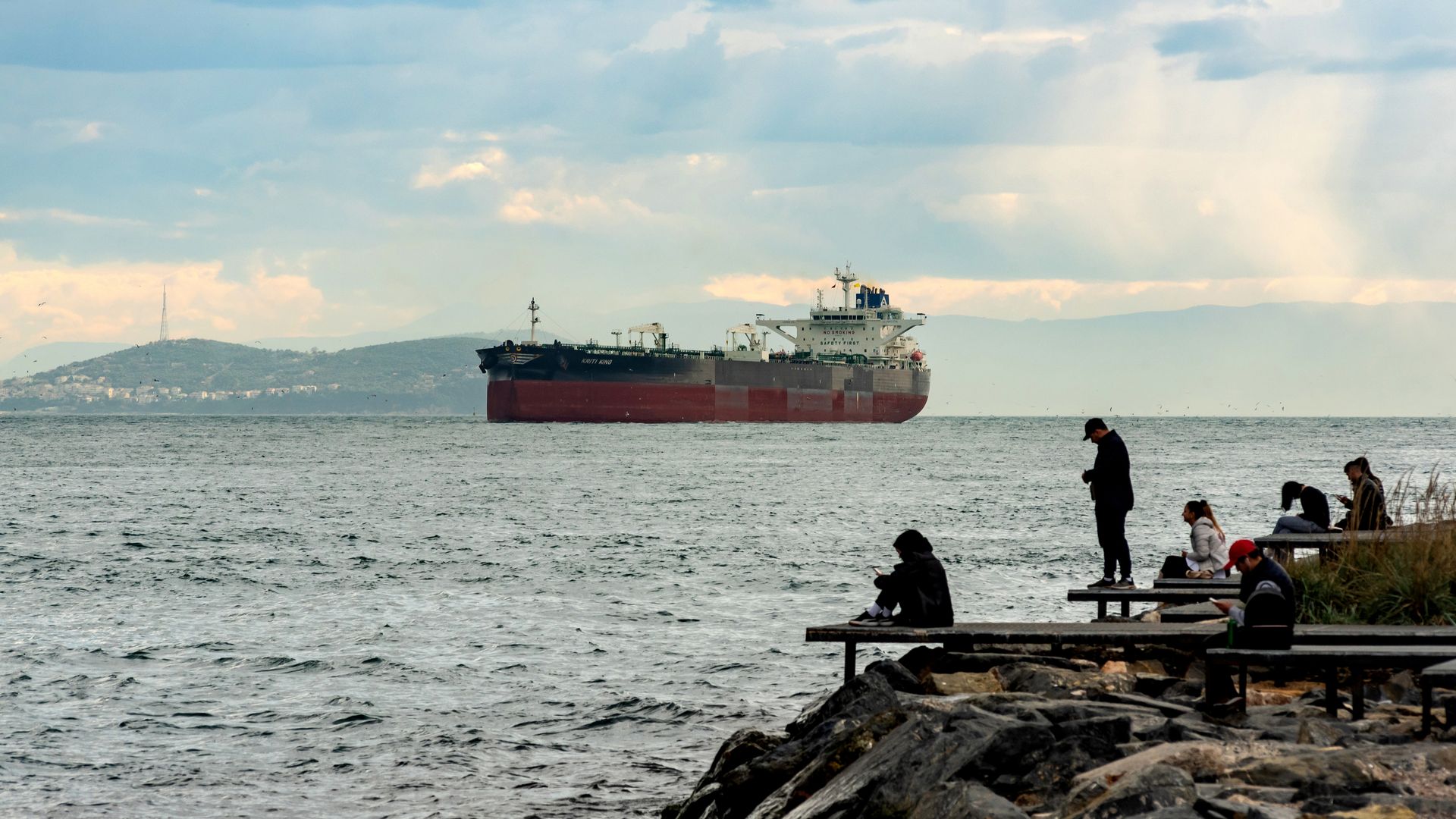
A crude oil tanker enters the Bosphorus strait, heading toward the Black Sea. Photo: John Wreford/SOPA Images/LightRocket via Getty Images
A year after a cap on Russian oil prices was imposed, the Treasury Department says that enforcement is needed to counteract Moscow's growing ability to ship crude, according to a memo obtained by Axios.
Why it matters: The $60 price cap on Russian crude was credited last year with making a dent in how much cash the Kremlin brings in from oil sales. That money helps pay for its war on Ukraine.
State of play: Russian crude oil prices on global markets rose to roughly $80 a barrel in September and October, driven by both higher oil prices at the time and Russia's investment in its "shadow fleet" of ships to carry its oil and avoid the rules that undergird the price cap.
- A recent report from the Atlantic Council noted that about 70% of Russian oil shipping is now conducted by this shadow fleet, compared with under 30% in January 2022.


What they're saying: "Russia invested in new shipping capacity that operates without Coalition services, creating more capacity for oil exports priced above the cap," Wally Adeyemo, deputy Treasury secretary, wrote in the memorandum, sent to his counterparts in the coalition of G7 nations (and Australia) that devised the cap.
- "We must adjust our approach to account for the new dynamic," Adeyemo wrote.
How it works: The price cap plan was based on the fact that service providers like shippers and insurers — the traditional backbone of the global oil market — are almost entirely based in the West and subject to Western financial regulations.
- Basically, shippers and insurers are required to get assurances from those buying and moving the oil — in signed "attestations" — that the petroleum was sold below $60.
- Violations would open companies to potential criminal and civil penalties. But for much of the last year, there was little in the way of public enforcement actions.
What's next: The government seems to be signaling that that will change.
- In recent weeks there's been increased enforcement activity, with sanctions levied on several shippers just last week, following a handful announced in November.
- Such increased enforcement will be a key part of what Adeyemo calls "Phase II" of the price cap.
The bottom line: "We must reduce Russia's profits through the following two channels: strengthening enforcement for the continued trade of Russian oil with Coalition services, and increasing the costs of Russia's efforts to circumvent the cap," he wrote in the memo.
