Film looks at challenges in recruiting police for Navajo Nation

Add Axios as your preferred source to
see more of our stories on Google.
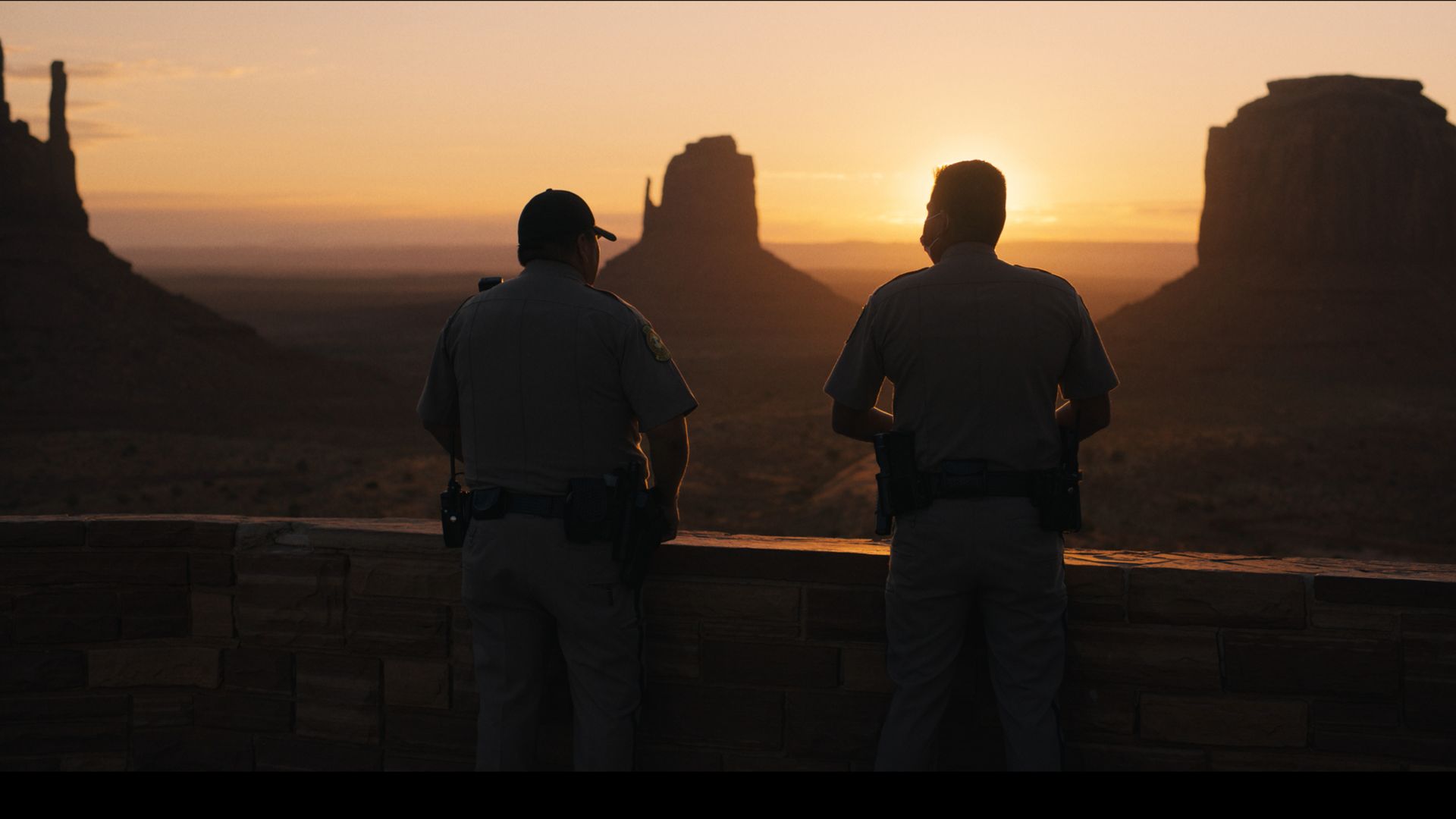
Navajo Nation police recruits in the HBO Original three-part documentary series "Navajo Police: Class 57." Photo: Courtesy of HBO
A new documentary examines how one of the nation's largest Indigenous tribes handles a police shortage and the plight of some aspiring officers who want to help.
The big picture: The HBO Original three-part documentary series "Navajo Police: Class 57" counters the romantic portrayals of Tony Hillerman's novels and John Ford's westerns about the Navajo Nation and gives a vivid picture of what's at stake in a vast region battling inequality.
Details: "Navajo Police: Class 57," streaming now on Max, follows 28 recruits as they struggle through the Navajo Police Training Academy just after the pandemic.
- Recruits, such as Shawvan Levi, must undergo a rigorous program of physical training and mind games to prepare to become officers in one of the poorest areas in the U.S.
- After class, recruits are shown fighting to get through everyday life with the pressures of family life on the reservation and dreams of improving their communities.
- Slowly, the recruiting class gets smaller as the series continues.
The intrigue: The Navajo Nation is the size of West Virginia and has only 180 officers to patrol the sprawling reservation.
- Navajo police chief Daryl Noon tells filmmakers that the tribe needs 500 officers to offer basic police services.
- Commissioned Navajo officers share thoughts about hoping all the recruits pass the class and needing more officers to help an overworked department.
What they're saying: "Natural and cultural beauty abounds, and the romance of Navajo history is very much alive and well," co-director David Nordstrom tells Axios.
- "However, these truths exist alongside more vexatious realities that stem from the ongoing exploitation of Navajo land, culture, and people."
- Co-director Alex Jablonski tells Axios filmmakers spent weeks on the reservation before capturing footage to build trust and assure Navajo residents that they sought authentic voices.
- "I think they knew that our hearts were in the right place and why we were making this."
Yes, but: Co-director Kahlil Hudson tells Axios the purpose of the series was to show three-dimensional Indigenous people not just going through struggle and failure but in moments of joy and triumph.
- "We knew in making a series about policing that those darker elements would be present, but it was important for us to show Native people empowered to make a change in their community."
The bottom line: "Navajo Police: Class 57" is a rare, honest look into the challenges around reservation life and how Indigenous people work to address those disparities themselves.
