Scoop: GM's Cruise plans careful re-launch for driverless robotaxis

Add Axios as your preferred source to
see more of our stories on Google.
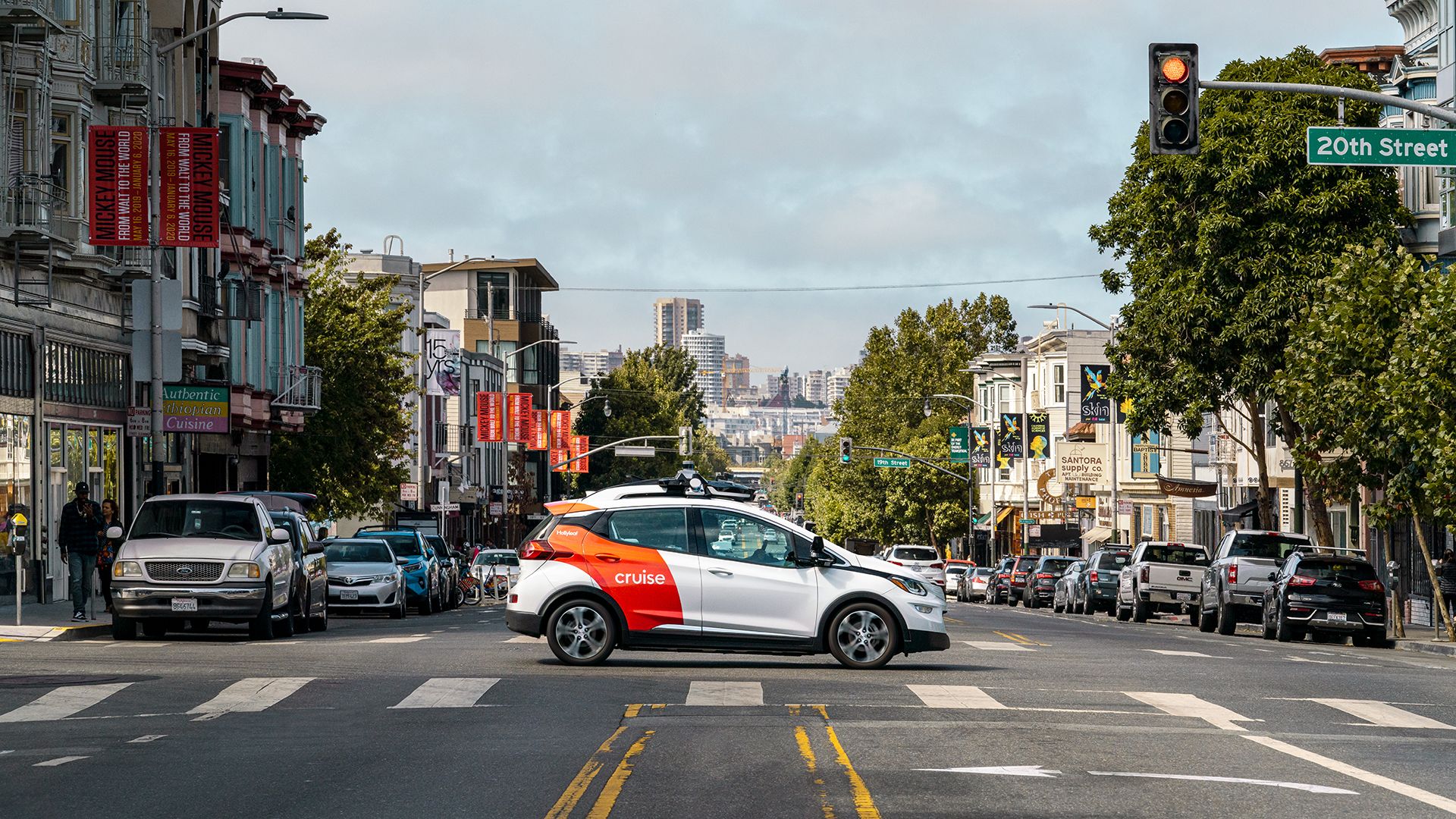
A Cruise robotaxi in San Francisco. Photo courtesy of Cruise
Robotaxi operator Cruise is plotting a slow return to service, starting in one city — potentially in Texas or Arizona — as it works to overcome safety concerns and a lack of public trust.
- It's also narrowing its engineering focus to its existing robotaxi, and will lay off an unspecified number of non-engineers in multiple cities.
Why it matters: The General Motors-owned autonomous vehicle developer needs to take baby steps to regain credibility after a string of incidents, including a horrific pedestrian accident in San Francisco last month.
Driving the news: Newly appointed President and Chief Technology Officer Mo Elshenawy outlined the company's next steps in an email to Cruise employees Wednesday.
- The company, which is awaiting the results of two independent investigations, will focus on "realistic" plans that "our teams can deliver," Elshenawy told employees.
- "Once we have taken steps to improve our safety culture and rebuild trust, our strategy is to re-launch in one city and prove our performance there, before expanding," a Cruise spokesman told Axios, confirming the contents of the staff email.
- Cruise will focus only on its electric Bolt robotaxis, which means tabling plans to develop and deploy a second robotaxi: GM's purpose-built Origin van.
Of note: GM already said it will pause Origin production in the coming weeks.
- A GM spokesman tells Axios that the automaker doesn't expect to produce more Origins in 2024.
What to watch: The changes mean Cruise will be laying off an unspecified number of its 3,800 employees, Elshenawy told the staff.
- The layoffs will mostly affect non-engineering workers, including those working on Cruise's commercial rollout in San Francisco and other markets, a Cruise spokesman said.
💬 My thought bubble: Cruise won't relaunch in San Francisco because California has yanked its license to operate there.
- The most likely bet is a city in Texas — Austin, Dallas or Houston — where Cruise already had some operations and was gearing up for expansion.
- Texas' regulatory environment is far friendlier toward autonomous vehicles than California's.
- Another possibility is Phoenix, where Cruise was doing driverless deliveries until its recent suspension. (Cruise's chief rival, Waymo, is already well-established in metro Phoenix.)
