The Beatles set to release "last" song four decades in the making

Add Axios as your preferred source to
see more of our stories on Google.
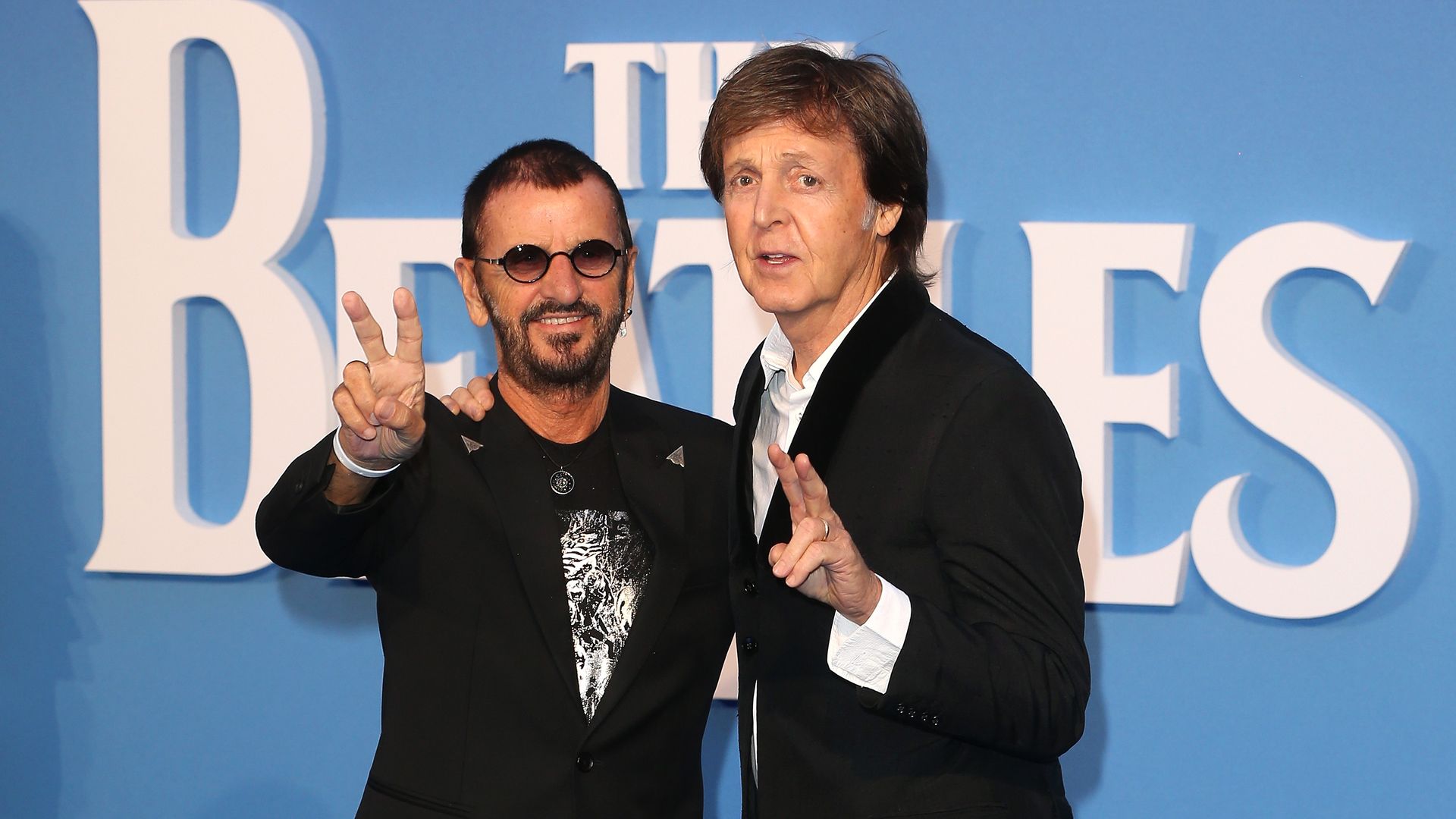
Ringo Starr and Paul McCartney in London in September 2016. Photo: Fred Duval/FilmMagic
The Beatles next week are set to release "Now And Then" — their "last" song to feature all four members that's been in the making for over four decades, the band announced on Thursday.
Why it matters: The song was in part finished using artificial technology, which is rapidly changing the music industry.
Details: The song was first written and demoed with vocals and piano in the late 1970s by John Lennon, who died in 1980, the band said.
- Yoko Ono Lennon, his wife, gave Paul McCartney a recording of the demo in 1994.
- McCartney, Ringo Starr and George Harrison, who died in 2001, also recorded new parts and completed a rough mix for "Now And Then" in the late 1990s.
- However, technology limitations prevented the band from finishing the song, as they didn't have a way to separate Lennon's vocals from the piano to achieve a "clear, unclouded mix."
That changed with audio technology from Peter Jackson's WingNut Films, which was used for the "The Beatles: Get Back" docuseries.
- The technology was able to separate Lennon's vocals from the piano, allowing the band to mix in acoustic guitar recorded by Harrison, a new drum track from Starr and new bass, guitar, piano and slide guitar tracks from McCartney.
- Backing vocals from the original recordings of "Here, There And Everywhere," "Eleanor Rigby" and "Because," were also woven into the new song.
What they're saying: "There it was, John's voice, crystal clear," McCartney said in a statement. "It's quite emotional. And we all play on it, it's a genuine Beatles recording."
- "It was the closest we'll ever come to having him back in the room, so it was very emotional for all of us. It was like John was there, you know," Starr said. "It's far out."
Of note: A 12-minute documentary film about the making of the song will premier on The Beatles' YouTube channel on Nov. 1.
Go deeper: Music lyrics lawsuit could set AI copyright precedent
