OSIRIS-REx asteroid sample contains water, carbon

Add Axios as your preferred source to
see more of our stories on Google.
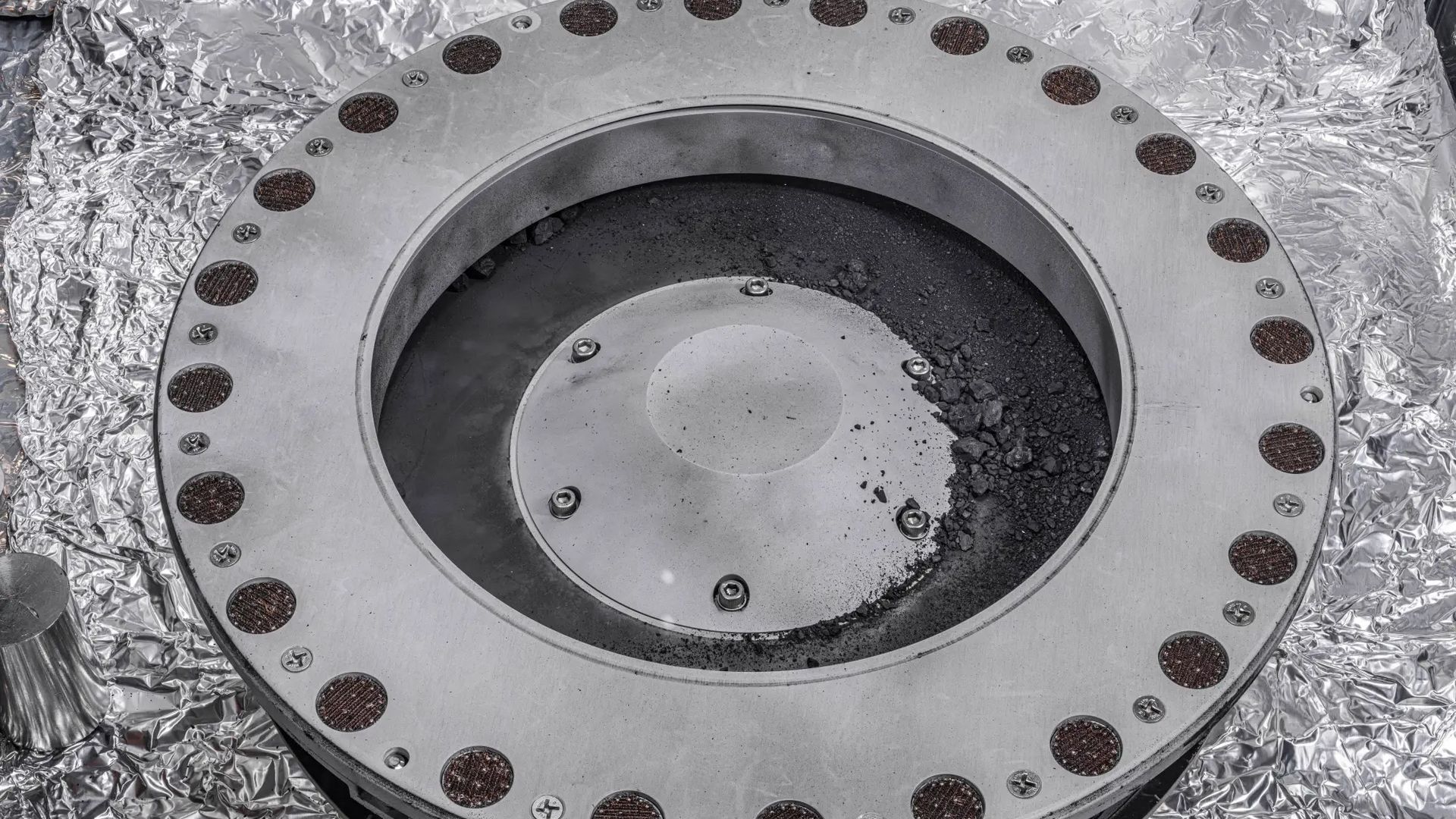
A view of the outside of the OSIRIS-REx sample collector. Image: NASA/Erika Blumenfeld & Joseph Aebersold
The pristine sample of a 4.5 billion-year-old asteroid delivered to Earth last month contains water and high amounts of carbon, according to NASA.
Why it matters: That composition suggests life's building blocks may be found within the asteroid, the space agency said.
What's happening: Scientists are now going to further analyze the sample to try to answer key questions about asteroids and their place in the solar system's history.
- The OSIRIS-REx mission was expected to collect at least 60 grams of material from asteroid Bennu, but it appears to have snagged a lot more, including some bonus material "covering the outside of the collector head, canister lid, and base," NASA said.
- "The bounty of carbon-rich material and the abundant presence of water-bearing clay minerals are just the tip of the cosmic iceberg," University of Arizona professor of planetary science Dante Lauretta, the principal investigator for OSIRIS-REx, said in a statement.
- NASA is planning to house about 70% of the asteroid sample at Johnson Space Center, setting aside some of it for scientists to study in the future.
Catch up quick: The OSIRIS-REx sample capsule landed in the Utah desert on Sept. 24 and arrived at Johnson the next day.
- OSIRIS-REx gathered the sample in 2020 and then made its way back to Earth.
- It is the largest sample of an asteroid ever returned to Earth.
- After dropping the sample capsule to land on Earth, the spacecraft is continuing on its journey through space, targeting the asteroid Apophis next. (NASA has renamed the spacecraft OSIRIS-APEX in light of the extended mission.)
The big picture: Scientists think asteroids and comets are leftovers from the dawn of the solar system billions of years ago.
- By studying these space rocks, researchers think they might eventually be able to piece together how water and even life were seeded on Earth early in our planet's history.
