The U.S. trade deficit is shrinking

Add Axios as your preferred source to
see more of our stories on Google.
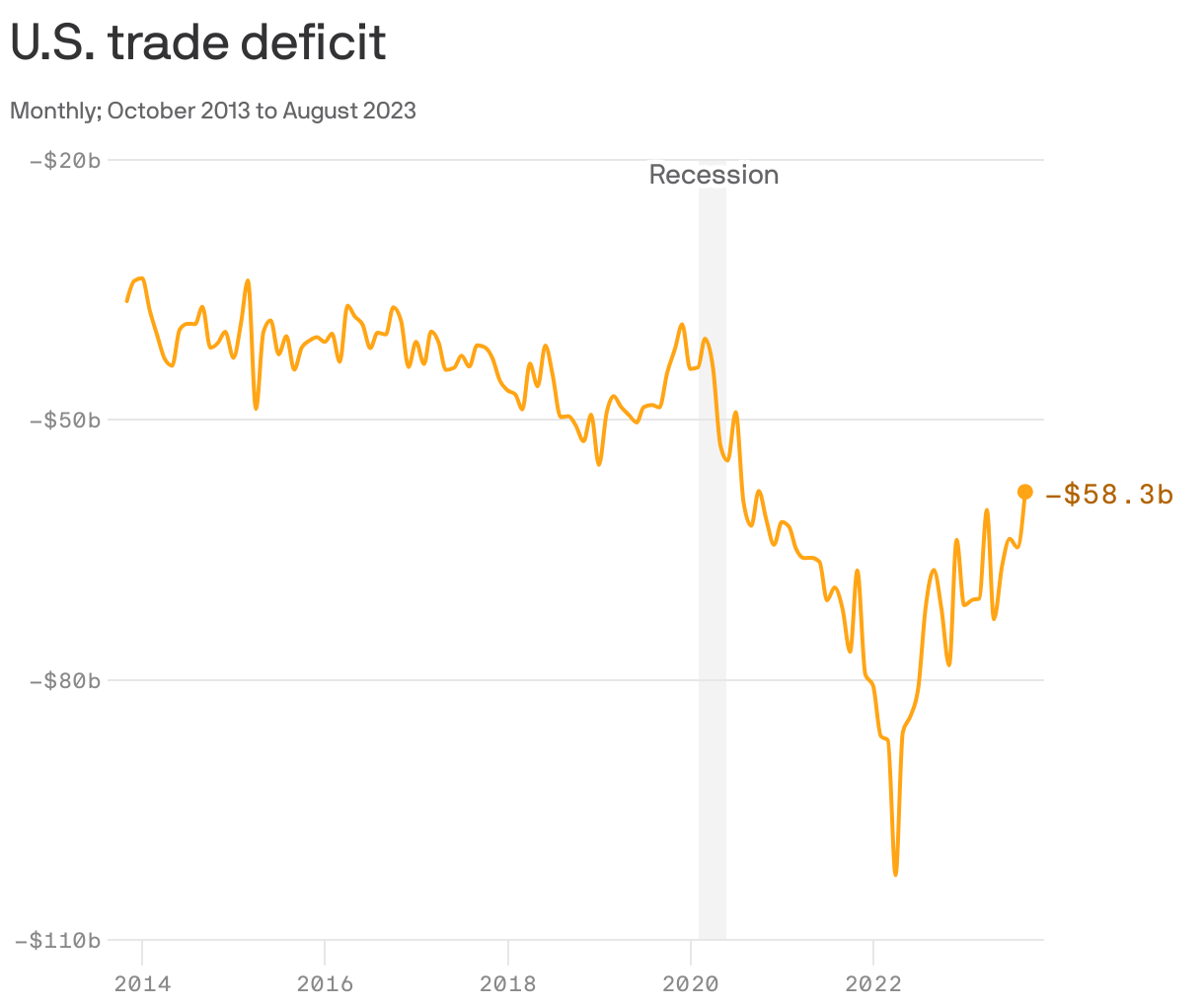
The U.S. trade deficit narrowed in August to the smallest in three years.
Why it matters: The deficit is going down because of a sharp downturn in imports of consumer and investment goods, which could be a sign of weakening demand in the U.S.
- On the other hand, the downturn in goods purchases may merely be a return to normal after the binge that came during and after the COVID crisis.
By the numbers: The trade deficit declined by roughly 16%, to $58.3 billion, in August, compared to the same month last year.
- U.S. exports rose, driven by rising crude oil sales. And imports fell, thanks to declines in cellphones, semiconductors and electrical equipment.
Be smart: The trade deficit is a measure of the gap between what the U.S. buys from foreign nations and what it sells overseas.
- Rising imports typically reflect increasing consumption, a key sign of economic health in the consumption-driven U.S.
- But deficits actually reduce gross domestic product, given the way the measure is calculated.
- So, the smaller deficit — while it actually might be a sign of weakening demand in the U.S. — actually could mean a better-than-expected GDP number for the third quarter.
The big picture: The large trade deficits that emerged in the 1980s, and grew with the rise of China as an exporting powerhouse, are associated with large job losses in some industries — especially in electorally powerful industrial Midwestern states.
The bottom line: Month-to-month swings are less important but the narrowing of the deficit in August could set the stage for a stronger Q3 GDP report than many expected.
- Goldman Sachs economists raised their estimate for Q3 GDP to 3.7% after the release of the numbers on Thursday.
