Sep 12, 2023 - Economy
Real incomes fell last year. No wonder Americans were bummed out

Add Axios as your preferred source to
see more of our stories on Google.
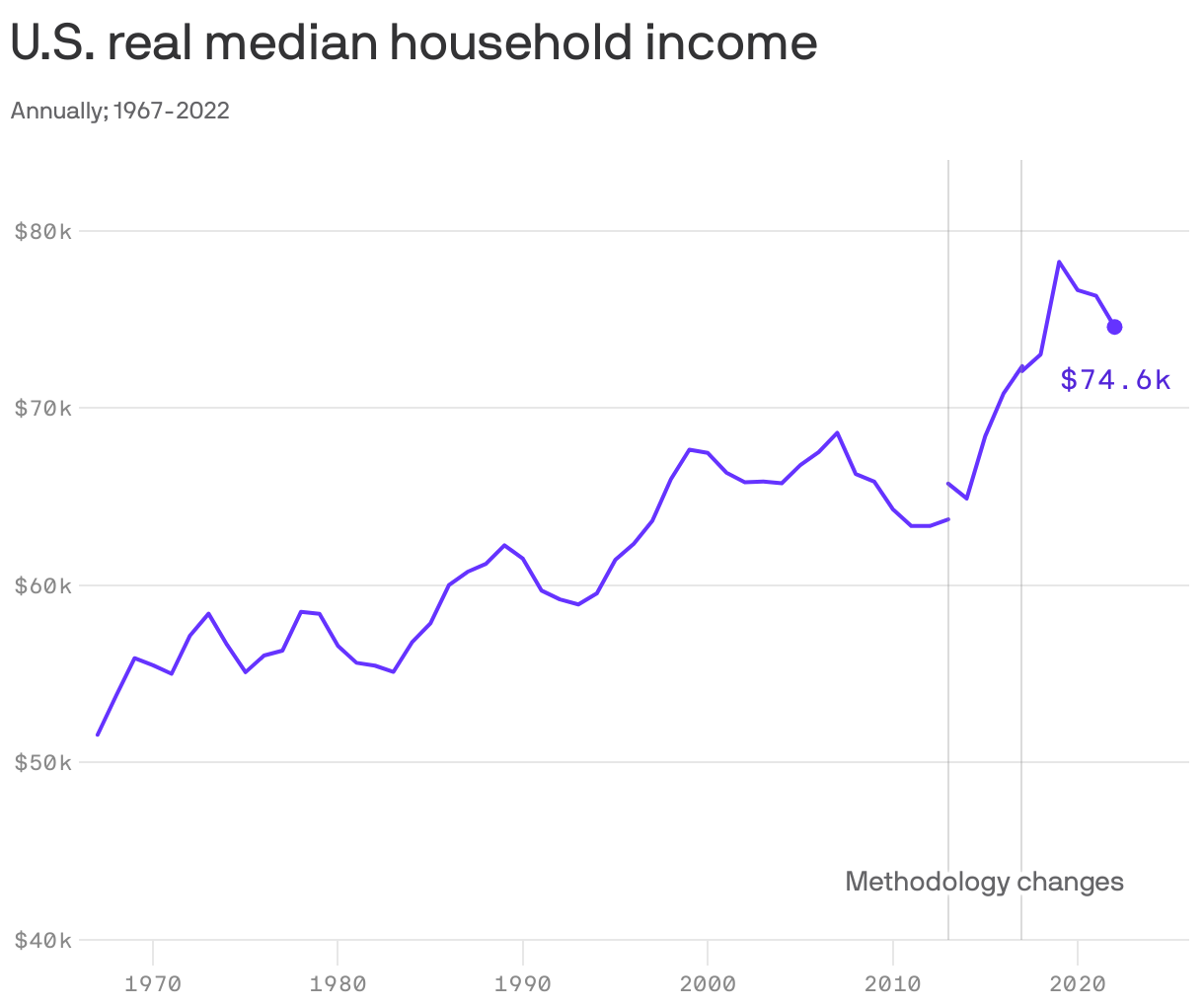
Americans' real incomes fell in 2022 from the previous year, new Census data show, as record-high inflation took a bite out of our paychecks.
Why it matters: The decline explains why Americans have felt so meh about the strong economy over the past couple years.
- To be clear: It's hard to be amped up about the economy when you're making less money (and prices are soaring.)
- It's another reason why the White House's Bidenomics pitch, an attempt to tell a feel-good story about the economy, seems to have fallen flat so far.
By the numbers: Real median household income fell by 2.3% to $74,580.
- Go deeper: If you break out the numbers by race, almost all groups saw relatively little change from 2021. The only group that experienced a significant decrease in real income was non-Hispanic white households — which saw a 3.6% drop.
- The income measure includes wages and earnings from work, as well as Social Security benefits, unemployment insurance, retirement income, dividends and public assistance. It's calculated pre-tax.
- Last year's historically high inflation caused the decline — the nominal income numbers were adjusted by a 7.8% inflation rate, the Census said.
Stunning stats: Americans with no high school diploma saw their real incomes increase by 6.4%.
- 65.6% of women worked full time last year — the largest share on record back to 1967.
What's next: The income picture looks better in 2023, as inflation has eased — Americans are finally starting to see a rise in real wages and incomes.
- Real median family income is up 1.2% so far this year, according to an analysis of federal data from the Council of Economic Advisors.
