Why a Cleveland art museum is feuding with Turkey over an ancient statue

Add Axios as your preferred source to
see more of our stories on Google.
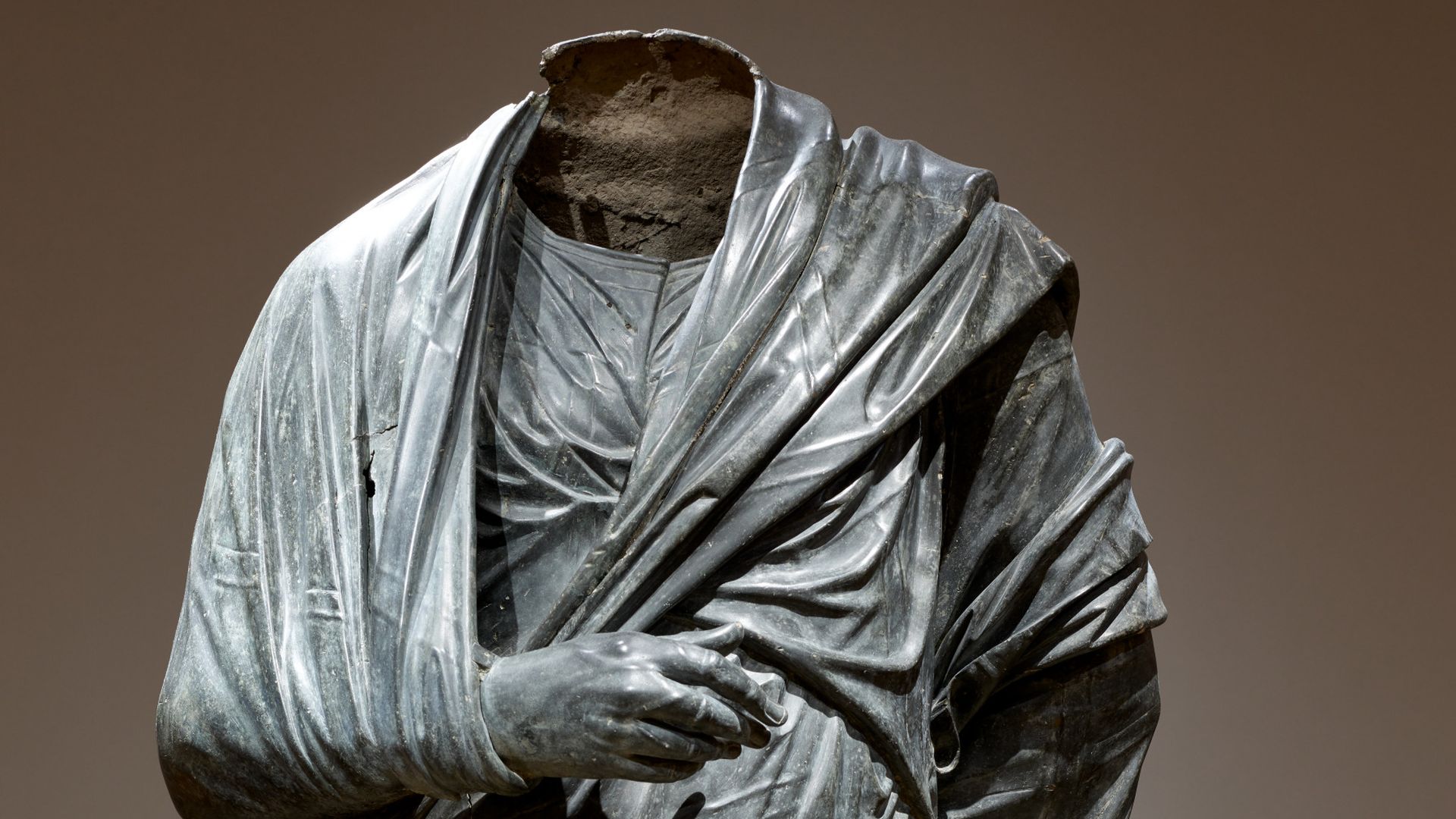
The headless bronze statue that's believed to depict Roman emperor and philosopher Marcus Aurelius. Photo: Cleveland Museum of Art
New York officials recently seized a headless bronze statue valued at $20 million that's believed to represent Roman emperor and philosopher Marcus Aurelius from the Cleveland Museum of Art.
Why it matters: The statue is at the center of an ongoing feud between the museum and Turkey, which claims it was stolen from an archaeological site in the country's southwest as part of a smuggling ring.
- The Manhattan District Attorney's Office, which executed the search warrant, got involved because the ring allegedly trafficked the statue and other antiquities through the borough.
- It's the office's latest seizure as part of its crackdown on the theft, looting and illicit trafficking of cultural property and effort to clear a backlog of repatriation cases.
State of play: Turkey has maintained for over a decade that the statue of Aurelius and dozens of other artifacts at the Cleveland museum were looted from its soil, according to the Cleveland Plain Dealer, which first reported the seizure.
- The country claimed the statue was looted in the 1960s from a Roman archaeological site in the ancient city of Bubon.
- The museum has said it would return any piece of artwork if a "legitimate" claim is made.
Of note: Though the museum once described the statue as "The Emperor as Philosopher, probably Marcus Aurelius (reigned AD 161-180)," it changed it to "Draped Male Figure c. 150 BCE–200 CE."
What they're saying: Manhattan District Attorney's Office spokesperson Doug Cohen confirmed the Aug. 14 search warrant and seizure as part of its "ongoing criminal investigation into a smuggling network involving antiquities looted from Bubon in Türkiye and trafficked through Manhattan."
- The museum and officials with Turkey's Department for Combating Illicit Trafficking didn't immediately respond to Axios' requests for comment.
The big picture: Over the past decades, the museum has faced several other allegations of housing stolen art and has returned several pieces.
- Italy received 14 artifacts from the museum in 2009. The country also alleged in 2022 that it had a 16th-century glazed terracotta altarpiece on display that was stolen from a village in the early 1900s.
- The museum returned a 10th-century statue of a Hindu god that was likely stolen from an ancient temple complex to Cambodia in 2015.
Go deeper ... Dreamy and complex: New online exhibit offers artists' perspectives on AI
Read the search warrant:
