"Afrotopia:" How Black Americans built an ideal community in the Old West

Add Axios as your preferred source to
see more of our stories on Google.
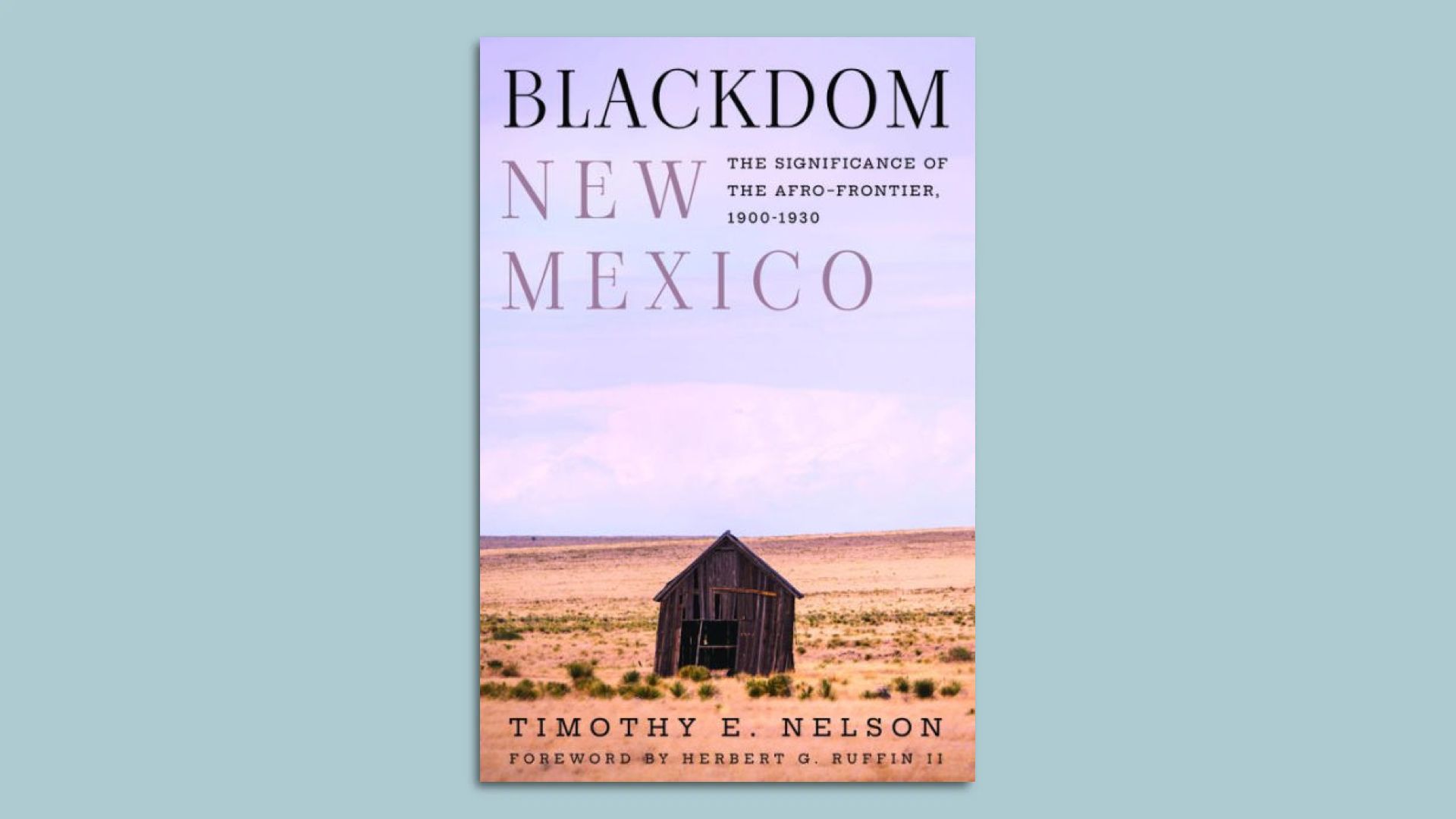
Photo: Courtesy of Texas Tech University Press
Less than 40 years after emancipation, a group of Black Americans headed West with the dream of setting up an "Afrotopia" in New Mexico.
The big picture: Historian Timothy E. Nelson's forthcoming book, "Blackdom, New Mexico: The Significance of the Afro-Frontier" documents that migration and the rise and fall of a multiracial community known as Blackdom.
- Nelson sheds light on what "Afrofrontierism" is, which describes the lives and conditions of Black people in the American West in the late 19th and early 20th centuries — an often overlooked part of American history.
Details: The book follows the creation of a vibrant town of Black churches and Black-owned businesses in a state populated largely by Hispanic and Indigenous residents.
- Nelson tells Axios that Blackdom residents came from the Old South, New York, and the Midwest with the hopes of starting anew amid a rise in racial violence at the time.
- "Here were Black folks in a sovereign space occupying their sovereign mind with what they wanted instead of having to deal with the impositions of white people."
For about 30 years, the town served as a haven for Black people and their allies, until the Depression struck and younger residents wanted to move to the cities.
- Though the town was founded by Black residents, Nelson says it was inviting to Irish immigrants, Mexican Americans, and Indigenous people, and gave clues to what a multiracial democracy could look like.
- The town thrived even though nearby New Mexico towns were founded and run by white former Confederates, Nelson writes in the book.
- Over time, the surrounding racial segregation and the economic downturn led to the demise of Blackdom.
- By the early 1930s, the town was largely empty of full-time residents.
Zoom out: Nelson says that Black conquistadors, Afro-Mexican cowboys and ranchers and Afro-Indigenous people lived in northern Mexico and present-day New Mexico long before the first enslaved Africans disembarked in Virginia in 1619.
- They converged with Black Americans from the South in the 1800s, creating new identities and experiences, which partly led to Blackdom.
Of note: The book is expected to be released on July 15 by Texas Tech University Press.
Subscribe to Axios Latino to get vital news about Latinos and Latin America, delivered to your inbox on Tuesdays and Thursdays.
