China tries to slow its currency slump

Add Axios as your preferred source to
see more of our stories on Google.
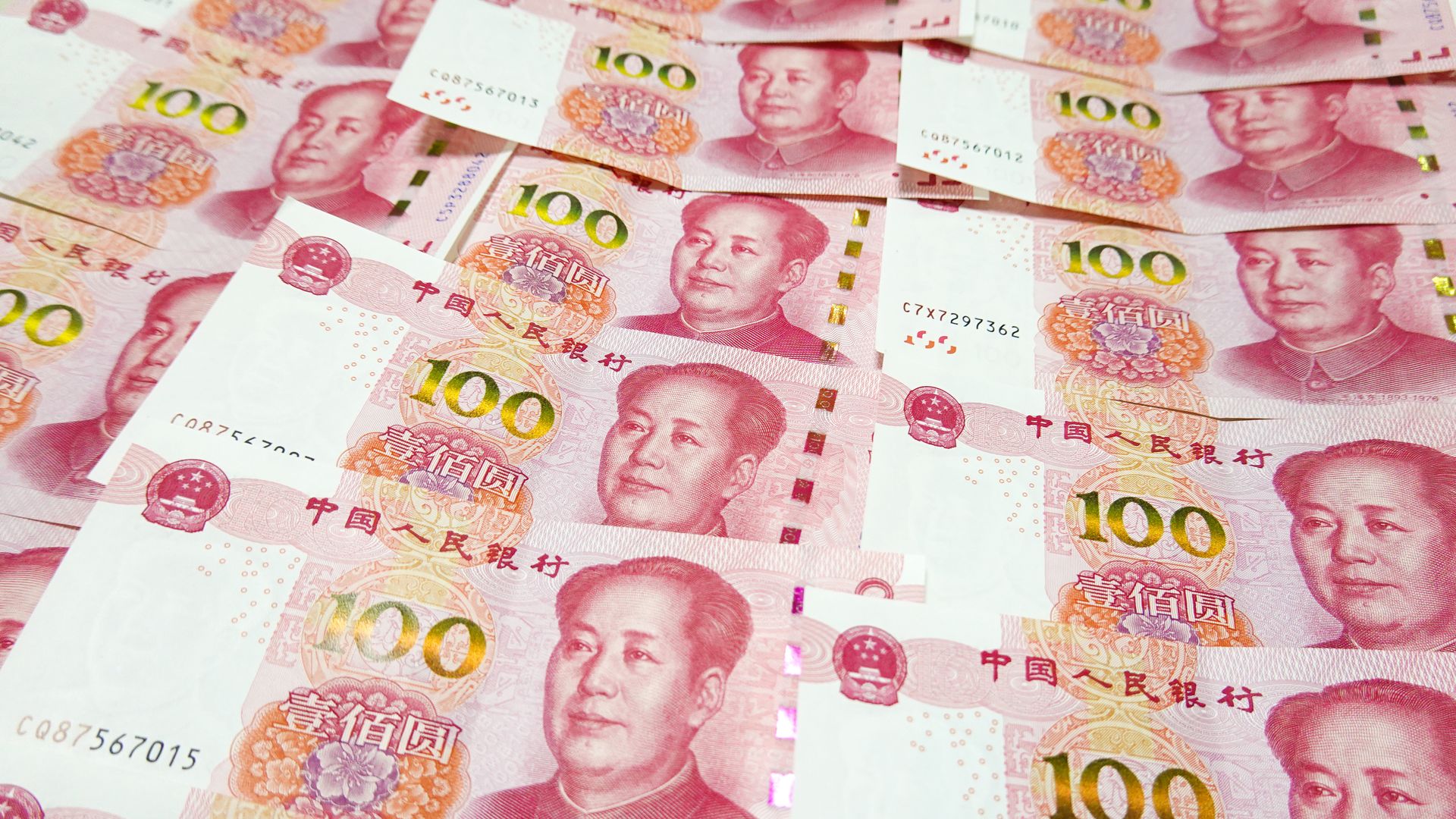
Photo: Sheldon Cooper/Getty Images
China's currency has fallen too fast for the government's comfort.
Why it matters: The yuan's tumble against the dollar reflects the global markets' dour view of the world's second-largest economy.
The big picture: China's economy still looks soft after the trauma of COVID and uncertainty about whether the Xi Jinping regime will prioritize economic growth — i.e. delivering massive stimulus — over confrontation with the West.
- S&P Global on Sunday cut its growth forecast for China to 5.2% in 2023, from 5.5%, calling the pace "relatively unambitious," and "low by historical standards."
- Last week, Chinese policymakers cut interest rates to try to help the economy limp forward.
Be smart: Interest rates drive currency markets. (Here's a primer).
- Countries with slow growth and weak inflation, accompanied by low-interest rates — like China at the moment — tend to see currencies weaken.
- Countries with high-interest rates and higher inflation — like the U.S. — tend to see currencies strengthen, since higher yields attract more investment.
- Those dynamics pushed the Chinese yuan down about 7% against the dollar since February, a giant move in currency markets.
Between the lines: China sometimes lets its currency weaken to help make its exports cheaper than foreign competition — which provides a boost to its industrial sector.
Yes, but: The Chinese government is simultaneously signaling it doesn't want a steady slide to become an avalanche.
- On Tuesday, the government set its official price for the currency higher than the markets expected, following a sharp drop in the yuan last week.
- It was the second straight day the official price was jacked up, which "suggests that the notable underperformance" of the yuan "has concerned policy makers," JPMorgan analysts wrote Tuesday.
How it works: The state manages China's currency but allows some space for market forces to affect the price.
- Each day the government sets an official price for the currency.
- Trading is allowed within a 2% band around that number, with the government intervening to ensure it stays there.
What they're saying: Analysts at JPMorgan think that the government's interventions "may not be enough to alter the weakening path [of the yuan] barring durable improvement in the cyclical outlook."
