Apr 3, 2023 - Health
Record growth in U.S. life sciences real estate footprint

Add Axios as your preferred source to
see more of our stories on Google.
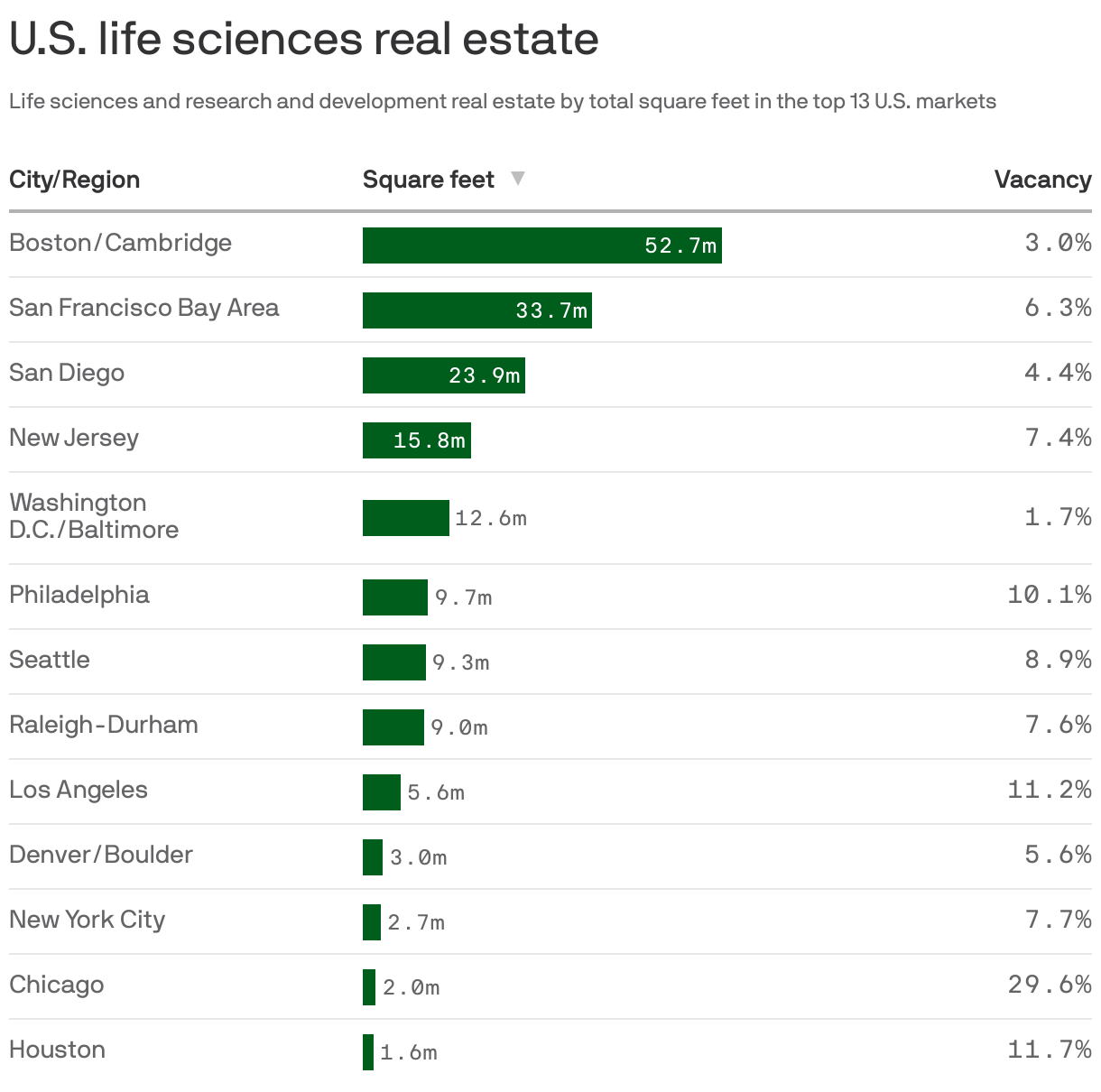
The inventory of U.S. life sciences laboratories and R&D sites jumped by nearly 50% in five years to 181.7 million square feet as of the fourth quarter of 2022, according to a CBRE report provided first to Axios.
- CBRE forecasts the properties will consume 220 million square feet by 2025 as new construction is completed, with nearly a third of the future space already pre-leased, according to the 2023 U.S. Life Sciences Outlook.
Why it matters: While there's been plenty of pessimism hanging over commercial real estate since the SVB failure — something that's certainly impacted the life sciences — the report points out multiple reasons to expect the sector will endure, the report says.
- Though bank turmoil is likely to slow venture capital funding, initial public offerings, and job growth, there's still a bevy of clinical trials for new drugs, federal funding, and ample cash reserves — at least for biotech's bigger players.
- The industry's vacancy rate, which rose to 5.7% in the fourth quarter from 5.1% in the third quarter of 2022, is still low compared to many other sectors.
By the numbers: Boston and Cambridge, Mass. remain hubs with 52.7 million square feet of inventory and 15.3 million square feet of life sciences space under construction.
- Only 3% of that space is vacant after booking the largest leases of 2022. Both Takeda and AstraZeneca leased about 600,000 square feet of space, respectively, in Cambridge.
- The San Francisco Bay Area, which has about 33.7 million square feet of space, also has among the fastest-growing inventories with 9.3 million square feet under construction.
- Chicago, which has less than 2 million square feet of life science inventory also has the most space available with a nearly 30% vacancy rate.
