Jordanian truckers strike enters 11th day

Add Axios as your preferred source to
see more of our stories on Google.
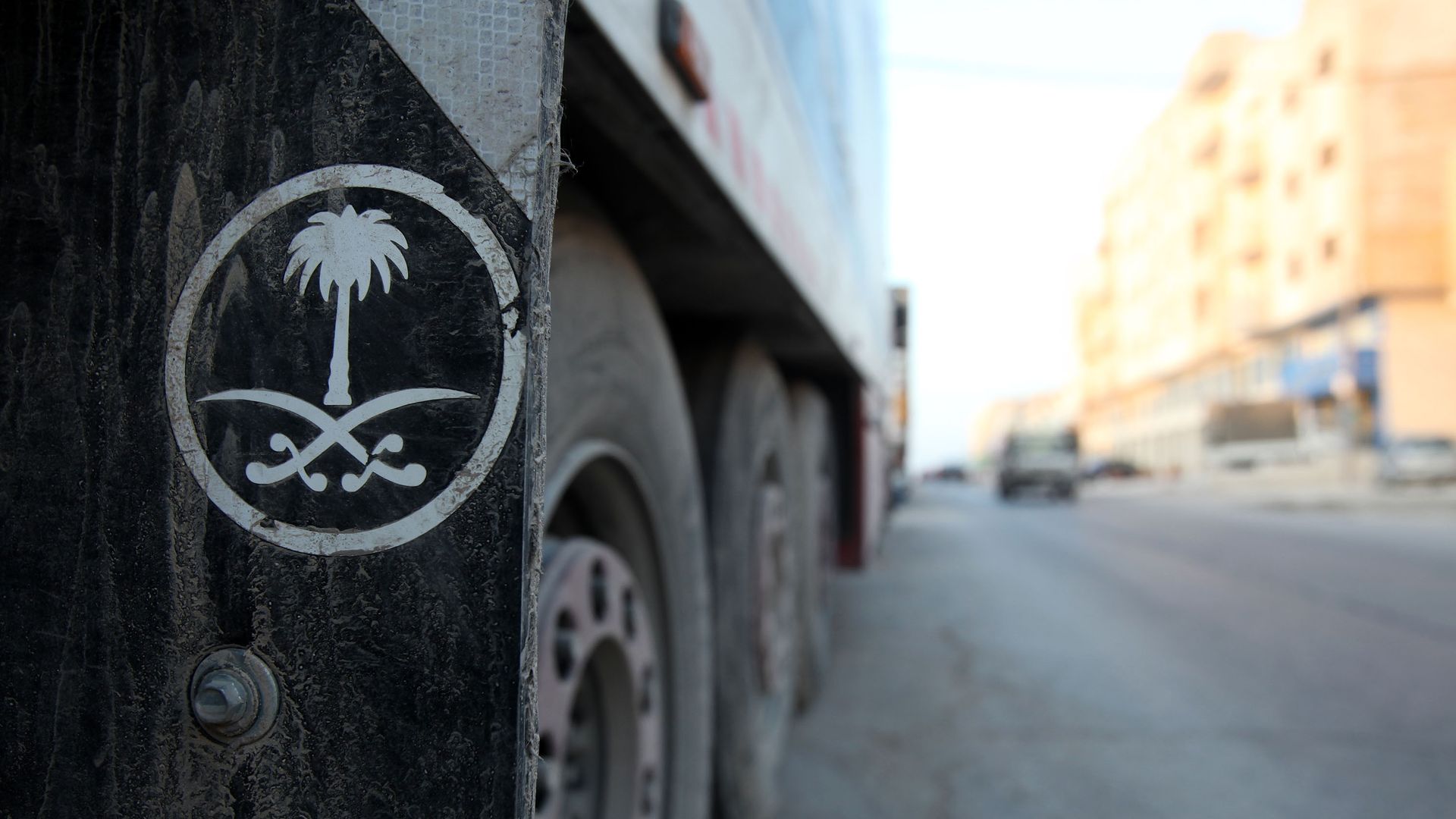
A truck in Jordan in February 2017. Photo: Salah Malkawi/Anadolu Agency/Getty Images
AMMAN — The Jordanian government and truckers, who have been on strike for 11 days, are locked in a bitter fight over fuel prices.
Why it matters: The truckers strike puts King Abdullah II and his government in an unenviable position: They cannot break their IMF commitment to not return to subsidized fuel prices in the country, which is almost totally dependent on oil and gas imports.
- But they also can't ignore the voices of the people, who are watching for any signs the government is not serious about the political reforms the king promised to make amid growing discontent.
Catch up quick: The strike started on Dec. 4 in the southern city of Maan. Partial strikes have since spread to other cities.
- Other transportation sectors, including bus, delivery truck and some taxi drivers have since supported the strike.
- The truckers' demands largely focus on a reduction in the price of fuel.
- The strike has paralyzed most transportation to and from the crucial Aqaba port and in several other parts of the country.
- Gas delivery drivers also went on strike on Monday for a single day. Buses for university students from Amman also partially stopped working, forcing some universities to suspend classes.
State of play: On Monday, the government-controlled press, which has been generally silent on the strike, broadcasted breaking news claiming the strike was over. It quoted the head of the land transport union confirming that drivers received a fee increase and have agreed to end the strike.
- But the drivers said they never signed on to the deal, which was approved by the largely pro-government appointed union head, and the strike continued.
On Tuesday, Ahmad Safadi, speaker of the Jordanian parliament, along with transport committee members met with the striking truck drivers.
- Safadi said after the meeting he and other lawmakers will seek a solution with the government.
- Later that day, the government organized security-protected truckers who were willing to cross the picket lines of their fellow truckers. This was seen as an escalation by the government.
- “The government looks down on workers and the public in general, and they ignored the truckers until the business community and parliament started to complain” Ahmad Awad, a Jordanian economist, told Axios.
What to watch: The government appears ready to bring down the prices of fuel but wants to wait until the end of the month, when there is a review of the prices based on market rates.
- The truckers, however, have said they aren't willing to wait.
