China's Xi lands Saudi Arabia for regional summits

Add Axios as your preferred source to
see more of our stories on Google.
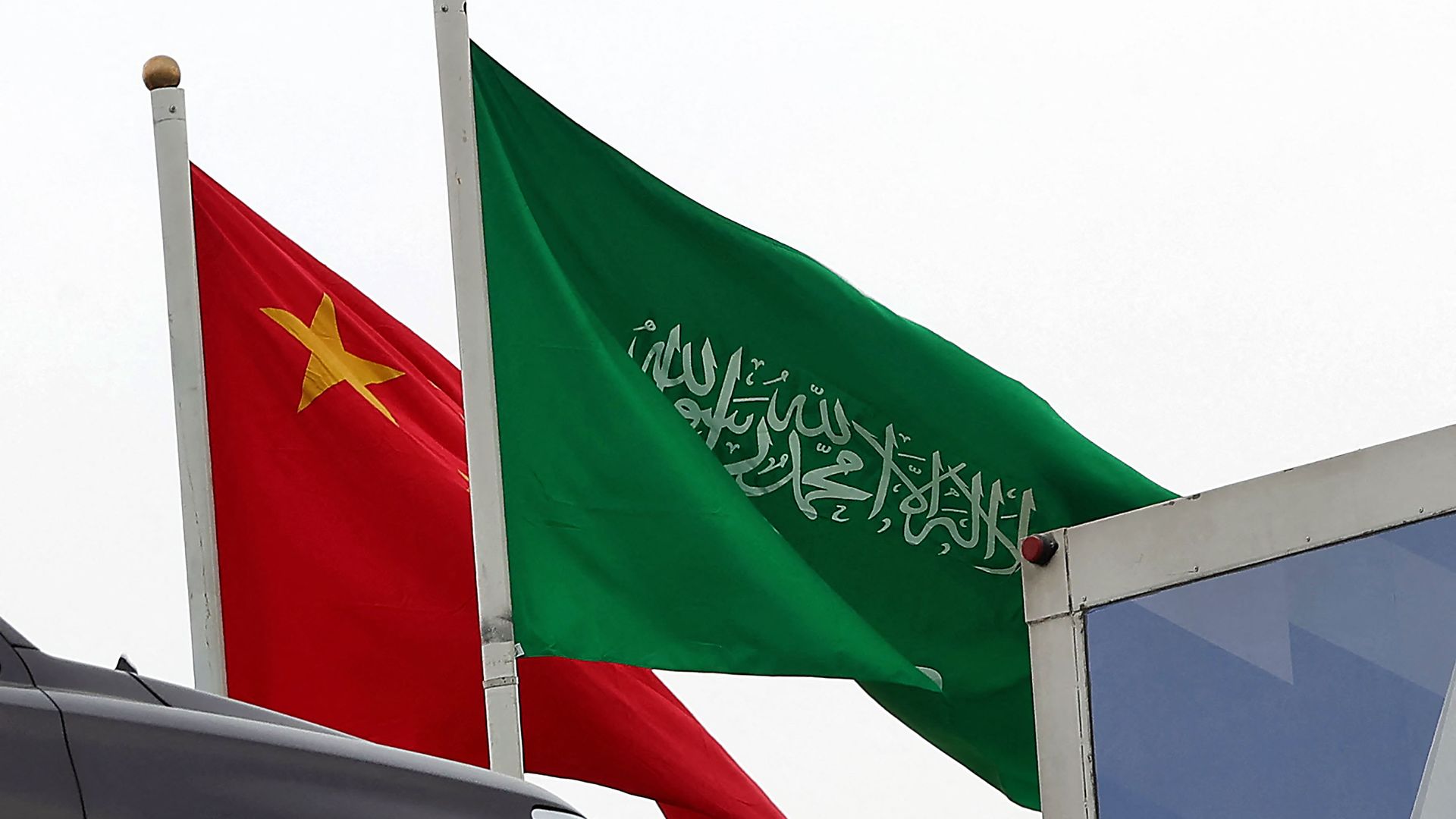
The Chinese and the Saudi flags on a street in Riyadh on Dec. 7 ahead of the Chinese president's visit to the Saudi capital. Photo: Fayez Nureldine/AFP via Getty Images
Chinese President Xi Jinping arrived in Saudi Arabia on Wednesday for a four-day visit that will include three summits with several Arab leaders.
Why it matters: The visit comes about five months after President Biden’s visit to Saudi Arabia, which included a summit with nine Arab leaders that was aimed at asserting U.S. leadership in the Middle East as part of the global competition with China.
- It also comes amid heightened tensions between Saudi Arabia and the Biden administration primarily over oil production in recent months.
Driving the news: Xi arrived in Riyadh Saudi Arabia this afternoon local time.
- His plane was escorted by several Saudi air force fighter jets.
- Xi was welcomed at the airport by the governor of Riyadh and the Saudi foreign minister. When Biden landed in Saudi Arabia, no Saudi ministers welcomed him at the airport.
State of play: During his visit, Xi is expected to meet King Salman and Crown Prince Mohammed bin Salman as part of a Chinese-Saudi bilateral summit.
- The sides are expected to sign a strategic partnership agreement, according to the Saudi press.
- Xi and King Salman will head a China-Gulf summit with the leaders of Oman, Qatar, the United Arab Emirates, Kuwait and Bahrain.
- The Chinese president will also attend a summit with the leaders of the Arab League countries.
- The focus of the summits will be mostly economy and development, per the Saudi press.
The big picture: Three weeks ago, the U.S. undersecretary of defense for policy Colin Kahl spoke at a conference in Bahrain and warned countries in the region that cooperating too closely with Beijing on security issues could damage their cooperation with Washington.
- A midlevel state department delegation is in the region this week for talks in Israel, Jordan and Bahrain about curbing Chinese influence in the region, U.S. officials said.
What they're saying: A State Department spokesperson said the Biden administration isn’t asking countries in the region to choose between the U.S. and China.
- “Countries are going to make their own sovereign decisions about their relationships and alliances," the spokesperson said. "The U.S. remains deeply committed to security in the Middle East, and our comparative advantage in building coalitions, partnerships, and integrating defensive structures is unmatched."
