See how much the price of popular Halloween candy went up this year

Add Axios as your preferred source to
see more of our stories on Google.
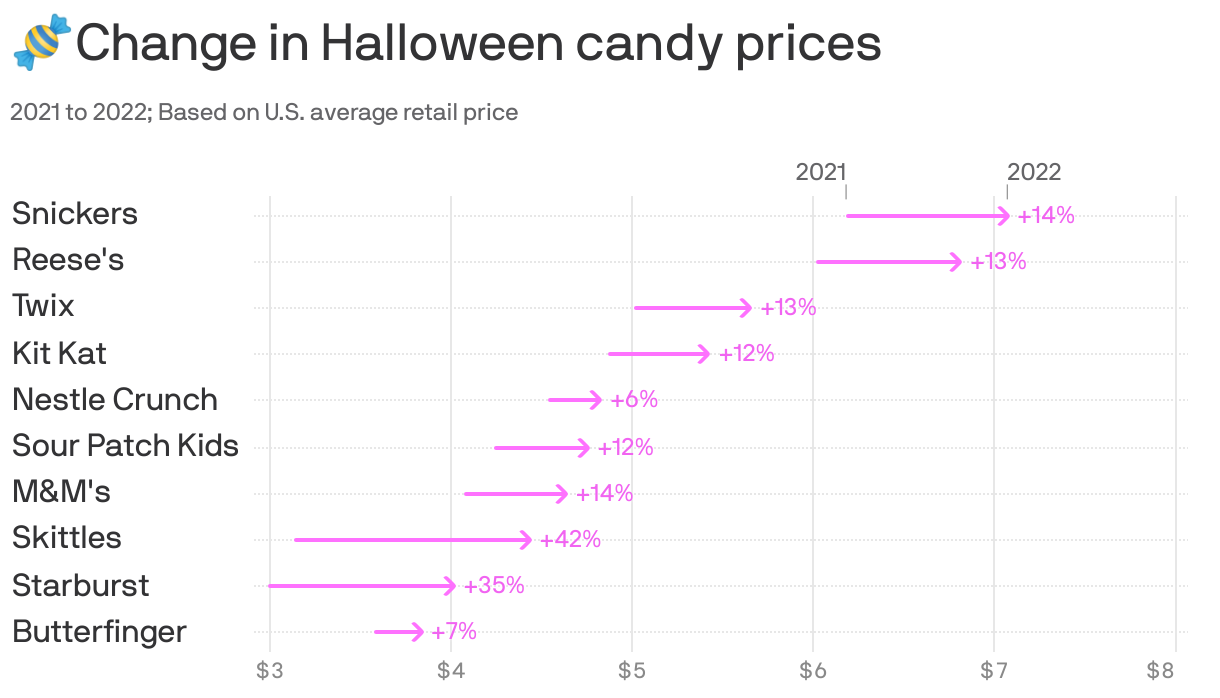
Halloween candy costs more this year — but most of us will likely pay up rather than go without our treats.
Why it matters: Soaring inflation and supply chain wrinkles have come for even the sweetest parts of life.
The big picture: Spending on Halloween surged over the past decade, as consumers simply got way more into the holiday — buying $300+ giant skeletons and other spooky stuff to deck out their homes, plus the typical loads of candy that you swear you're going to save for trick-or-treaters.
- Halloween is the biggest season for candy sales — more than Easter or Christmas. "It's our Superbowl," an industry executive told CNBC a few years ago.
State of play: Planned household spending for Halloween fell this year to $100.45 billion, compared to $102.74 billion in 2021, according to the National Retail Foundation's Halloween Spending Survey. In 2019, the number was just $86.27 billion.
Prices for most treats surged this season fairly in line with inflation for overall food, but Skittles and Starburst prices jumped way more — up 42% and 35% from last year, respectively — according to analysis from Datasembly.
- To get their numbers, Datasembly scraped price information across the web and looked at the price of candy sold by retailers, who operate both online and in-store.
The delicious intrigue: Skittles and Starburst are cheaper than others on the list, including Snickers and Peanut Butter Cups.
- Relatively small price increases, on a dollar basis, look huge when measuring in percentage points.
- Meanwhile, Starburst's supply chain is vulnerable to the vagaries of hurricane season, according to a blog post from IBM. It's possible there are weather impacts here, too.
- Axios has reached out to Mars Wrigley, which makes both candies, for comment.
The bottom line: Halloween candy is delicious and relatively inexpensive, despite inflation. Happy Halloween!
