By the numbers: Ranked-choice voting

Add Axios as your preferred source to
see more of our stories on Google.
Some voting experts are concerned the disastrous mayoral election in New York City will cause Americans to blame ranked-choice voting — rather than problems with the city's election board.
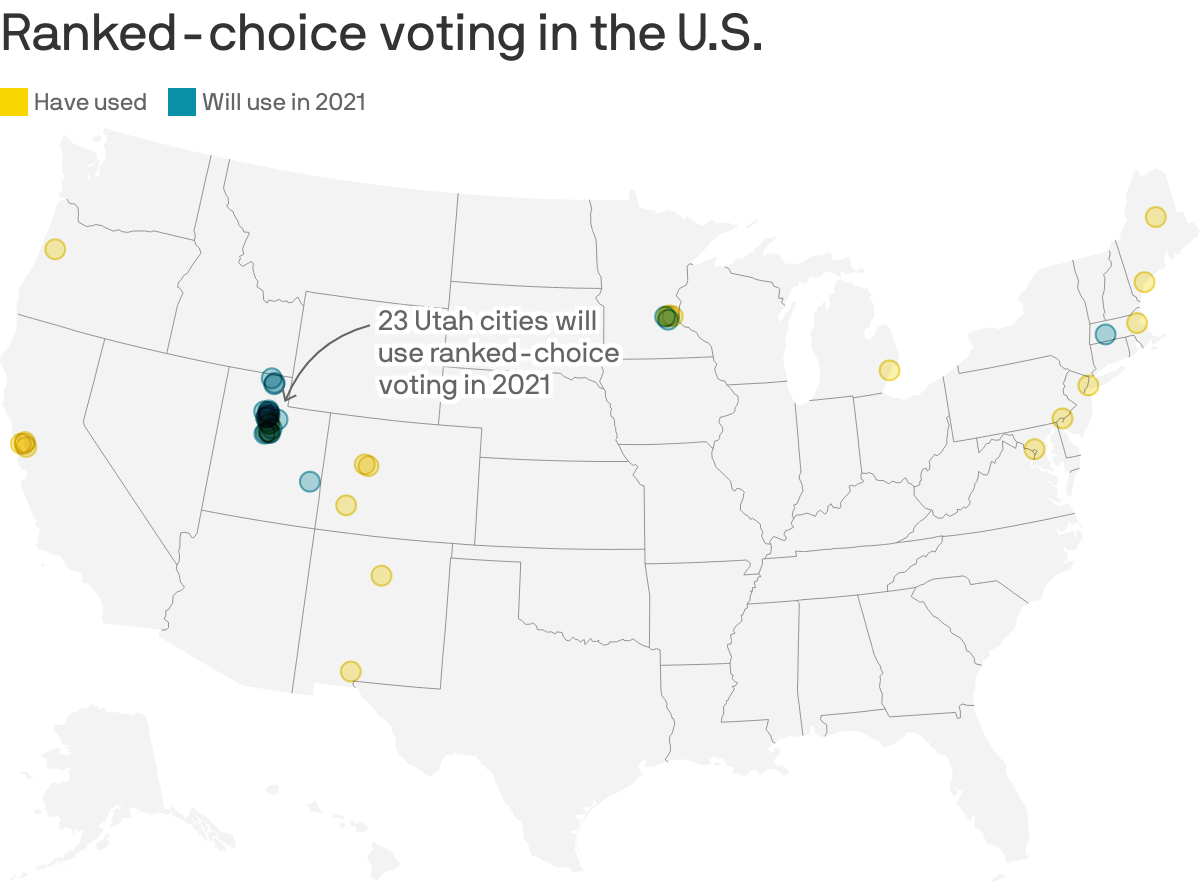
Between the lines: There's slowly growing support for ranked-choice voting, which allows voters to choose not only their top candidate but their second choice and third choices, and so on. Localities across the U.S. have had successful ranked-choice elections, and others are eyeing it for upcoming races.
- 22 jurisdictions used ranked-choice voting in their most recent elections, as of June, according to the advocacy group Fair Vote.
- 53 plan to use it in at least one of their next two elections.
What they're saying: When it comes to the mistakes made in New York, which caused officials to mistakenly count 135,000 test ballots, "I am worried that it will hurt ranked-choice voting nationwide — although I hope it doesn't and it shouldn't," Edward Foley, an election expert at Ohio State University, told Axios.
- "Already the beef against ranked-choice voting is that it's too complicated ... but this will just add to the concerns," said Rick Hasen, a recognized election expert at the University of California, Irvine.
- "I think it reflects the general incompetence of New York City's board of elections, rather than having anything to do with ranked-choice voting."
