Axios Hill Leaders

May 29, 2026

Happy Thursday! Tonight's edition is 761 words, 3 minutes.
- 😬 Dems get "chippy"
- 👑 The new kings of campaign cash
1 big thing: 😬 Dems get "chippy"
Today's Michigan Democratic Senate debate showed why party insiders are so nervous about holding retiring Sen. Gary Peters' seat.
🤺 Why it matters: Democrats agree Michigan is essential for retaking the Senate, but they've got a trio of well-funded candidates tearing each other apart ahead of the Aug. 4 primary.
- After Ken Paxton's runoff win this week over Sen. John Cornyn (R-Texas), Senate Majority Leader John Thune's Republicans are recalibrating spending and strategy nationally around protecting seats in states President Trump won comfortably.
- That includes Texas, which Trump carried by roughly 1.6 million votes.
😬 But this afternoon's debate on Mackinac Island is a reminder that Senate Minority Leader Chuck Schumer's Democrats have their internal differences to resolve in a state Trump carried by 80,000.
- "It is messy. Messier than I would have liked," Sen. Elissa Slotkin (D-Mich.) told AP about the primary.
- "Unfortunately, people are getting a little chippy in the race," the retiring Peters (D) told AP.
🤖 Zoom in: AI and AIPAC produced the most pointed exchanges in today's debate.
- "I'm the only candidate who didn't ask AIPAC for their support," said former public health official Abdul El-Sayed.
- "I'm the only candidate on this stage who big AI super PACs are not going to be spending money on behalf of."
- He called to "regulate AI and AI corporations as public utilities."
🤑 State Sen. Mallory McMorrow and Rep. Haley Stevens focused more on electability and the GOP's likely nominee, former Rep. Mike Rogers.
- "There is a path for Democrats to take back control of the U.S. Senate, but it is not without Michigan," McMorrow said. She called for "a token tax on commercial use of AI to fund apprenticeship programs."
- "It's not enough," El-Sayed responded, arguing that Democrats need to think bigger about the threat AI poses to workers, consumers and government itself.
- Stevens largely stayed out of the AI fray, framing the issue instead in terms of industrial competition and economic growth.
📢 The intrigue: The clash over AIPAC and campaign money became even more personal.
- El-Sayed accused outside pro-Israel groups of shaping the race itself. "It absolutely would not shake my perception — it's AIPAC money," he said.
- He later escalated the attack after moderators asked Stevens directly what campaign money "buys."
- El-Sayed interjected: "Just not answering the question."
🥊 McMorrow answered more of El-Sayed's contentions than Stevens did.
- "I have not taken a dime of corporate PAC donations. I have not taken a dime of AIPAC donations," she said.
☢️ Between the lines: The three agreed on nuking the filibuster, though Stevens raised eyebrows by incorrectly saying that removing it would have allowed Democrats to block the "one big, beautiful bill" that became law.
— Hans Nichols
2. 👑 The new kings of campaign cash
AI companies, the cryptocurrency industry and pro-Israel groups are spending like never before to sink their least favorite members of Congress and congressional candidates.
☠️ Why it matters: The volume cannot be ignored. It's the kind of spending that can kill careers and stop political movements in their tracks.
💰 The big picture: Eight of the 12 top outside spenders in House primaries this cycle are PACs affiliated with crypto, AI or pro-Israel groups, an Axios analysis of FEC data found.
- Pro-Israel groups spent nearly $8 million to oust GOP Rep. Thomas Massie in Kentucky's 4th District this month, helping to fuel the most expensive House primary in American history.
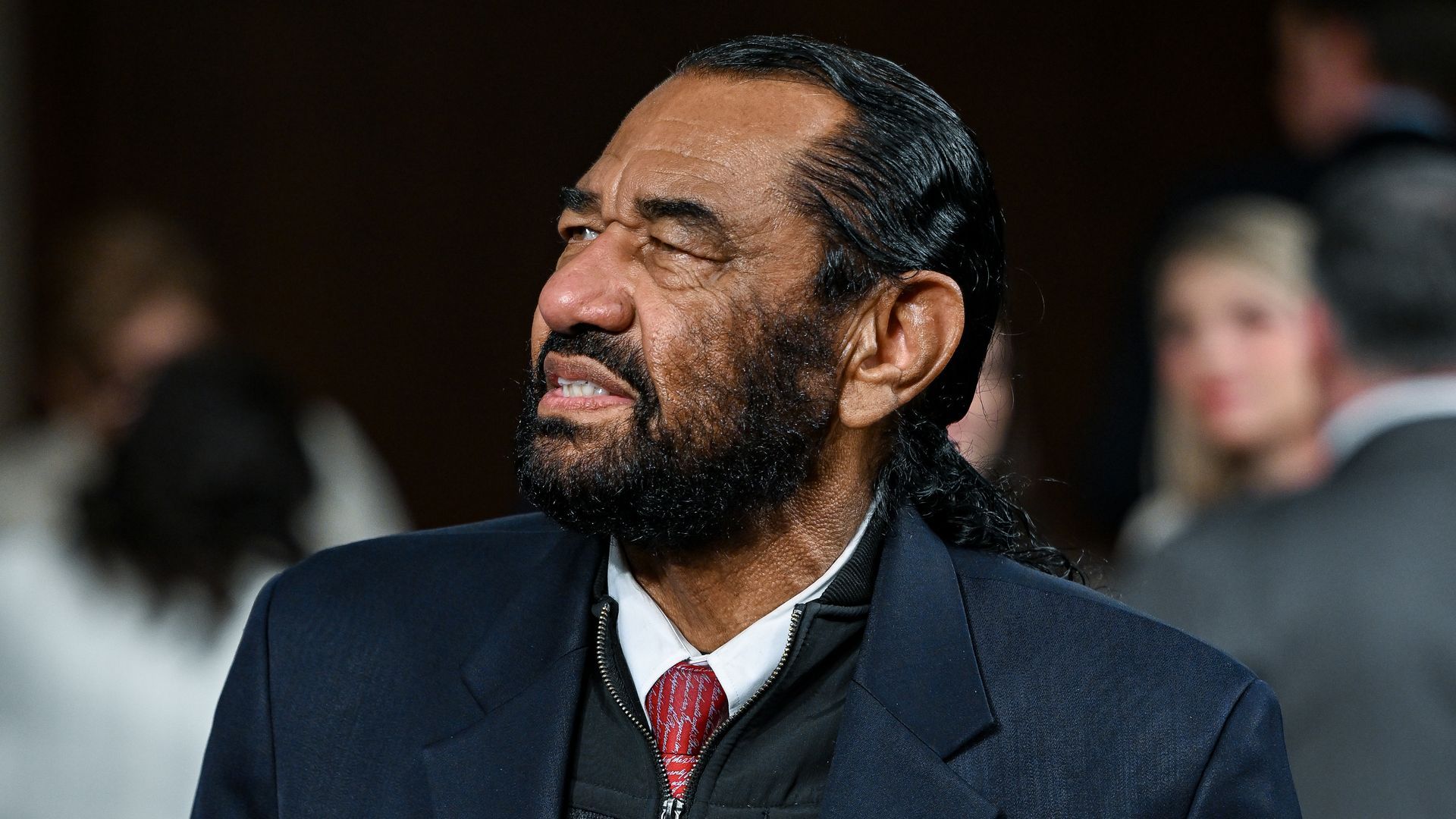
- Crypto-aligned Protect Progress was by far the largest spender in Texas' 18th District, pouring nearly $5 million into ousting longtime Rep. Al Green (D-Texas) in favor of freshman Rep. Christian Menefee (D-Texas).
🎊 Zoom out: The only entities that can really compete with these levels of spending are the two parties' main super PACs, the Democrats' House Majority PAC and the Republicans' Congressional Leadership Fund.
- These groups rarely spend large sums in primaries, however, focusing their energy on supporting battleground-district candidates in the general election.
- That leaves House primaries wide open for outside groups to flood the zone with as much spending as they deem necessary to get their preferred candidates over the finish line.
😬 The bottom line: Rep. Marc Veasey (D-Texas) told us in a phone interview today that "people want to campaign on" these PACs spending against them, "but I don't think people really give a sh*t."
- Veasey said he wants to eliminate big money in politics, but "people have to figure out how to work in that world ... and be realistic."
— Andrew Solender
This newsletter was edited by Justin Green and copy edited by Kathie Bozanich.
Sign up for Axios Hill Leaders