Axios AM

May 27, 2026

1 big thing: Trump's Texas takedown
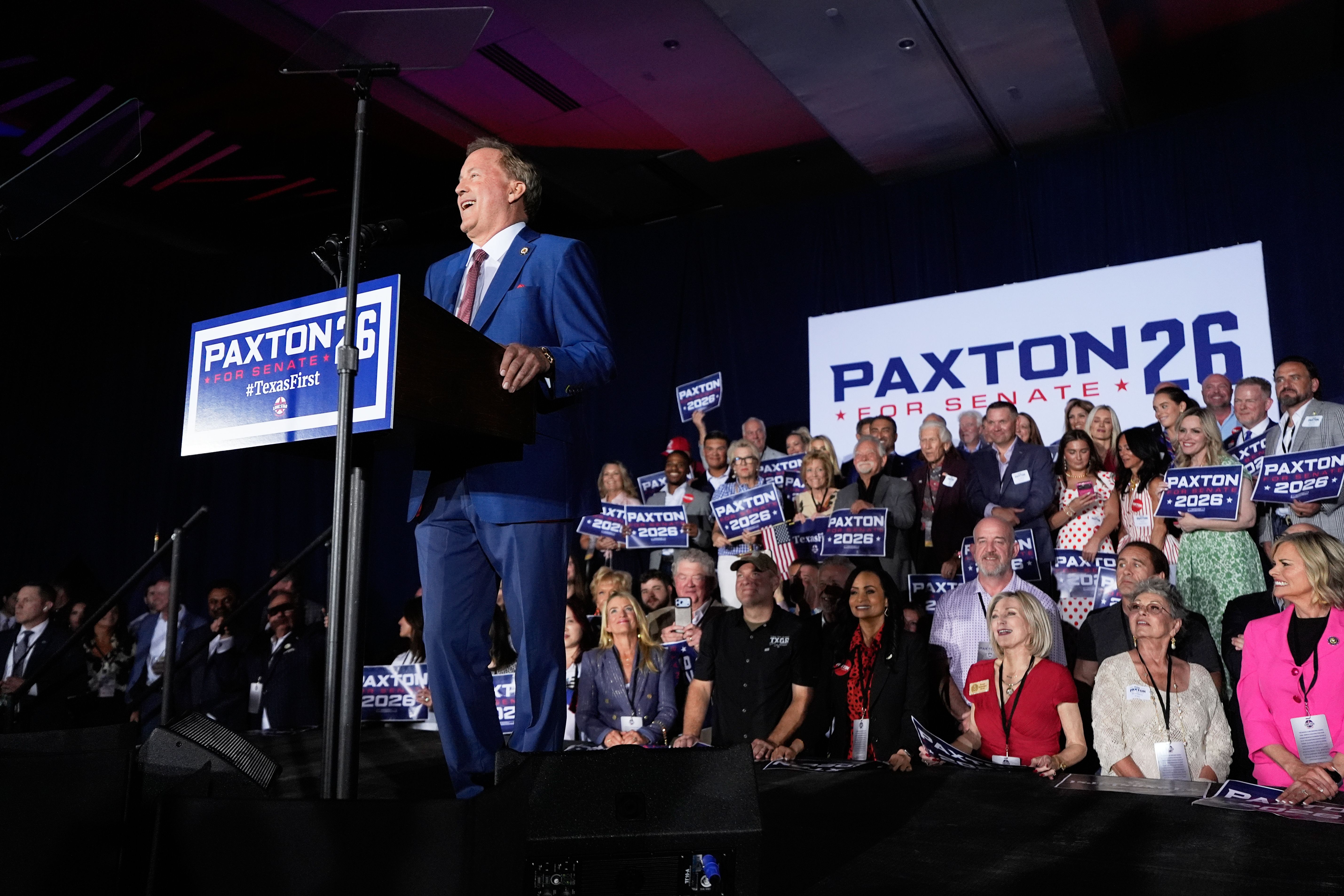
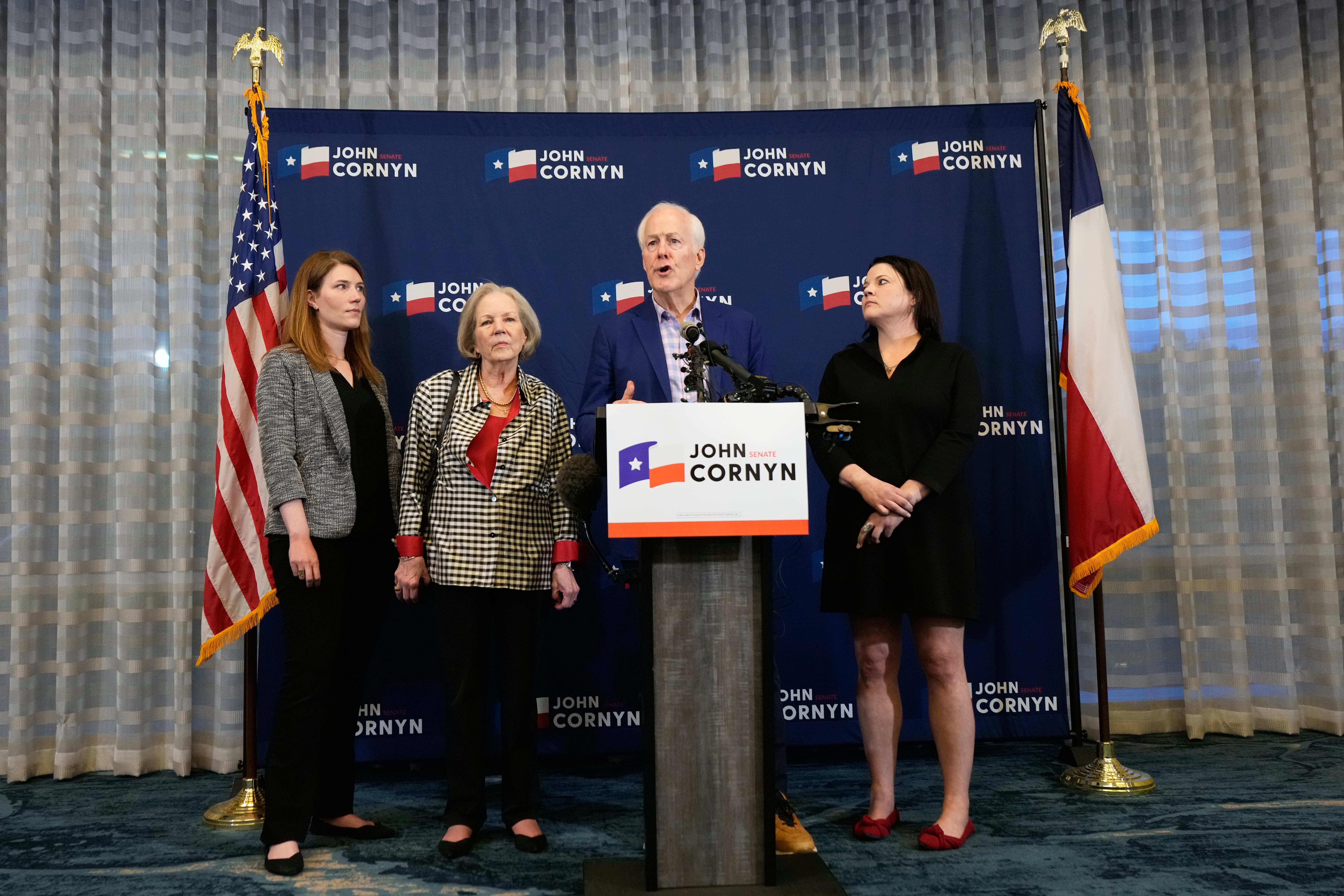
Texas Attorney General Ken Paxton's 28-point primary runoff rout of longtime U.S. Sen. John Cornyn (R-Texas) — the widest primary defeat for a sitting senator in nearly 50 years — further cements President Trump's hold over the GOP — but may complicate the party's ability to protect its Senate majority in November, Axios' Alex Isenstadt writes.
- Paxton's margin, 64% to 36%, was far wider than polls had suggested.
Why it matters: Trump infuriated clubby senators by endorsing Paxton a week before yesterday's primary. Now he's taken down yet another Republican he viewed as insufficiently loyal.
- Trump got revenge on Indiana state lawmakers who resisted his redistricting push and Sen. Bill Cassidy (R-La.), who in 2021 voted to convict Trump on impeachment charges. Cornyn almost always votes with Trump, but was viewed as not aggressive enough in pushing his agenda.
Last night's takeaways:
1. The money problem: Republicans now feel the need to pour tens of millions of dollars more into the Texas Senate race than if it were Cornyn opposing upstart Democrat James Talarico.
2. GOP's YOLO problem (You Only Live Once): Trump already has a numbers problem in the Senate, where he faces rage over his $1 billion ballroom project and his $1.8 billion Anti-Weaponization Fund for compensating allies.
- After Trump helped end his four-term Senate career, Cornyn will feel freer to hold up controversial Trump priorities.
- That's what Cassidy has done since Trump helped oust him in a Republican primary earlier this month.
3. Trump still calls the shots: His popularity numbers are historically low and the primary turnout was light. But the power of Trump's endorsement was clear in counties across the state.
- Cornyn won just three of the state's 254 counties: Dallas, Travis (Austin) and Kenedy — which had just eight voters last night (six for Cornyn) and includes a big chunk of the famed King Ranch.
Share this story ... GOP primary by county.
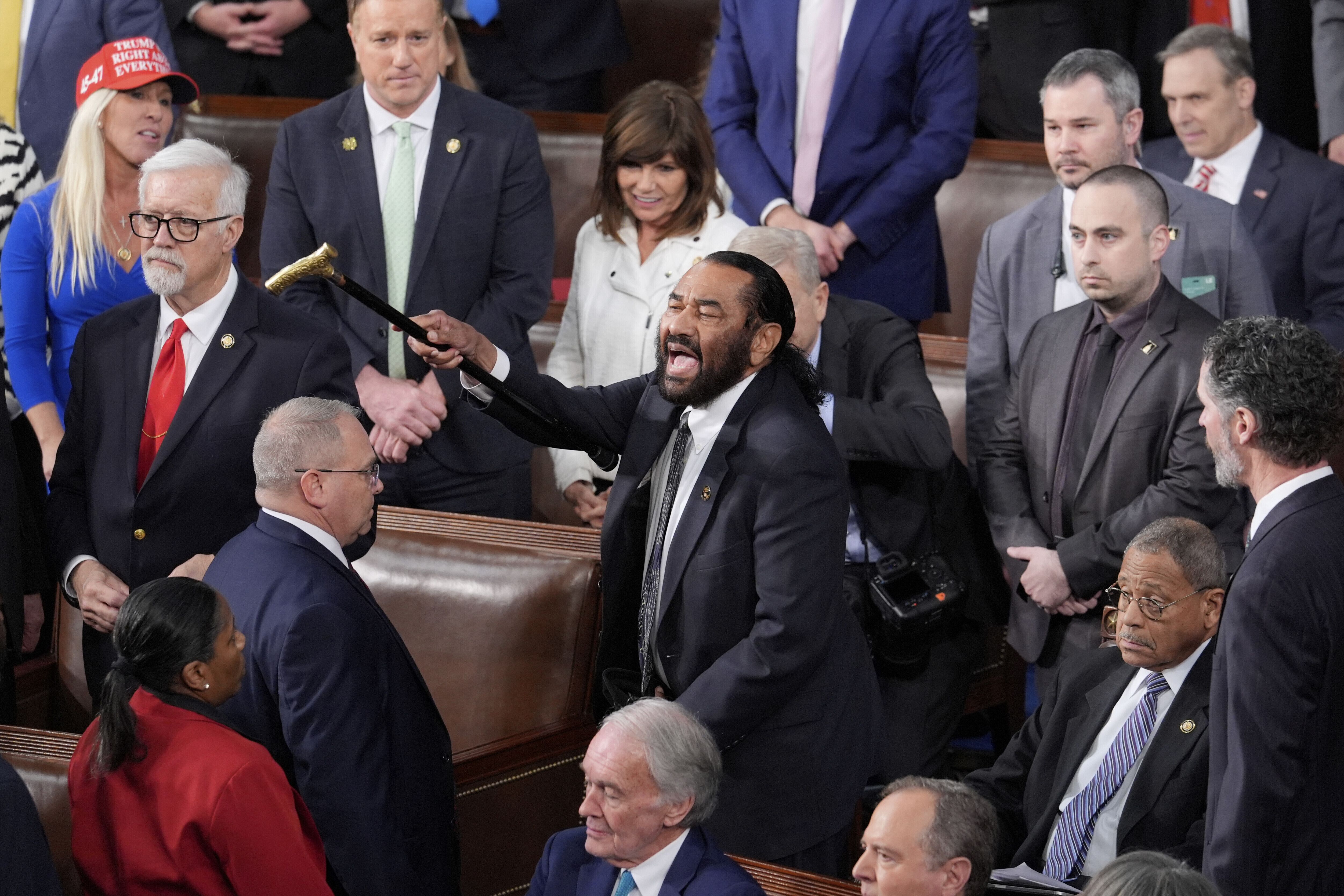
🪙 The crypto industry took out another Democratic critic: Freshman Rep. Christian Menefee, 38, crushed 21-year incumbent Rep. Al Green, 78, by 37 points in the Democratic runoff for Houston's redrawn 18th Congressional District.
- Fairshake's pro-crypto super PAC, Protect Progress, spent $6.5 million on the race. The committee targeted Green for his "F" crypto rating and his votes against industry-backed legislation on the House Financial Services Committee.
Green — an outspoken progressive known for heckling Trump during joint sessions of Congress — was displaced by Republican redistricting and drawn into the same district as Menefee, who joined Congress in February after a special election. Green called the crypto spending a "deal with the devil," Axios Houston's Jay R. Jordan reports.
2. 🤖 AI jobs civil war

Powerful AI CEOs are splitting over whether their technology will gut white-collar work or supercharge it, Axios' Madison Mills writes.
- Why it matters: Leading AI labs are trading in hype and doom, making it hard for companies, policymakers and the public to know what's coming.
🖼️ The big picture: A pair of public appearances this week highlighted differences between Anthropic and OpenAI.
- Anthropic co-founder Chris Olah, speaking at the Vatican event where Pope Leo's encyclical was unveiled, doubled down on CEO Dario Amodei's warnings about AI's effects on jobs. "There is a real possibility that AI will displace human labor at very large scale," Olah said.
OpenAI CEO Sam Altman is sounding rosier. He said it's unlikely to cause a jobs apocalypse and that he was "wrong" about earlier projections that it would wipe out entire categories of jobs.
- "I'm delighted to be wrong about this," Altman told Commonwealth Bank of Australia CEO Matt Comyn. "I thought there would have been more impact on entry-level white-collar jobs being eliminated by now than has actually happened."


A spate of recent tech layoffs has given fresh fodder to the "doomer" camp.
- Meta let go of nearly 8,000 employees after projecting at least $125 billion in AI capital expenditures this year.
- That came after Coinbase, Block, Pinterest, Shopify and others tied workforce restructurings to AI capabilities.
The other side: Software engineering job openings on Indeed are up over 18% year over year, while all openings are down 4.3%.
- LinkedIn's chief economist recently said AI has led to around 1.3 million new job postings.
3. 📈 Midwest stops shrinking


For the first time in years, more Americans are moving to the Midwest than leaving it.
- Why it matters: Decades of decline hollowed out the region as manufacturing jobs vanished and the service economy lured residents to the South, The Wall Street Journal reports.
In the year ending last June, the Midwest gained about 16,000 more people than it lost — a sharp reversal from losses that topped 175,000 in 2022.
- Metros with service economies — Indianapolis, Columbus and Des Moines — are leading the rebound, with similar gains in Cleveland, Akron, Dayton and Canton in Ohio and Racine in Wisconsin.
👓 Between the lines: Migration has slowed as the South's job growth cooled and its housing got more expensive, the Journal notes.
- The median price for an existing single-family home in the Cleveland area last year was $237,400 compared to $419,300 nationwide.
Keep reading (WSJ gift link).
4. 🏡 Charted: Luxury home boom


Demand and prices for luxury homes are rising faster than for middle-market houses, Axios' Emily Peck writes.
- Why it matters: This is the K-shaped economy in action — a thriving upper class and everyone else stagnating or falling. The rising stock market and AI boom are driving much of this.
🧮 By the numbers: The median U.S. luxury home sale price rose 4% to $1.4 million in the three months ending April 30, according to new Redfin data.
- That's double the increase for non-luxury homes, which gained just 1.4%, to $377,734.
5. 💥 Drone fever reaches Taiwan

Colin Demarest, who writes our weekly Future of Defense newsletter, reports from Taichung, Taiwan:
A Taiwanese company — eyeing conflict with China — is developing an attack drone that looks like Iran's deadly Shahed model.
- Why it matters: In the quest for cheap-but-deadly weapons, more countries are adopting this delta-wing design that's been proven in combat across the Middle East and Eastern Europe.
Each of the drones — named Papa Delta — costs tens of thousands of dollars.
- The company, Thunder Tiger Corp., told us: "We know that Taiwan needs something like long-distance attack drones that can attack cities in China from Taiwan. It has to travel a long distance. … Drones are used for asymmetrical warfare. [We've learned] a lot of lessons from Ukraine."
6. ⚡ Data centers test climate tech

7. ⛪ States punish worship protesters

8. 💪 1 for the road: Most powerful women in business

Axios AM