Exclusive: Fired general admitted to leaking classified Iran and Ukraine info, report says

Add Axios as your preferred source to
see more of our stories on Google.
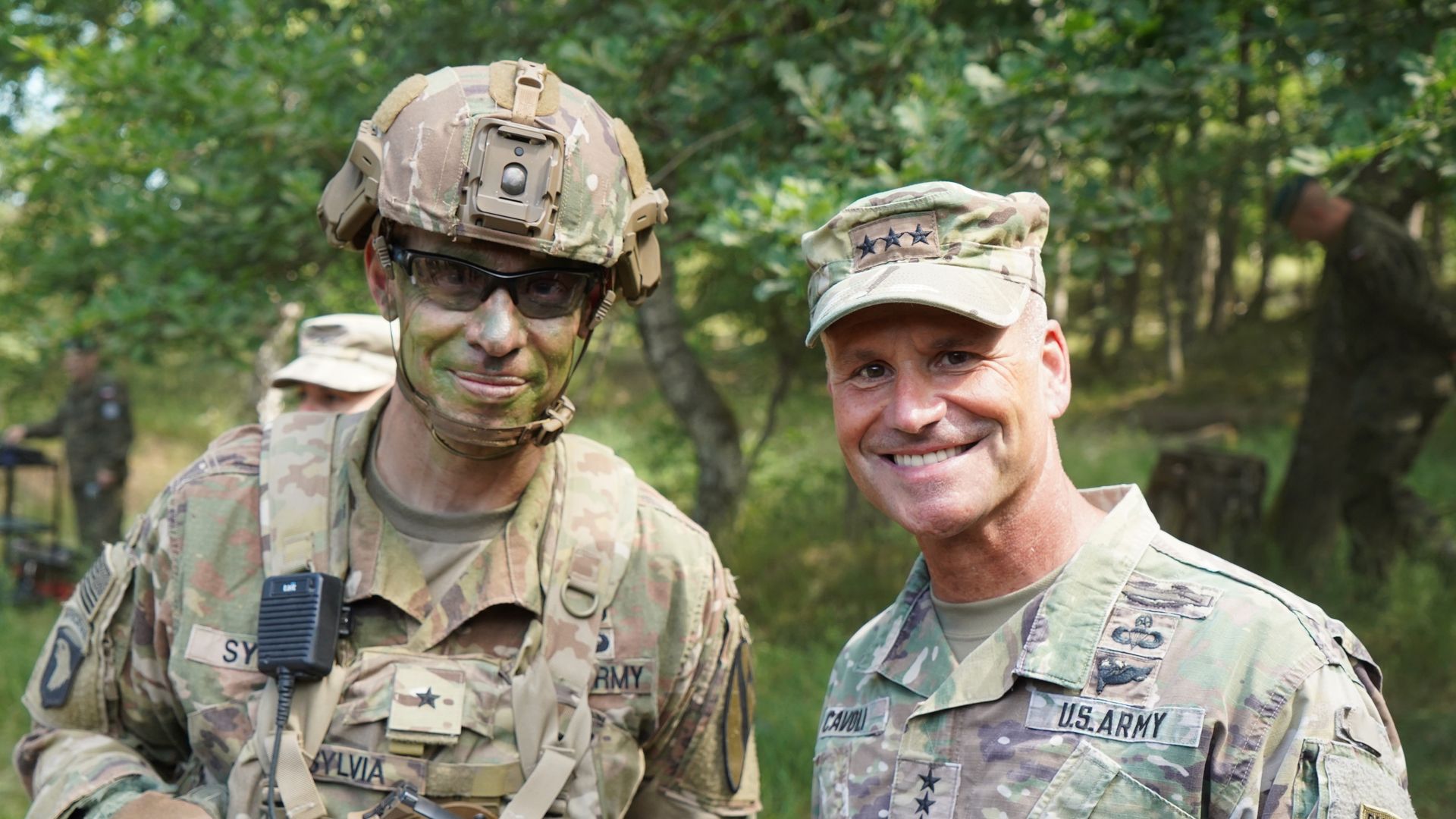
Gen. Brett Sylvia, shown at left in 2020 with Gen. Christopher Cavoli at an exercise in Europe, was fired this week. Photo: Janek Skarzynski/AFP via Getty Images
The Pentagon's top military planner admitted to leaking classified information about Ukraine and Iran to two reporters from separate outlets over a one-year period, according to an internal report of the investigation shared with Axios.
Why it matters: Army Lt. Gen. Brett Sylvia was fired this week by Defense Secretary Pete Hegseth for the alleged misconduct, which the career soldier acknowledged on video after he failed four polygraph tests, a U.S. official said.
- "He had trouble passing multiple polygraph interviews," the report said.
- The report accused the general of making "unauthorized disclosures to the media," and said he "was cooperative with answering questions about interactions with the media to resolve this, and provided his personal phone for a forensics examination."
Zoom in: The report and U.S. officials said that Sylvia's leaking began as early as June 2025 — before mainstream media outlets were removed from the Pentagon — and continued afterward via secure Signal app and once at a Silver Diner in Arlington, Va.
- "The meeting at the diner occurred because [redacted's] access to the Pentagon was revoked between meetings," the report says.
- "During the meeting at the diner, [Sylvia] relied on notes he took while reviewing a classified secret report to orally give redacted on U.S. assistance to Ukraine, the report says.
- The report says the reporter in question was writing a book and met twice with Sylvia. It also emphasized that the general "did not coordinate these meetings with [the Pentagon's Public Affairs Office], or seek to have the information reviewed before providing it to the reporter."
The intrigue: U.S. officials suspect that Sylvia intentionally deleted any trace of contact on Signal between him and one of the reporters, but pretended it was an accident.
- "Sometime between June or July, Sylvia received Signal messages from [redacted]. Sylvia is unable to recall exactly what was in that message," the report said. "But he believes it had something to do with Iran."
- "He stated that he did not respond to the message and instead deleted it. While deleting it, he believes he deleted the entire message thread with [redacted]," the report said. "This erased Signal messages and Signal phone calls that would have been recorded in Signal on his personal phone."
- For another story, the report said, Sylvia "admitted to being one of the 20 officials" cited in a story criticizing Pentagon leadership.
Another U.S. official told Axios that Acting Army Secretary Adam Telle and his office lobbied the Joint Staff to put out a statement supporting Sylvia "to minimize the damage about any future claims of him leaking classified information."
- After someone within the Defense Department revealed to the Joint Staff why Sylvia was fired, the Joint Staff retracted its statement.
Sylvia's dismissal marks the latest crackdown on leakers and the press from Hegseth's Pentagon.
- In July, the Defense Department announced a joint task force with the Justice Department that aimed to identify Pentagon leakers. It also called on the Pentagon's Office of General Counsel to prioritize prosecutions of those who make unauthorized disclosures to the media.
- Last year, in response to restrictive rules imposed by the Pentagon, several defense reporters and media outlets turned in their media passes.
What they're saying: Sylvia did not immediately respond to a phone call, voicemail and text message left at the phone number listed for him in public records.
