Waste is becoming America's next reliable homegrown energy source
A message from: WM
Landfill gas is finding new life as renewable natural gas (RNG), a lower-emission fuel that can be used to power homes, businesses and vehicles — and it's already being produced in significant volumes across the country.
Why it's important: As organic waste breaks down in U.S. landfills, it produces landfill gas containing methane. While landfill gas is a byproduct of this process it can also be a usable energy source.
- Today, RNG facilities across the U.S. are utilizing landfill gas to provide a lower-emission energy source and help enable circular energy systems.
The landscape: WM, which operates the largest network of landfills in North America, is now also one of the nation's largest producers of RNG from landfill gas.
- WM owns or hosts more than 20 RNG facilities that are currently generating pipeline-quality natural gas to serve communities across the country.
- An example: The company's largest RNG facility, Fairless RNG Facility outside Philadelphia, opened in 2025. It's expected to generate 3 million MMBtu of RNG per year — enough to serve the equivalent of almost 63,000 households in Pennsylvania. And that's just one example of the projects WM plans to bring online now through 2026.
How it works: WM differentiates itself in the RNG space by operating in almost every step of the RNG value chain at WM-owned and operated RNG facilities, from feedstock to production to fueling stations, creating a more stable, end-to-end energy system.
- Step one: WM's fleet collects waste and brings it to a landfill.
- Step two: Decomposing waste creates landfill gas that is collected and then captured by the gas collection system at the landfill.
- Step three: The captured landfill gas is processed into RNG at a WM facility.
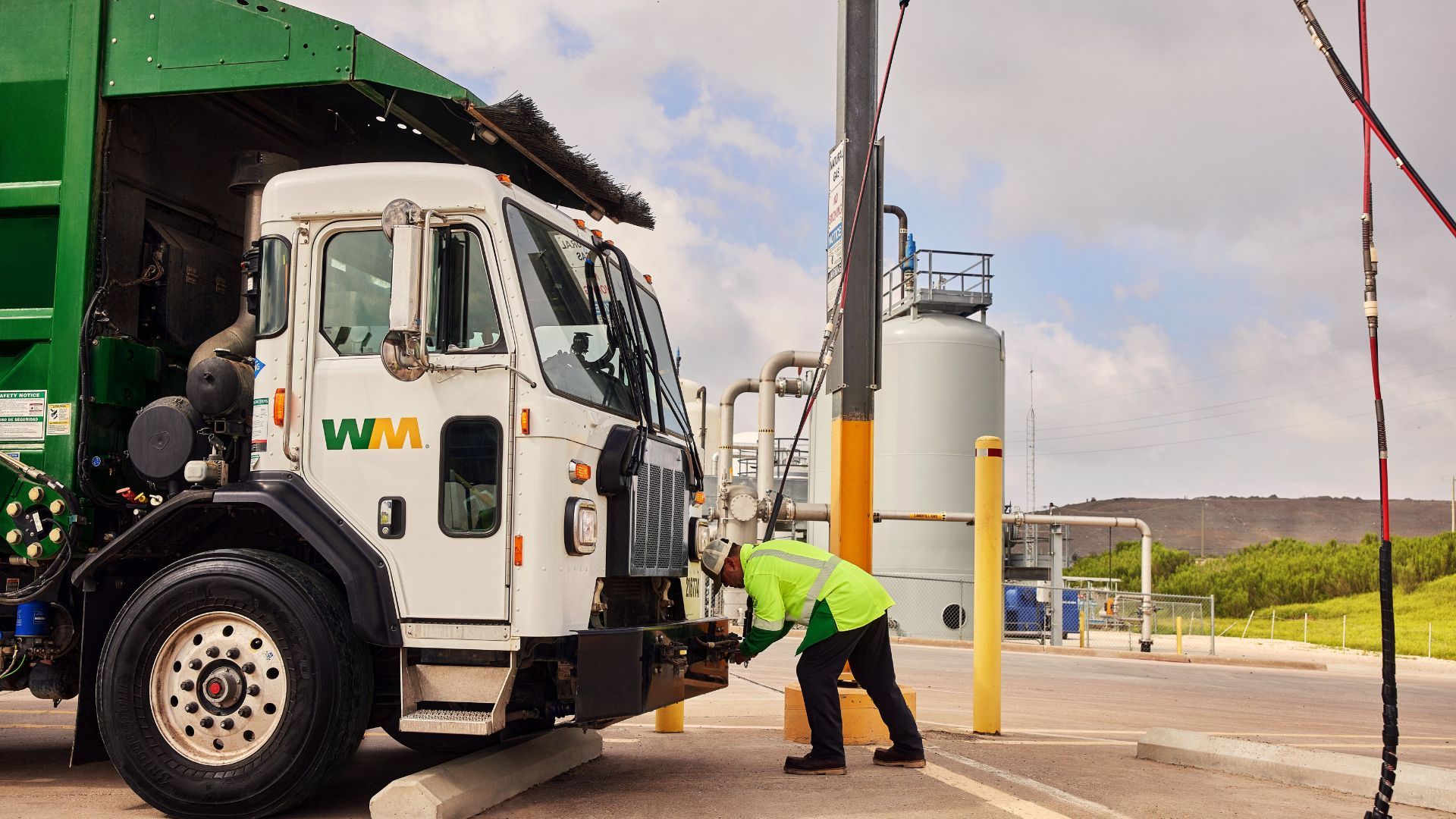
- Step four: RNG is injected into the pipeline for use like ordinary natural gas, such as by communities, WM customers and WM's trucks.
WM has the largest heavy-duty, natural gas-powered fleet in the U.S. industry, plus a coast-to-coast network of fueling stations and logistics expertise that allows WM to both produce RNG for communities, its customers and allocate it for use it across its own operations.
- In 2024, more than 70% of WM's collection fleet was made up of alternative fuel vehicles.
The impact: For RNG customers, WM's RNG approach means renewable energy that is available at scale and supported by a consistent source of feedstock, enabling smarter, more reliable and lower-emission energy decisions.
- For the environment, RNG offers a lower-emission alternative to fossil fuels, with the potential to reduce greenhouse gases and benefit communities.
Looking ahead: WM will continue executing on its $1.6 billion investment plan in renewable energy capabilities from 2022 to 2026, which aims to support 20 new RNG facilities and aid in the transition to modern energy systems.