U.S. military and industry look toward next generation of aircraft

A message from: GE Aerospace
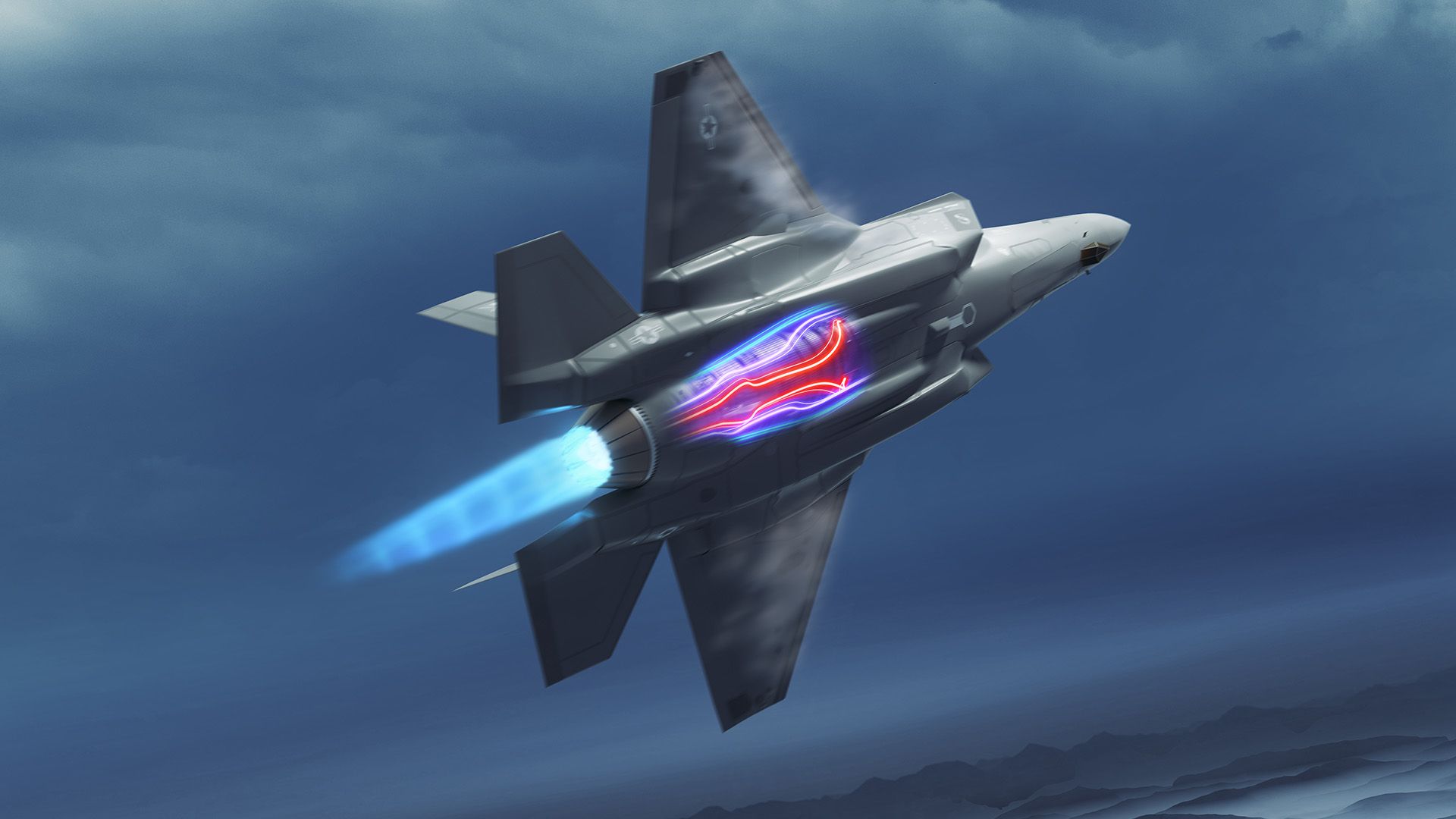
As the U.S. military looks toward sixth-generation aircraft, it must invest now to equip American fighters with cutting-edge propulsion technology.
- Maintaining U.S. air dominance by continuing to develop the most advanced jet engine technology is an ongoing endeavor that requires sustained investment, innovation, and a close partnership between the U.S. industrial base and government.
Why it matters: America's adversaries are rapidly closing the capability gap in military aviation technology. The U.S. Air Force's development of the Next Generation Adaptive Propulsion (NGAP) program represents a critical step in fielding the advanced engine technologies needed.
- Without sustained investment in the program, the U.S. risks losing its technological edge and its ability to deter potential adversaries in an increasingly complex geopolitical environment.
The challenge: Budget uncertainty has plagued military jet engine research in recent years at a time when increased attention has been paid to programs requiring smaller, less sophisticated engines.
- Budget clarity and consistency is necessary to build a bridge between innovation and production to equip U.S. combat aircraft with the necessary technologies.
Worth a mention: GE Aerospace has a proven track record of on-time delivery of advanced capabilities and stands ready to meet the challenge. It has invested heavily in:
- Adaptive engines: GE Aerospace is moving forward with the XA100 adaptive engine and XA102 adaptive engine, which offer greater fuel efficiency, power and thermal management capabilities compared to previous generations.
- Ceramic matrix composites (CMCs): This technology was pioneered and proven in military applications and then industrialized by GE's commercial aviation business for its fuel efficiency benefits. Now, CMCs are being used in GE Aerospace's XA102 adaptive engines.
- Additive Manufacturing (a.k.a. 3D printing): GE Aerospace's state of the art production processes create aircraft components that are lighter and stronger, increasing fuel efficiency. Additive manufacturing can produce complex geometries that were impossible for traditional manufacturing methods.
How it's done: GE Aerospace prioritizes innovation across the spectrum of engine development, not only focusing on smaller engines.
- While there is a demonstrated need for smaller engines for programs such as the collaborative combat aircraft (CCA), it hasn't lost sight of the importance of investing in high-performance engines to field America's advanced future fighter jets.
Here's what else: GE Aerospace is committed to embracing advancements in digital design and modeling to accelerate the development process and optimize engine performance.
- This digital transformation allows GE Aerospace to further develop advanced military propulsion technology by moving faster to mitigate risk in the design phase and enable GE Aerospace to consistently deliver advanced capabilities on time.
The takeaway: Collaboration and communication between the U.S. industrial base and the government are crucial for transitioning innovative technologies into production, ensuring that the U.S. defense industrial base has the budget certainty and support it needs to invest in next-generation engine development.