The link between autonomous trucks and your grocery bill

A message from: Aurora
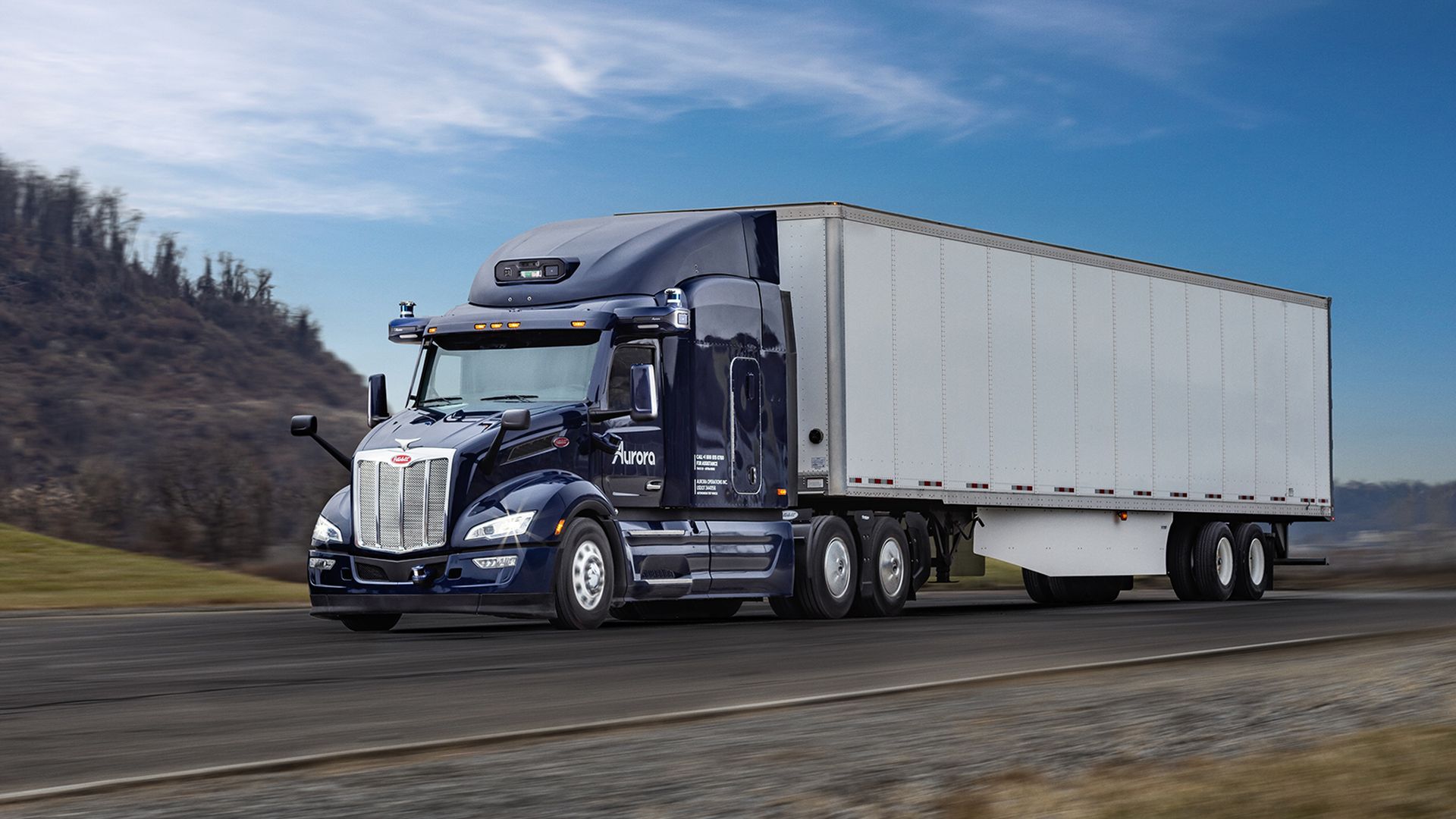
The price of your groceries may depend on who, or what, delivers them.
What you need to know: Autonomous trucks — trucks that operate without a driver — could lower shipping costs, helping reduce grocery prices while improving safety and supply chain efficiency.
- Enter Aurora, a leading company in autonomous trucking, aiming to modernize and strengthen the industry, not dismantle it.
🚚 Why it's important: The U.S. faces a growing need for drivers and will have to hire more than one million over the next decade to meet demand. If this gap is not closed, those costs may be passed on to consumers.
- In 2025, there was a shortage of between 60,000 and 80,000 drivers, according to the American Trucking Associations.
- That puts the shipping and delivery industry under pressure, with high overhead costs and backlogs that can lead to inventory shortages.
The positive news: Autonomous trucking is already making an impact and has room to scale. The industry currently supports:
- $3.3 billion in total economic output.
- 17,000 jobs.
- $1.3 billion in worker earnings.
📈 Aurora's autonomous trucking network alone is set to triple its reach this year, with 10 routes expanding across the Sun Belt — a stretch of land across the Southeast and Southwest.
The impact: The company's expansion positions it to operate on long routes autonomously, beyond hours of service limitations that apply to traditional drivers.
- The Aurora Driver, an intelligent self-driving system that can operate almost 24/7, cutting out the mandatory rest breaks that human drivers must take, decreasing transit times nearly in half and maximizing efficiency.
Autonomous trucks are advancing:
1️⃣ Road safety
Every year, over 5,000 people are killed in crashes with large trucks. And since 2009, the frequency of these crashes has risen, according to NHTSA.
- Large trucks make up 1 in 8 fatal crashes, even though they're only 5% of registered vehicles in the country.
In other words: Improving truck safety can save lives.
Autonomous trucks are designed to react quickly to unexpected changes, see more of the road than human drivers can and utilize built-in backup systems if something goes wrong.
Key numbers: Recent analysis by the Steer Group estimates that by 2035 autonomous trucking in the U.S. can help prevent:
- 490 fatalities
- 8,800 injuries
- 23,000 damage-only crashes
Worth a mention: These safety precautions could also result in about $9.4 billion in savings annually.
2️⃣ Job growth
While autonomous trucking reduces the need for human drivers, it creates more higher paying jobs across the workforce.
- Today, 82% of autonomous vehicle workers earn above the national median wage — and many of these jobs don't require a college degree, making them more accessible.
Plus: Autonomous trucking is focused on the most challenging long-haul routes that are difficult to staff, allowing human drivers to work more on shorter, local routes that are more stable and lend themselves to less human error.
3️⃣ Supply chain efficiency
America's trucking industry is responsible for up to 72.5% of all domestic freight shipped annually in the U.S.
- What this means: A driver shortage could significantly impact the supply chain and larger economy.
Autonomous trucking creates solutions, supporting up to 25% growth in the trucking industry by:
- Increasing truck utilization by over 100%, as they remove drivers' hours-of-service requirements.
- Boosting fuel efficiency up to 32%, resulting in 1.6 billion fewer gallons of fuel consumption a year.
- Saving $5.7 billion in fuel costs for shippers.
- Lowering insurance premiums by 40%.
4️⃣ Affordability
The effects of autonomous trucking will be felt at the individual affordability level as well, since shipping impacts most households across the country.
Key numbers: The growth of autonomous trucking could unlock $9 billion in additional annual spending through higher purchasing power and cheaper goods, countering inflation and the rising costs of goods.
- Lower shipping costs, increased trade and higher business productivity could add another $70 billion to the U.S. economy.
Looking ahead: Autonomous trucking continues to rev up across the country, as companies like Aurora lead the charge in hitting these major milestones by 2035.
With the support of policymakers and the public, the industry has the capability to expand to:
- 170,000 autonomous trucks across the country, up from a few dozen.
- 33 billion truck miles a year, making up 15% of the trucking market.
What Aurora is saying: As the industry grows, it's crucial to focus on education for both workers and the public on the realities of autonomous trucking.
- To accomplish this, Aurora is setting aside $1 million for the Aurora Works initiative. This program will foster educational partnerships and technical training programs to develop skills that are key to the driverless trucking industry workforce.
An expert take: "Through the Aurora Works program, we are ensuring that as our technology scales, so do the opportunities for the people who power this industry," said Chris Urmson, co-founder and CEO of Aurora.
The takeaway: As the demand for drivers grows and supply chains face increasing strain, autonomous trucking offers a safer, more efficient way forward while having a positive anti-inflationary impact on the economy.