Redesigning the DNA of modern manufacturing
A message from: Siemens
Siemens
Our smartphones, electric cars and smart home electronics feel effortless, but behind them sits a dizzying web of interconnected hardware, mechanics and silicon.
AI is increasingly helping engineers power the design and manufacturing of these systems, from chip design to machine engineering.
Okay, but: Industrial AI cannot operate like consumer AI.
- If a chatbot hallucinates a dinner recipe, it's a funny mistake.
- If an industrial AI hallucinates a tolerance level on a factory line, it can trigger catastrophic product recalls, production downtime or severe safety incidents.
Key numbers: There is a massive gap between ambition and impact. While 75% of executives rank AI as a top priority, only 25% are seeing a tangible ROI, according to BCG.
Most companies are trying to bolt generic AI tools onto fragmented, siloed systems. Without a deep industrial context, AI is effectively aiming blind.
Trust is the missing ingredient
The idea: Industrial AI requires a fundamentally different architecture than consumer chatbots. To move past pilot projects and capture real value, manufacturers need systems they can trust.
- According to a global study by the University of Melbourne and KPMG, only 46% of respondents trust AI systems. In a high-stakes factory environment, that trust gap paralyzes adoption.
To bridge this gap, leading manufacturers are shifting toward an Industrial AI operating system built on a comprehensive "data fabric" within their digital enterprise.
- What this means: Rather than just dumping data into a massive lake, a data fabric links, structures and contextualizes enterprise information from design, process and production.
- Knowing when, how and where data was produced is as valuable as the data itself. The fabric adds a semantic layer — embedding AI directly into everyday workflows.
How it works: The smart lifecycle
When AI is backed by a connected data fabric and a comprehensive Digital Twin, it transforms from a novelty into a context-aware engineering companion.
With operational and product data connected through a digital thread, industrial intelligence optimizes every stage of production:
- Intelligent design: Teams use generative design to evaluate thousands of optimal engineering possibilities and trade-offs earlier, preventing costly late-stage rework.
- Traceable validation: AI grounded in a Digital Twin streamlines simulation and testing by predicting failure modes and tracking decisions across design cycles, strengthening compliance and audit readiness.
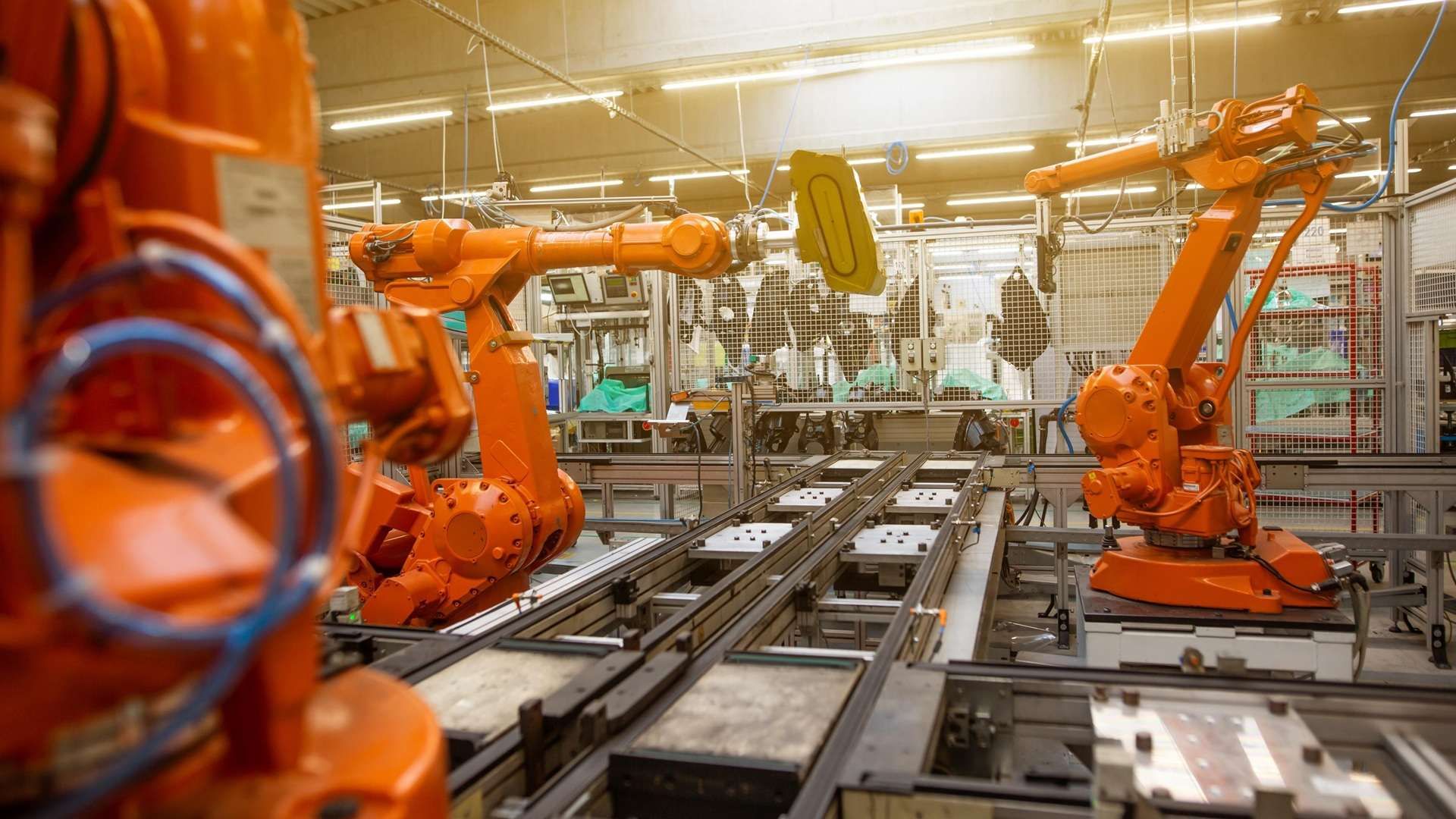
- Shop floor action: High-fidelity data is captured from physical machines and sensors in real time. Increasingly, AI agents assist in orchestrating workflows and recommend low-latency fixes, keeping humans firmly in control.
The impact: Measurable outcomes across the value chain
When built on real-word data and executed through a connected framework, Industrial AI delivers concrete, bottom-line results across the entire value chain.
How it's done: By linking AI to real-world operations, it drives faster time-to-market, higher resource throughput and reduced downtime, waste and costs.
Ultimately, this approach ensures more compliant and highly sustainable factory operations while empowering the workforce by scaling expert human knowledge rather than replacing it.
The takeaway
The future of manufacturing belongs to the software-defined factory. According to Accenture, 65% of factory managers expect AI to be the primary enabler of highly automated production by 2030.
- The real risk for manufacturers is allowing operational intelligence to remain fragmented. The companies that master this shift will turn complexity into a competitive advantage.
What's in store: Siemens is making this lifecycle intelligence possible. By anchoring AI inside a connected digital enterprise, Siemens helps ensure that data turns into real-time decisions, decisions turn into reliable action and the workforce is empowered by automated digital workflows.
Explore how Siemens is building the future of industrial AI.