New strategies to support an invisible industry — family caregiving

A message from: Otsuka
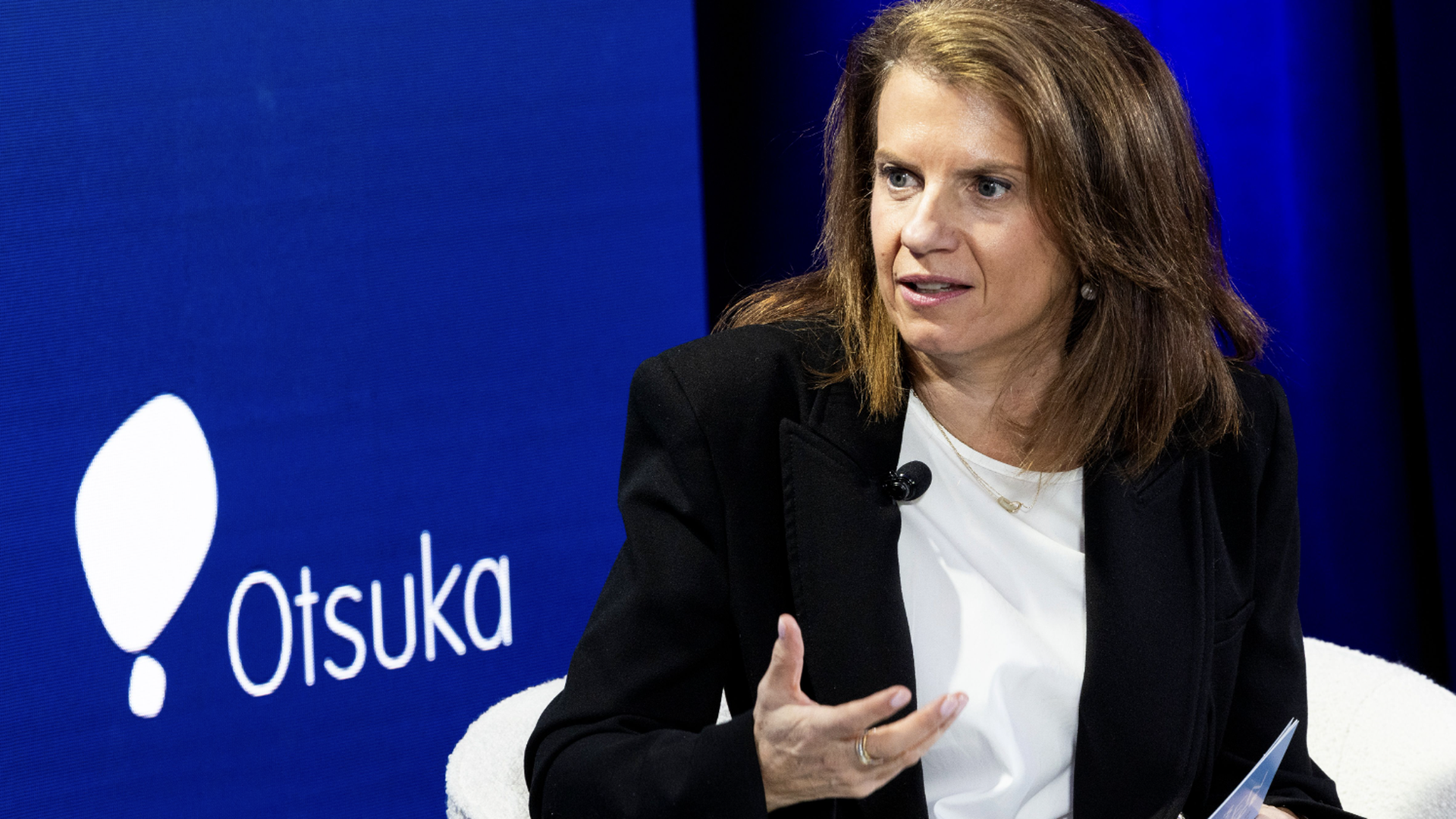
Caregivers in the United States often face emotional and financial stress, but many don't have access to critical support or resources.
Axios publisher Nicholas Johnston recently sat down with Debra Barrett, VP of corporate affairs at Otsuka, to discuss how the company is helping create solutions.
1. Key numbers: Otsuka recently sponsored research by the Columbia University Mailman School of Public Health and the findings are very compelling. The report shows that 44.58 million caregivers in the U.S. perform the equivalent of an estimated $873.5 billion worth of labor each year. How did you react when you first heard the findings?
Barrett: I'm excited to be here for today's event to focus on an important issue — caregivers — understanding their breadth, their impact and the challenges that they face.
Chances are that everybody in this room has either been a caregiver, knows a caregiver, or will become one, but we don't talk enough about it. That's what this report from Columbia that you're citing, which we were really excited to be involved in, was about.
- It was about putting some numbers and context around unpaid family caregivers in November, National Family Caregiver Month. It seems an appropriate time to talk about it. And to answer your question, I was sort of blown away.
$873 billion worth of labor. If family caregiving were a company or an entity, that would be the largest revenue-generating company in the world. Pretty incredible.
- About a quarter of the caregivers are individuals who are caring for loved ones who have Alzheimer's and other forms of dementia. But, the labor they represent is about 40%, so it's a disproportionate amount.
- The last thing I would say about this report is that 61% of caregivers are women and they are the "sandwich generation." We've talked about this term before, but caring for aging parents and young kids.
And so there are many issues there and much to talk about.
2. Why it's important: There may be some people out there wondering why a pharmaceutical company is so dedicated to raising awareness about caregiver burden. Can you tell us why Otsuka made this commitment?
Barrett: Otsuka is first and foremost a healthcare company. And if you're a company committed to healthcare, you can't not be thinking about the caregiver.
- The caregiver drives what's happening in our healthcare system and drives what's happening in the patient health journey.
- We also happen to be a company that works in the chronic disease area — serious mental illness, brain disease, kidney disease. You can imagine that the issues for caregivers with loved ones with chronic diseases are pretty acute.
The last thing that drew us to this is that we realized how much they sacrifice. Unpaid caregivers are sacrificing their jobs, careers, financial security, health and well-being.
- The Columbia report said that every year there are about $28 billion worth of caregiving-induced declines in health. So caregivers are suffering as a result of what it is that they're providing.
We've got to do something about this.
3. The strategy: With the rising aging population, new cases of Alzheimer's disease and other forms of dementia are projected to increase. As a result, unpaid family caregivers will continue to play a crucial role in navigating the complex system and balancing their many responsibilities. Knowing this, can you tell us about what Otsuka has been doing to support caregivers?
Barrett: When we started this, the first thing we did was listen to caregivers.
We did some focus groups and research to understand a little bit more about their experience — and there is no monolithic experience — to understand where the challenges were and where we could make a difference.
Things fell into three categories:
1️⃣ The first is making sure the caregivers' voices are heard and that they and their experiences are seen. And I think that's a big part of why we're here today.
2️⃣ I'm also really proud that Otsuka has done a lot to develop an online community of caregivers. We have a place on our own website where you can go for resources. We're also very active across most social media platforms.
3️⃣ And we are working on a video series where individuals are getting to tell their experiences.
- And I'm very excited about this, we are the lead sponsor of an upcoming film that's going to be released next spring that's executive produced by Bradley Cooper about caregiving. It is one of the feature films in WETA's wellbeing campaign.
4. Some solutions: It's good to hear as an employer Otsuka is supporting its own employees who may be in the middle of the caregiving journey. You also mention inspiring action. What does the industry need to be doing?
Barrett: I think it would be hard for us to say we're committed to caregiving and not look within our own walls.
- Otsuka created a caregiving benefit. I unexpectedly became a caregiver myself last year and there was a benefit that said here's support, here's resources, take time off — it makes a big difference. I think lots of individuals and employers can go there.
On the policymaking front, I think this issue is just too big of a deal, too important, too large, to not come at from multiple ways.
- There are lots of things that can be done at the state level. We've talked about this in terms of benefits, in terms of flexible work policies, in terms of provider reimbursement.
- And the federal level — caregiver tax credit, Medicare and Medicaid reimbursement, other programs like the GUIDE Model, which is looking for how to support caregivers.
We really hope this conversation brings together some of the experts and people who have creative ideas to figure out what we can do to address some of these issues.