New research: Open source AI drives economic growth and cost savings

A message from: Meta
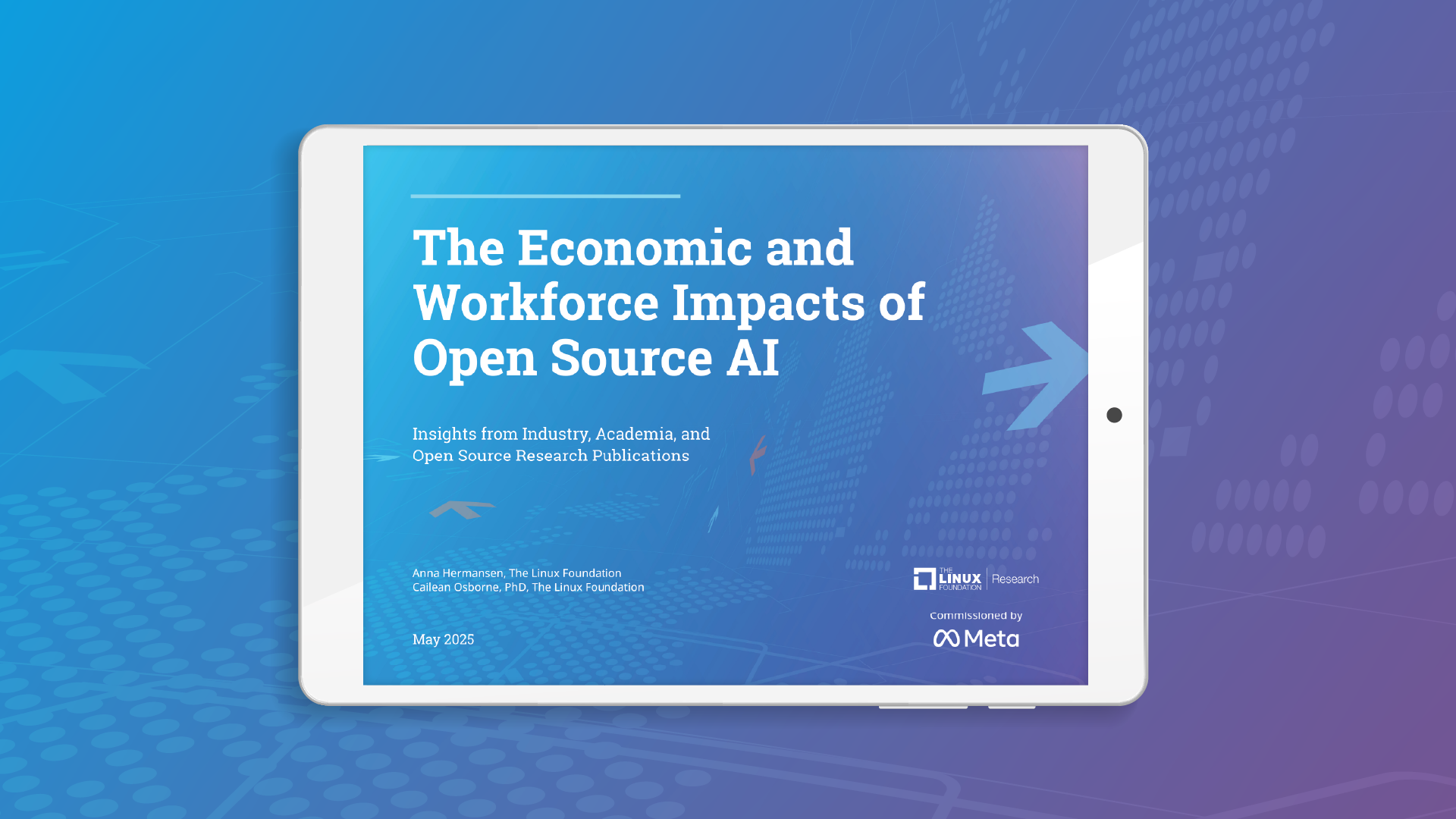
Open source AI is transforming the economy by boosting productivity, entrepreneurship, and economic growth with nearly 9 in 10 organizations that adopt AI utilizing some form of open source technology in their AI infrastructure.
New research developed by the Linux Foundation and commissioned by Meta, "The Economic and Workforce Impacts of Open Source AI," underscores the economic benefits associated with open source AI — including increased efficiency, faster innovation, cost savings, and revenue gains for both individuals and businesses.
Open source AI models like Meta's Llama, which has been downloaded 1.2 billion times, are becoming the industry standard for how to unlock AI's real benefits, serving not just as a bedrock for innovation, but also as a critical tool for small and medium sized businesses to stay competitive.
- For example, Solo Tech uses Llama to offer offline, multilingual AI support for underserved rural communities with limited internet access. This includes insights in the physical world for farmers, medical assistance for doctors and adaptive learning in schools.
According to the report's key findings, open source AI creates:
- Cost savings: Nearly half of organizations surveyed choose open source because of its cost savings. AI's 50%+ reduction in business unit costs, coupled with open source software's cost savings, suggests that open source AI holds significant potential for revenue gains.
- Boosts to small businesses: With 75% of small businesses using AI, smaller companies without deep pockets are adopting open source at a higher level because it provides access to cutting-edge AI technology at a lower cost than proprietary software.
- Faster innovation: Open source increases the speed of innovation, as greater community collaboration leads to faster development of high-quality models. As evidenced in the report, engagement in open, collaborative activities is seen as a better indicator of innovation than patents.
- Industry and market impacts: The economic value of open source AI is distinct across industries. It is projected to boost the construction industry by $90-150 billion and the agricultural sector by $40-70 billion.
Why it's important: Open source AI drives innovation, economic growth and competition; because of this, open source AI is good for developers and businesses, good for the U.S. and global economies, and good for tech companies.
- "The results from our research confirm that the net impact of open source AI on the economy and workforce is reassuringly positive. Not only are organizations cutting costs and accelerating innovation, they're also growing their teams to keep pace with the opportunities open models create. It's clear that this technology is fueling both productivity and job creation across industries," says Hilary Carter, senior vice president of research at the Linux Foundation.
The impacts of open source AI are proliferating — from supporting industry leaders to enabling small and medium size businesses to build custom AI applications at accessible costs.
- Linux Foundation research findings show that open source AI levels the playing field, allowing innovative smaller and medium sized companies with high growth environments to compete in the global economy.
When looking at its impact on the workforce, research shows that AI will boost productivity and act increasingly as a task complement rather than a job replacement mechanism. The skills needed to use AI will also command a wage premium.
- Even though most organizations are already using AI in some form, 95% of surveyed hiring managers over the past two years do not plan to reduce headcount due to AI adoption; and longer-term projections show AI skills may increase workers' wages by over 20%.
- As a result of AI adoption, research predicts a multiple-trillion-dollar boost, as high as $15.7 trillion by 2030, to the global economy due to productivity gains.
The takeaway: As adoption accelerates, open source AI is transforming industries and offering unique benefits to small businesses alike. Research like this supports Meta's belief in the promise of open source AI, and accordingly making its Llama models freely available and continuing to advocate for openness as the industry standard, which helps to ensure the economic benefits of AI are accessible to everyone.