Inside the pop-up model that's reviving downtown San Francisco

A message from: JPMorganChase
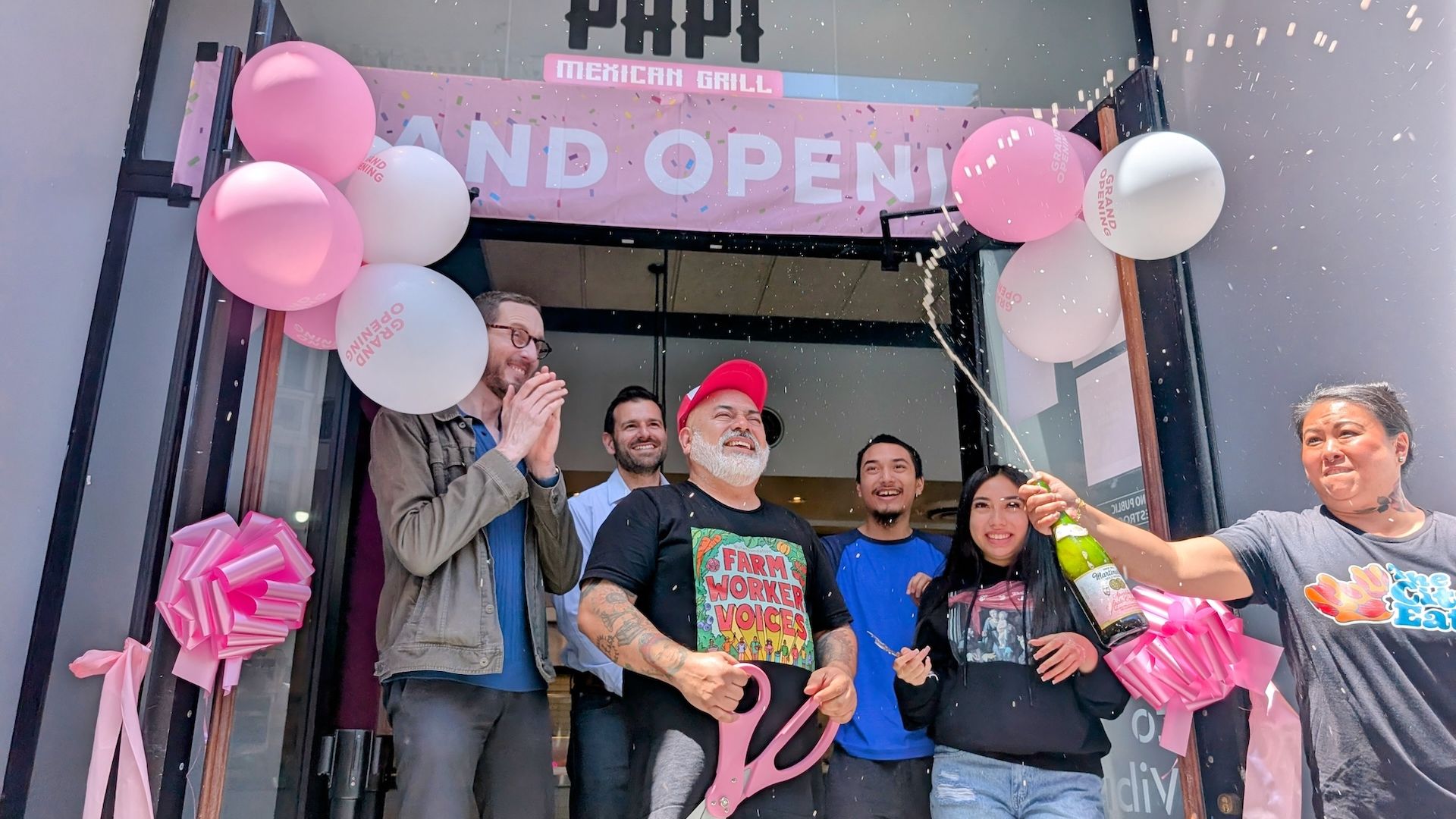
Less than a block from Union Square in downtown San Francisco, passersby can find:
👗 Nooworks, a woman-owned clothing company that collaborates with independent artists to produce fun, quirky textiles.
🍫 Dandelion Chocolate, a bean-to-bar chocolate maker that uses just two ingredients: cocoa and sugar.
🌮 Al Pastor Papi, a Mexican restaurant known for its tacos.
👚 Taylor Jay, a Black-owned women's clothing store featuring pieces designed and sewn in Oakland.
- These brands, homegrown in the Bay Area, are four of 33 pop-ups launched across Downtown San Francisco since 2023 as part of SF New Deal's Vacant to Vibrant program.
Why it's important: Downtown districts are vital to urban economies. They serve as cultural and economic hubs that bring together jobs, residences, businesses, public spaces and more.
- But like many districts across the U.S., Downtown San Francisco saw widespread business closures, empty storefronts and reduced foot traffic during the pandemic.
🏙️ SF New Deal launched the Vacant to Vibrant program to open a window into the future of what downtown can be, bringing the district back to life, with small businesses and local participation.
- Since 2020, SF New Deal has designed and operated innovative programs that keep small businesses and neighborhood vibrancy at the heart of San Francisco's culture and economy.
- The Vacant to Vibrant program connects activators — like small businesses, artists and community organizations — with property owners to turn vacant storefronts into pop-ups.
How it's done: Pop-up activators have received grant funding in variable amounts depending on the length of pop-up tenancy and the size of the storefront, as well as free rent, technical assistance in lease negotiations, permitting, compliance, marketing, and operations.
- SF New Deal provides participating property owners resources to cover tenant improvements and utility expenses valued at up to $5,000.
Vacant to Vibrant underscores the power of public-private partnerships.
- SF New Deal has partnered with the City of San Francisco, community-based organizations, local property owners, and corporate partners like JPMorganChase to bring the program to life.
- "This program works because it brings everyone to the table — local government, property owners, funders and small businesses," said Simon Bertrang, the executive director of SF New Deal.
The impact: In just two years, 33 pop-ups have opened in 23 downtown storefronts — and, among eligible storefronts, more than half have signed long-term leases.
- "Vacant to Vibrant isn't just about filling spaces today," Bertrang explained. "It's about creating long-term futures for local small business owners and helping downtown neighborhoods thrive for years to come."
- Those that stay beyond the initial pop-up term can participate in the Pop-up to Permanent track, which offers up to $50,000 in grant funding, lease negotiation support and more.
🗣️ The stories: Local small business owners shared what it has meant to have a storefront in downtown San Francisco.
- "Being in Union Square, the heart of San Francisco, is truly indescribable," said Miguel Escobedo, owner of Al Pastor Papi.
- Hilary Passman, owner of Devil's Teeth, said: "I always wanted to be downtown. Pre-pandemic, it was busy, vibrant and energetic. But back then, super-big landlords didn't want to talk to a tiny little bakery."
- "San Francisco is no stranger to big booms and busts," said Victor Gonzalez, owner of art consulting agency, GCS Agency. "So if we're in the midst of a bust, what's next? It's a boom. And I want to be positioned to be part of it."
Here's what else: SF New Deal's work isn't just making an impact in San Francisco. The program has become a blueprint for dozens of cities across the country, including New York and Los Angeles.
- "Vacant to Vibrant has shown that when you give small business owners the chance to shine, they bring our downtowns back to life," Bertrang said. "What started in San Francisco is now becoming a playbook for cities across the country that want to reimagine what's possible in their own main streets."
The takeaway: Small businesses are the cultural anchors of communities — and investing in their success helps drive the cultural and economic revitalization of cities across the U.S.
📍 See how cities across the U.S. are reimagining the future.