How South32 Hermosa could strengthen the U.S. critical mineral supply

A message from: South32
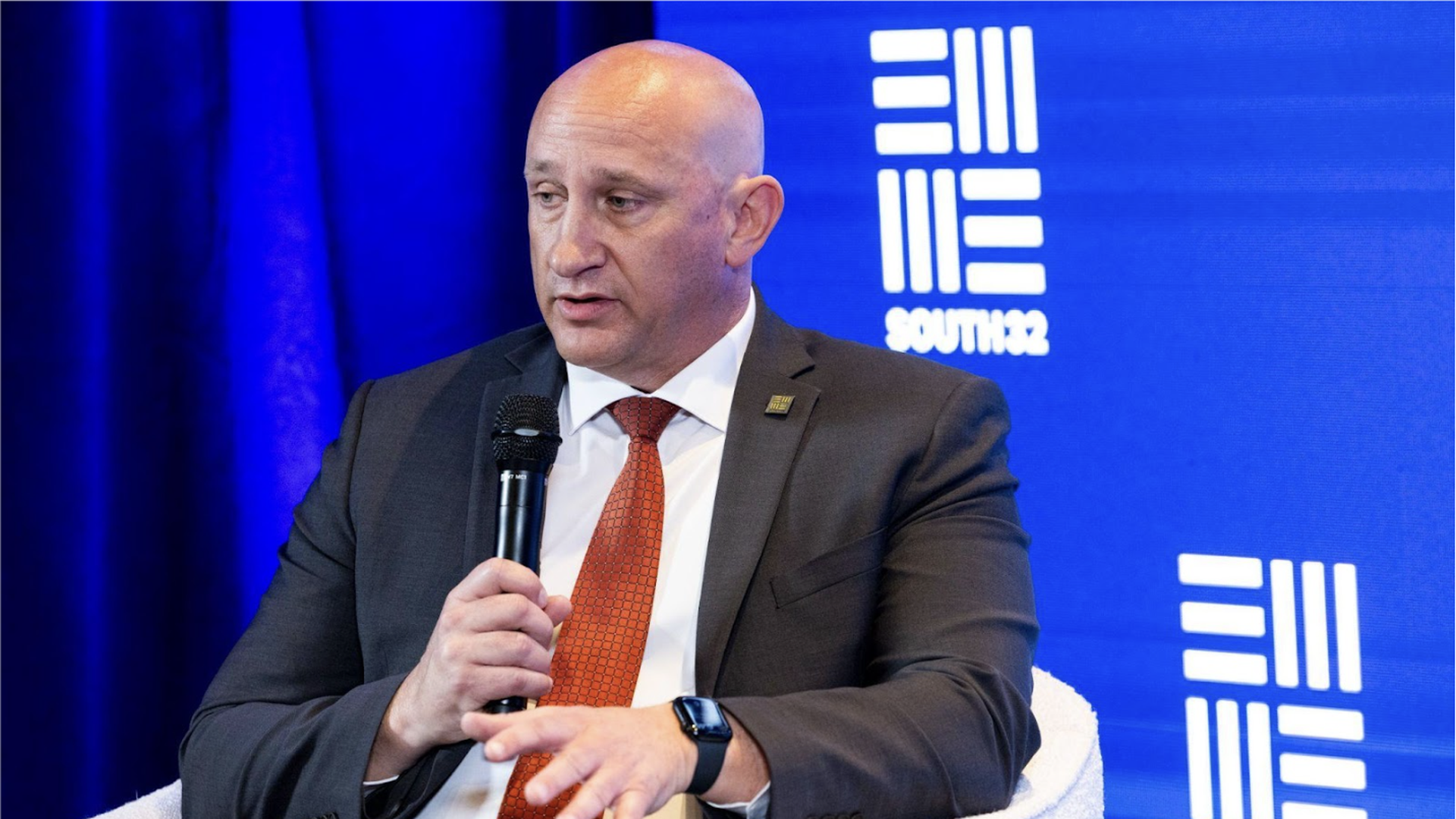
South32's Hermosa project is the country's only advanced mine development designed to produce two minerals essential for powering the nation's energy future.
- In a recent interview, Pat Risner, president of South32 Hermosa, details the company's plans to help the U.S. compete in the global critical mineral economy.
First things first: What is the Hermosa project, and how does it fit into the current administration's emphasis on minerals and domestic mining?
Risner: South32 is developing a critical minerals district in southern Arizona's Patagonia Mountains.
Our Hermosa project would produce manganese and zinc, which are on the DOI's critical minerals list.
- The project uses state-of-the-art technology that we believe will be safer, more efficient and less impactful on the environment.
In February 2024, our board announced a $2.16 billion investment to take the project into first production of zinc by 2027.
We are also the first and currently only covered project under the federal government's FAST-41 permitting program.
Why it's important: Why does the project focus on zinc, in particular?
Risner: Zinc is a critical mineral that hasn't received enough attention.
- Zinc is used to galvanize steel, so it's very important for infrastructure and all forms of energy — including battery storage and other defense applications.
By 2034, there will be a 4 million-ton gap between global zinc supply and demand.
- To close the gap, you'd have to develop three projects the size of Hermosa every year between now and 2034.
- Ours is the world's only zinc discovery of this scale in the last 10 to 15 years.
The background: You've said that Hermosa is designed to be a "next-generation" mine. What does this mean?
Risner: When we began this project about six years ago, our ambition was to create a mine that sets a new standard for sustainable mining and benefits a socioeconomically disadvantaged region at the same time.
We have a road map for Hermosa to be a net-zero mining operation.
- We've placed the largest order in industry history for battery electric equipment fleets, which will be used underground.
- We've designed our mine to minimize disturbance, which is often a big challenge for the industry.
- We will only disturb 750 acres throughout the mine's life; your average open-pit mine spans 10,000-plus acres.
- We use 90% less water than typical mines in the region around us.
- We're committed to having 80% of our workforce from the local community. We will also train them.
The challenge: How has South32 Hermosa navigated challenges around the permitting process?
Risner: The heart of that issue is often around stakeholder and social license issues.
- Our industry has a history of waiting to engage [local] Tribes for regulatory processes.
- Long before we filed a permit application, we did cultural work on an area 40 times the size of our footprint and engaged transparently with up to 14 different tribes.
- We are also developing what we typically call a "good neighbor agreement" — or, a Community Protection and Benefits Agreement with local communities and government to help memorialize long-term social investment.
- Our goal is to help the area realize its long-term vision beyond mining while committing to environmental protection measures.
Here's what else: South32 Hermosa is the first, and currently only, covered project in the federal government's FAST-41 permitting program. How has this affected your initiative?
Risner: We're seeing much more improved timelines.
- The permitting council that oversees FAST-41 projects works to zero in on administrative delays.
- As a result, there's better inter-agency coordination and more resources. There is a collective will to complete this process within a determined timeline.
Also, the Forest Service just published our Draft Environmental Statements (EIS), and we'll have a Final EIS decision next July.
- This milestone will happen about two years into a process that typically takes six or seven years.
Looking ahead: What role can the federal government play in supporting mining projects like South32 Hermosa?
Risner: There are a lot of opportunities to [advance] policies around market development and tax incentives.
I also believe strengthening relationships with Mexico and Canada is important.
- Many refining and downstream processing issues can be resolved via partnerships in those countries.
Lastly, there's a lot of opportunity around byproducts.
- The federal government should invest in policies that help us get more out of the deposits we're already planning.