How Samsara is pioneering physical AI for frontline workers

A message from: Samsara
Samsara
For years, sensors and cameras have helped operations teams see what's happening across job sites. Now, Samsara is using AI to help teams act on that data in real time.
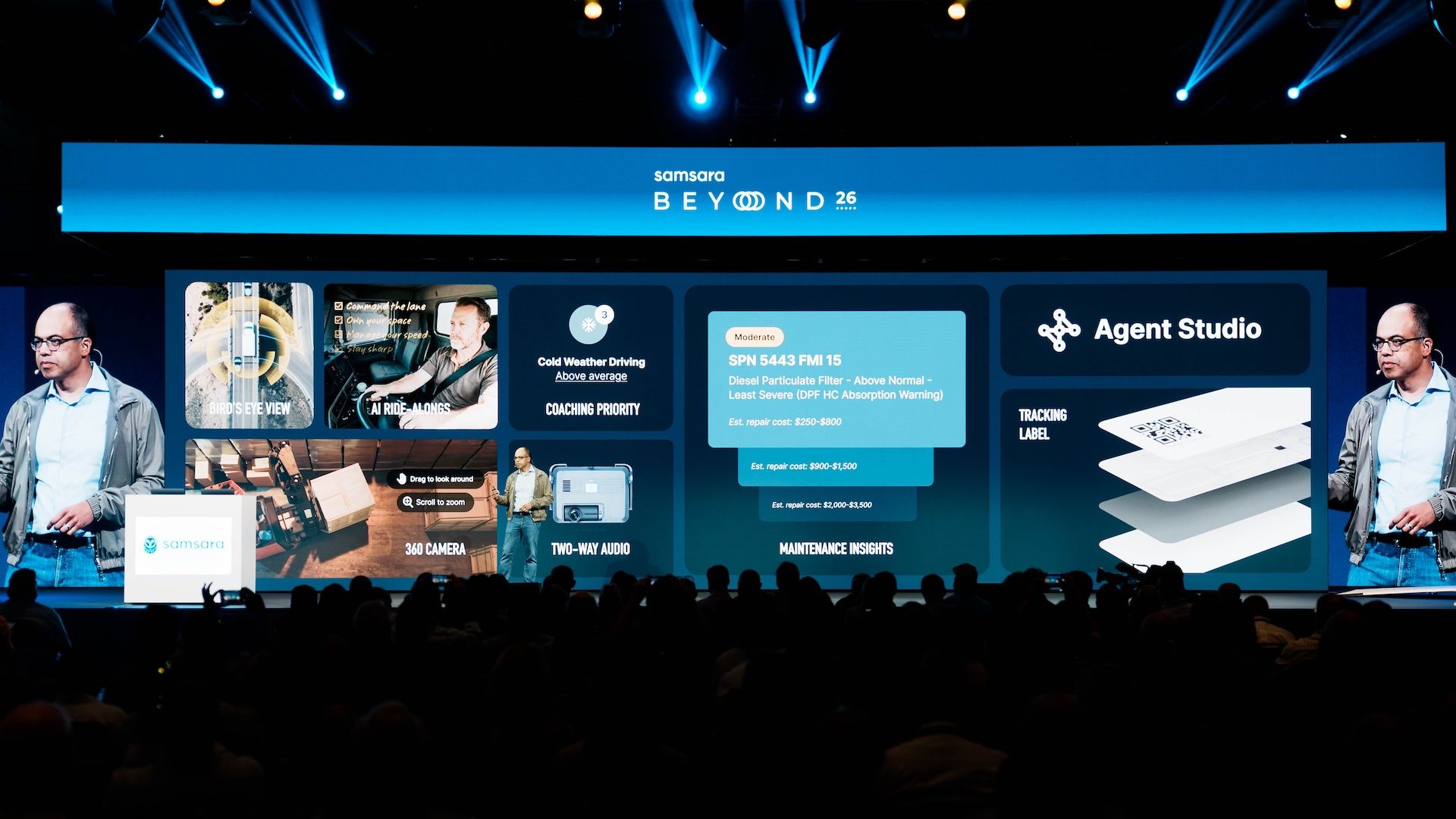
The story: At Samsara Beyond 2026, a conference for physical operations leaders, Samsara introduced three products that act on what operations already see and understand.
- Agent Studio: A workshop for a team's AI ideas. In plain English and with no developer support, operations teams can turn capabilities on or off, set permissions and build their own agents — from scratch or from pre-built templates — all powered by Samsara data.
- Tracking Label: A paper-thin, single-use Bluetooth label that delivers near-real-time shipment visibility from origin to delivery, powered by the Samsara Network. With cargo theft up 60% year over year and costing the U.S. roughly $35 billion annually, the label makes theft easier to detect and proactively surfaces shipping exceptions.
- 360 Camera: Built for forklifts, pallet jacks and other operator-controlled equipment, this single-mount, all-weather camera captures every angle around the asset.
These innovations increase visibility and understanding of the real world, automate the grind for both frontline workers and the back office and usher in unprecedented visibility into shipments.
- Taken together, they represent the next frontier of physical AI, deployed at scale.
Why it's important: Every stocked shelf, on-time flight and building that goes up starts with a physical operation running somewhere upstream.
The data center boom and rising infrastructure investment have pushed physical operations to grow 65% over the past decade, nearly twice as fast as the economy overall, and most are only partway through the shift needed to get real value out of that growth.
Now, connected devices and physical AI give operations teams the ability to see, understand and act in the real world — helping resource-constrained industries grow.
An expert's take: "In 5–10 years, I think we'll have connected the whole operation, and it will all live on an agentic platform," says Johan Land, chief product officer at Samsara.
- "You can imagine having a mixed fleet with some autonomous vehicles, or even drones, or humanoids that are living and augmenting an operation together with humans. These need to come together, and that's the agentic platform that we see ourselves building."
Here's what else: Samsara's reimagined frontline worker experience extends AI into the workday.
AI agents are helping frontline workers throughout their day with start-of-shift briefings, two-way calls with their managers or agents via their dashcam, commercial navigation in CarPlay and weekly driving recaps.
The ultimate aim is for agents to become a two-way support system by empowering, coaching and protecting frontline workers, and Land says that kind of support matters.
- "While the tasks our frontline workers do vary — from cutting down trees to driving a school bus to maintaining mining equipment — they all have a few things in common: they want to do that in an efficient and safe way," Land says.
Looking ahead: Frontline operations already produce vast amounts of data — and AI and hardware deployed at scale can now help teams understand and act on information.
- For Samsara, the next phase of physical AI starts with agents that help frontline workers make safer, faster and better decisions to keep the world moving.