How consumer perspectives on aging are shifting marketing strategy
A message from: Havas
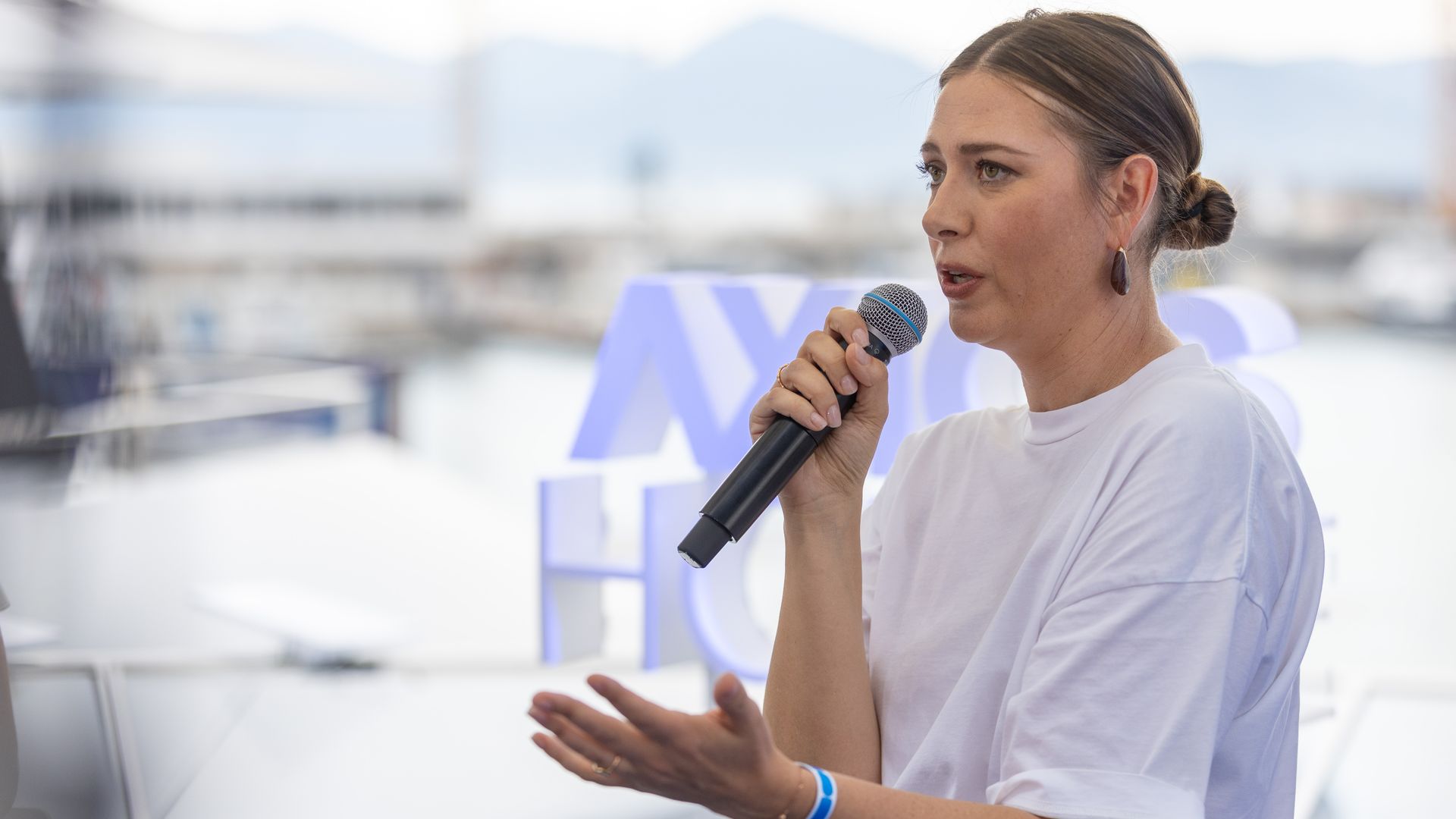
Maria Sharapova, tennis champion and entrepreneur
At Axios House in Cannes, France on June 24, Eric Weisberg, global chief creative officer at Havas Health Network, sat down with executive vice president of Axios Live Kristin Burkhalter to discuss Havas' latest report on the "superaging" era.
Drawing on data from the network's prosumer research, tracking insights from 10,000 forward-thinking consumers across eight countries, Weisberg broke down how global attitudes toward growing older have transformed, turning the $33 trillion longevity economy into an engine for brands across every industry.
First things first: You describe this moment as the superaging era. What's fundamentally different about the way people think about aging today?
Weisberg: When we talked to people 5 years ago, 77% of people said that society was too focused on aging. When we went back to them a couple months ago, it had dropped almost 25 points.
- 55% of people are actively seeking ways to change the aging process. All of that leads us to sit here at the backdrop of the longevity economy that's worth $33 trillion.
The details: You said there's a fundamental shift. I would like to understand what has changed in the last decade.
Weisberg: It's a combination of everything that we're sitting here witnessing.
- Science is changing. There's science now that can extend our lives by 20%. It's technology, it's AI and societal shifts. It's the demographic shift of two massive things, which is that the children born today are going to live to be 100 years old, and now Gen Xers and millennials are driving the global economy.
What you need to know: You released a report today where you say that longevity is no longer a healthcare story. What industries will be transformed by a world where people routinely live healthier lives into their 80s, 90s and 100s?
Weisberg: At the center of the impact of longevity on every industry is that this $33 trillion economy is being driven by the 50 plus crowd. Every brand is a health and wellness brand today.
- If you're going to be a brand that uses creativity and innovation to differentiate yourself in today's marketplace, you have to ride this wave. You see it partly driven by the GLP-1 revolution impacting travel, food and entertainment.
- I don't think about longevity as being a health and wellness trend; I see it as a global economic trend that any brand that wants to unlock growth needs to use as their engine.
Why it's important: One of the most provocative things in the report is this word 'well-tainment.' Is culture becoming as important as science in determining how people age?
Weisberg: We wouldn't be talking about longevity if science hadn't unlocked the possibility of us living longer, healthier lives, but culture is what leads to adoption. Culture is what erases the stigma that allows people to make the choices that lead to longer, healthier lives.
- 55% of the content we consume today isn't ad-supported, so advertising alone can't be the way that brands drive change.
- That's why at Havas we launched 'well-tainment.' Well-tainment is meant to bring together wellness education mixed with entertainment, whether that's gaming, long-form content, episodic content or music.
- We started partnering with the biggest brands in the world like Marvel, Universal Music and CBS Studios to bring wellness conversations into entertainment and solve the longevity distribution issue.
The challenge: If we're entering a world where people are increasingly able to engineer their longevity, what is the biggest challenge society or the folks in this room need to solve for next?
Weisberg: We have a widening gap of economic stability for a lot of people, which leads to people having access to longevity tools and services and people that don't.
- The positive side of that is there's a real opportunity for consumer brands to close the divide by making longevity solutions far more accessible. Helping close that gap starts to create a "health for all" or "longevity for all" mentality.
The takeaway: What is the most exciting thing about the report that you want people to 100% narrow in on?
Weisberg: As marketers, we chased what we thought were aspirational consumers, usually consumers 20 years younger who didn't embrace gray hair or wrinkles. I think the aspirational consumer has shifted significantly.
- When you have 55% of prosumers actively participating in their longevity, it means the aspirational consumer of tomorrow looks nothing like the aspirational consumer of before.