Frontline work is evolving — here's how autonomy fits in

A message from: Samsara
- The American Trucking Association (ATA) estimates a shortage of 60,000 drivers today — a number projected to reach 160,000 by 2030 if current trends continue.
- Meanwhile, the frontline workforce is aging, and new talent is scarce. About a quarter of these truck drivers are over 55-years-old and only about 12% are under 25-years-old.
- Warehouse labor is under similar strain: dangerous, physically demanding jobs are increasingly hard to fill.
What this means: Organizations need smarter, safer, more scalable ways to deliver essential services — especially as customer expectations for speed and affordability continue to rise.
🤖 Here's the deal: Advances in autonomous technology are unlocking safer workplaces, filling labor gaps and boosting operational efficiency.
- "Some of these innovations are actually pretty expansionary," autonomous leader and expert Boris Sofman explains. "If you relieve some of these constraints [i.e., labor shortages], the actual market size skyrockets — and you get gigantic secondary effects with new jobs created around it."
What you need to know: Samsara, a leader in connected operations, is helping customers use real-time data and AI to improve safety and scale emerging technologies like autonomy.
- Trained on more than 14 trillion data points globally, Samsara's AI powers smarter, data-driven decisions — from real-time coaching to predictive maintenance and crash prevention.
- "I think this idea of autonomy being another tool in the toolkit, helping operations continue to run smoothly as demand continues to scale, is going to be the key," says Samsara's CEO and Co-Founder Sanjit Biswas. "It's an and, not an or."
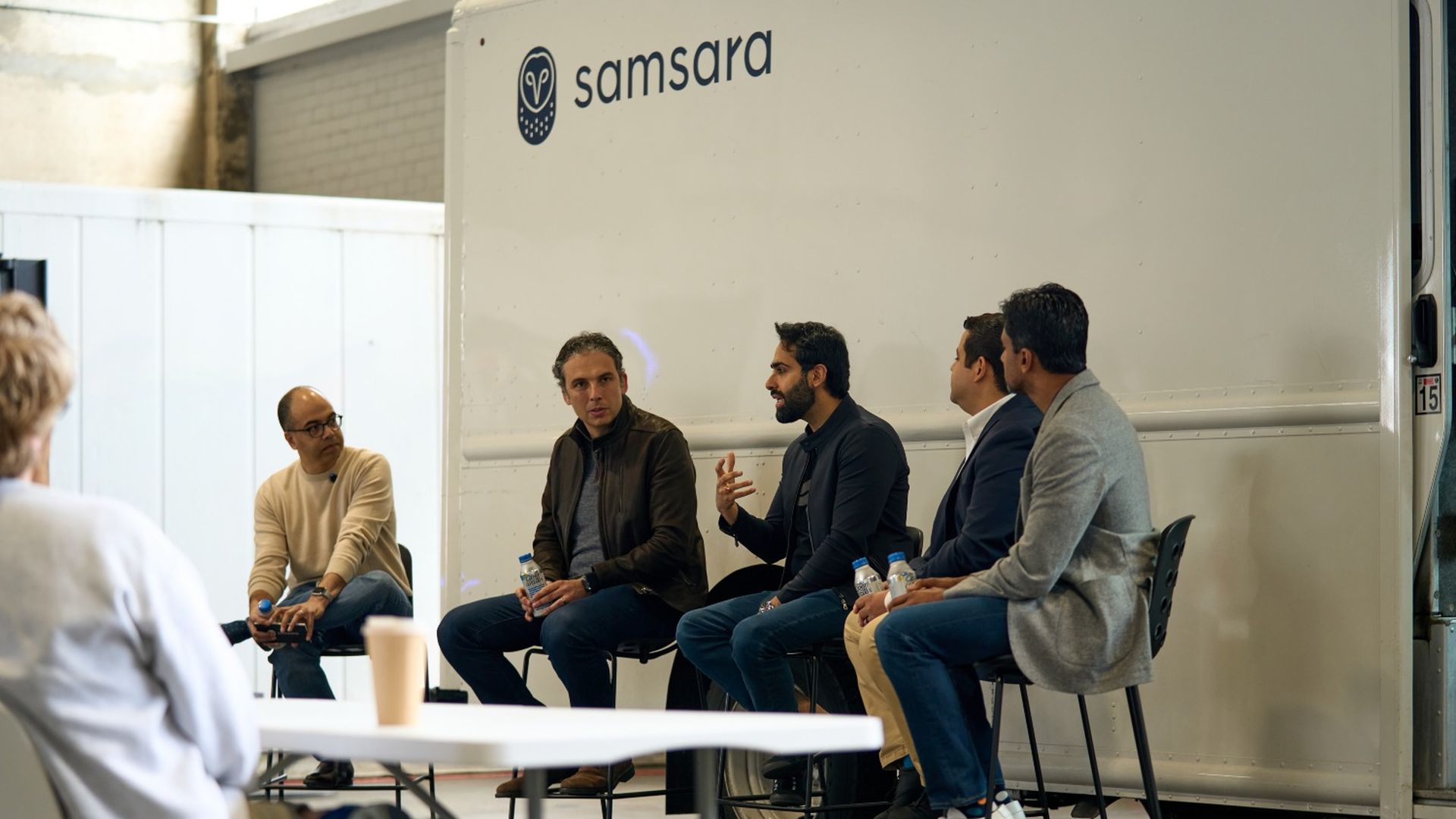
How it's done: At a recent Samsara-hosted panel, customers and industry leaders discussed how autonomy is already strengthening frontline operations — not in theory, but in the real world.
🚛 On the road: Gatik, a leader in middle-mile autonomous logistics, is deploying fully autonomous trucks to handle repeatable routes between distribution hubs and retail locations.
- By focusing on fixed operation, they've scaled autonomy faster while achieving rigorous third-party safety validation.
- "For us, it was really important to start with the customer pain point and then build the technology or the solution," says Gautam Narang, CEO and Co-Founder of Gatik.
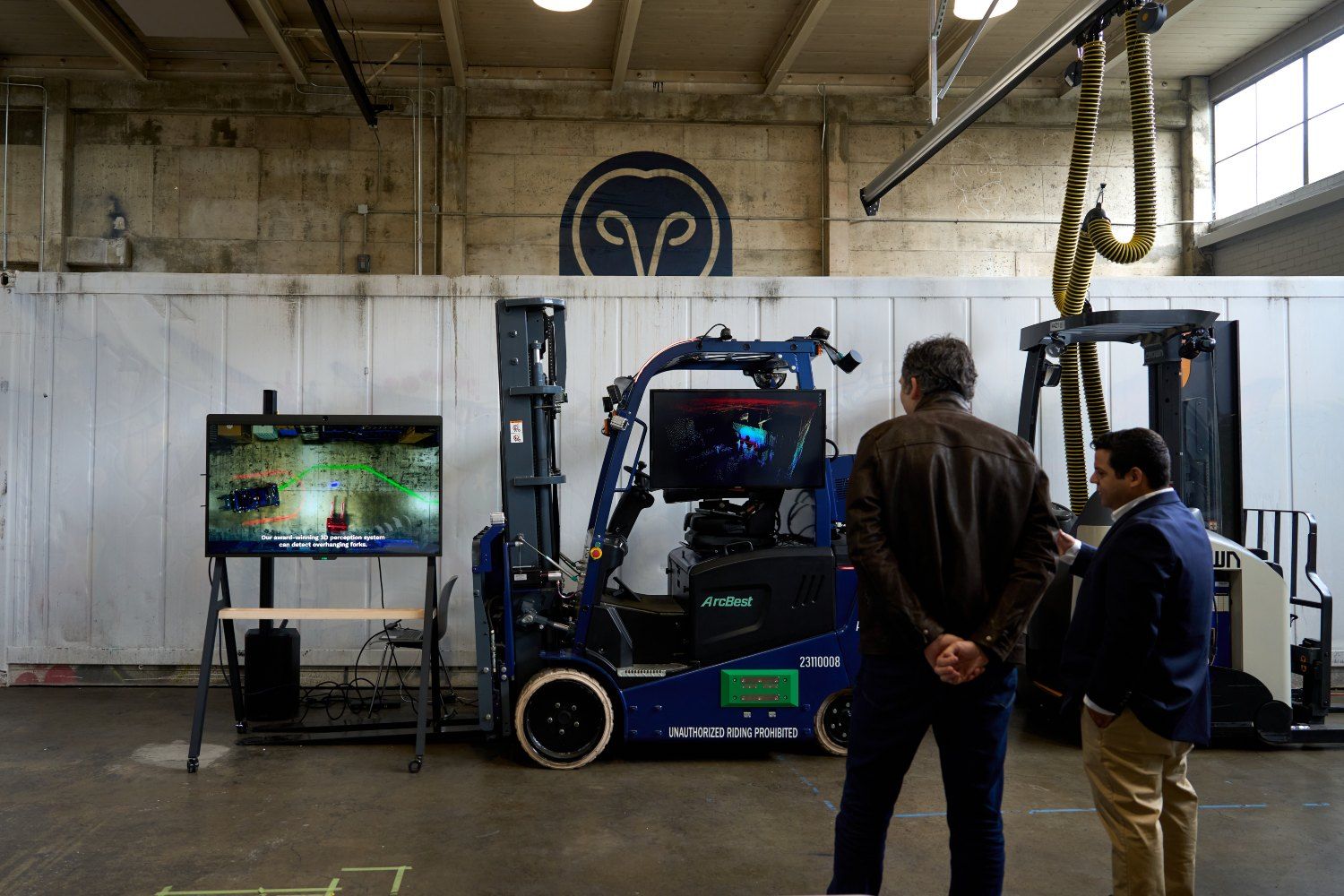
👷 In warehouses: ArcBest, an integrated logistics company, is transforming warehouse labor by combining autonomy with teleoperations.
- Employees now operate forklifts remotely via game controllers — reducing injuries and expanding access to a broader labor pool.
- "Our approach has been to allow autonomy for the things that robots are really good at (i.e., navigating around the facility) but leverage remote operations for the things that humans are really good at, such as complex tasks," says Jefferson Maldonado, Director of Robotics and Automation at ArcBest.
🤝 Okay, but: Scaling autonomy safely requires more than just machines — it demands orchestration across diverse technologies, teams and operations.
- Samsara's CPO Kiren Sekar emphasizes: "No one company will be able to do it all. The idea of open partnerships and being able to integrate these systems is really important for effectiveness as well as safety."
- The company's open platform brings data from IoT devices, original equipment manufacturers (OEMs), robotics companies, and more — creating a real-time view of operations
The impact: Once systems are connected, autonomy opens new ways of operating: avoiding traffic, shifting deliveries to off-peak hours, lowering emissions and rethinking how — and where — frontline work gets done.
"That requires orchestration and coordination," says Sekar. "And that's the place that Samsara plays — as that data platform connecting everyone together."
Here's how: Through a unified platform, Samsara gives organizations the tools to:
- Strengthen safety with AI-powered dash cams, behavior analytics and real-time coaching — with many of Samsara's customers seeing up to a 50% drop in accident-related costs.
- Boost visibility with real-time asset tracking, diagnostics and predictive maintenance across fleets, equipment and facilities.
- Seamlessly integrate autonomous and human-driven systems into one operational view — enabling autonomy to scale safely and incrementally.
The results: By connecting data, people and systems, Samsara helps organizations scale autonomy where it makes sense — without losing the human expertise that drives frontline success.
👀 Looking ahead: Full autonomy won't happen all at once, but change is accelerating. Companies that start building a connected, intelligent foundation today will be the ones best positioned to adapt and lead.
The takeaway: Scaling autonomy isn't about replacing workers — it's about empowering them. Removing the most dangerous, dull or difficult parts of frontline jobs and paving the way for safer roads, stronger supply chains and better jobs.
- "For Samsara, the vision is to help make that happen, make it practical and make it a great experience for everyone on the frontline and the back office," says Biswas.