Energy solutions that drive prosperity, security and lower carbon intensity
A message from: Chevron
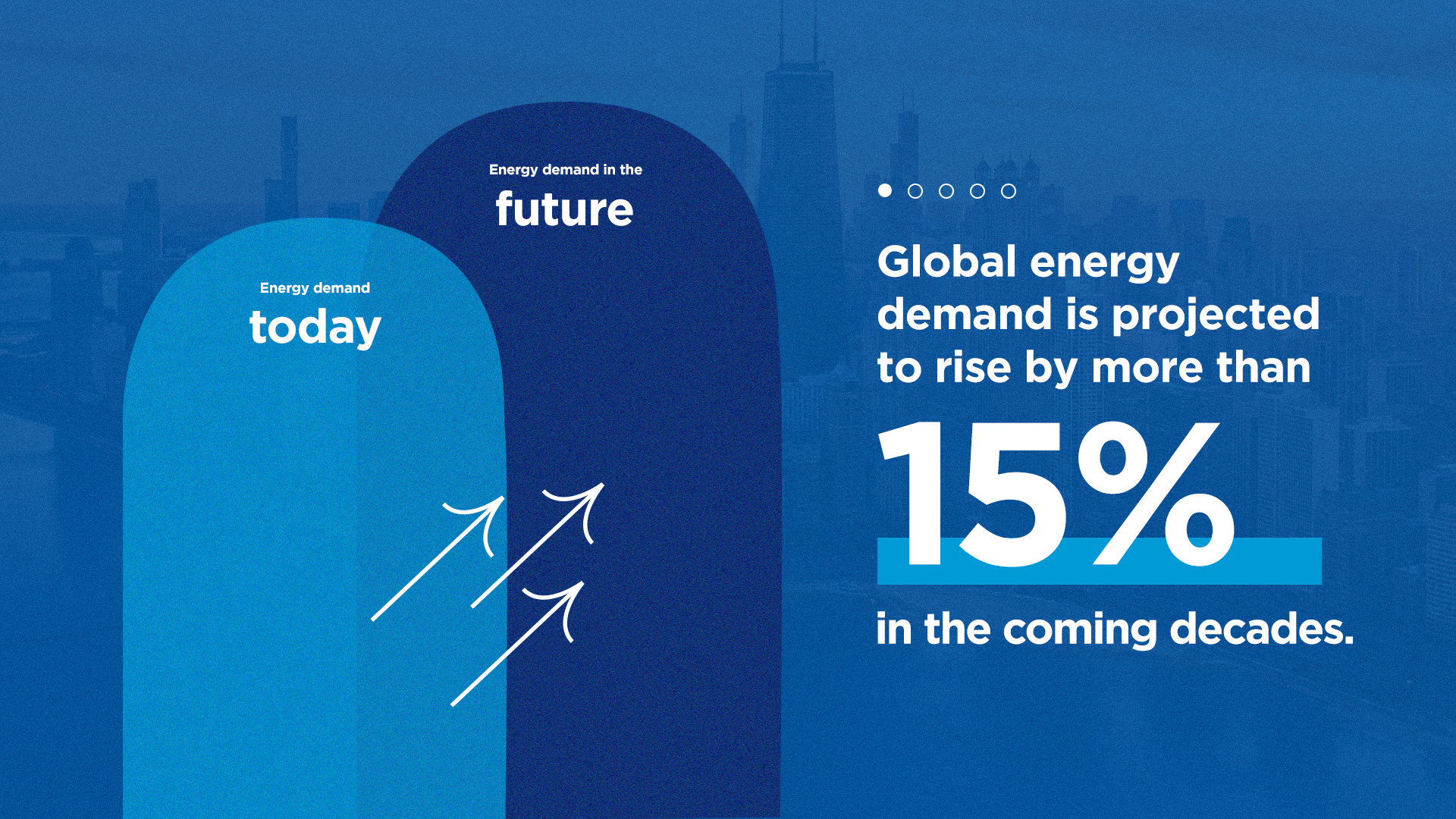
Total energy demand is expected to increase by nearly 15% worldwide over coming decades. Driving that demand is the growing use of energy by billions of people living in developing nations.
- Finding ways to sustain growth while lowering emissions is a growing imperative.
⚖️ Here's the deal: When talking about energy, it's critical to balance affordability and reliability, and do so in ever-cleaner ways.
- Affordable energy is vital for economies to flourish.
- Reliable energy is essential for national security.
- Managing environmental impacts continues to be important as the world demands lower carbon energy in an effort to protect the environment.
What you need to know: This delicate balancing act is at the heart of Chevron's balanced energy framework. The company is confident that affordable, reliable and ever-cleaner energy is required to achieve:
- Economic prosperity
- Energy security
- Environmental protection
"You really have to balance those three elements around the world to ensure that people have the energy that they need," says Molly Laegeler, Vice President of Strategy & Sustainability.
The proof: This approach comes to life in two key projects.
1️⃣ ACES: Unlocking hydrogen's potential
Hydrogen will likely be key to the future of U.S. energy. It is expected to be 12% of the global energy mix by 2050. It can help increase the use and availability of lower-carbon energy.
The Advanced Clean Energy Storage (ACES) project is expected to demonstrate hydrogen's potential at scale.
- A joint venture between Chevron and Mitsubishi Power, with Chevron as a majority owner, ACES goal is to drive the development of hydrogen hubs across the U.S. to transform intermittent renewables into a more reliable form of energy while still balancing environmental protection and affordability.
- Located in Delta, Utah, this project will produce, store and transport hydrogen at utility-scale for power generation, transportation and industrial applications in the western U.S.
Even better: Expected to begin commercial operations in 2025, ACES Delta is planned to be the biggest hydrogen storage site in the world.
How it's done: ACES will capture excess renewable energy, such as wind and solar, during off-peak hours to inexpensively power electrolyzers that convert water molecules to hydrogen and oxygen.
- The hydrogen will then be stored in underground salt dome caverns to provide dispatchable and long-duration energy storage.
● The salt cavern storage capacity is expected to make it possible to store excess renewable energy produced in the spring when energy demand is low and use it to generate energy in the summer when demand is high.
🔋"It's basically acting as a huge battery," says Laegeler. In fact, just one of the ACES Delta caverns in Utah is expected to be able to store more than three times as much energy as all of the utility-scale batteries the U.S. had online at the end of 2023.
● It would take more than 40,000 shipping containers of lithium-ion batteries to produce the equivalent megawatt-hours of energy that one hydrogen salt cavern can store.
The impact: ACES Delta's industry-leading solutions are designed to give utilities, companies, organizations and governments the power to access stored renewable energy that can be ramped and delivered at scale, on-demand, with unprecedented consistency.
● Plus, plus, plus: The project combines key technologies to create seasonal utility and industrial-scale hydrogen storage that intends to be incrementally fueled by 100% hydrogen by 2045.
2️⃣ Angola LNG: Energy security through natural gas
Natural gas is the cleanest burning conventional fuel, in that it produces lower levels of greenhouse gas emissions than the heavier hydrocarbon fuels, like coal and oil.
The result: Demand for natural gas is growing around the world due to its efficiency, abundance and versatility.
● Its affordability has tangible benefits: By 2040, U.S. households are projected to save $100 billion — or about $655 per household per year — thanks to the rising use of natural gas.
Okay, but: Geopolitical tensions are affecting its availability and pricing, especially in Europe.
The Earth has enormous quantities of natural gas, but much of it is in areas far from where the gas is needed.
● To move this cleaner-burning fuel across oceans, natural gas must be converted into liquefied natural gas (LNG), a process called liquefaction.
● Global LNG demand is expected to increase by 18% between 2021 and 2026, driven by increasing demand in Europe, according to a Bloomberg analysis.
Chevron's Angola Liquefied Natural Gas (ALNG) project is commercializing natural gas resources in western Africa to meet growing demand in the region and internationally.
● ALNG is one of the largest energy projects on the African continent and the first LNG project in Angola.
The breakdown: Located in Soyo and operated by Angola LNG Limited, ALNG commercializes associated natural gas produced by Chevron and other crude oil operators.
● As the world's first LNG plant supplied with associated gas, ALNG supports continued offshore oil field development.
- With a capacity to process 1.1 billion cubic feet of natural gas per day, the ALNG plant helps Chevron meet the global demand for abundant, cleaner-burning natural gas.
Worth a mention: Europe has become an increasingly important market for ALNG following the continent's ongoing energy crisis, as a result of the conflict between Russia and Ukraine.
👀 Looking ahead: Many energy solutions will be required to achieve the world's energy and environmental goals.
Chevron believes all energy sources — from oil and gas production to renewable energies such as wind, solar, geothermal and hydrogen, as well as carbon capture technologies — are going to be part of the energy equation and the supply mix in the coming decades.