Empty buildings can find new purpose through adaptive reuse

A message from: Capital One
- Only 34 affordable and available rental homes exist for every 100 extremely low-income renters.
- In 12 of the 50 largest metropolitan areas, the shortage exceeds 100,000 units.
"We're in this crisis moment across the country," says Desiree Francis, Managing VP of Community Finance at Capital One. "There is an acute need for affordable housing, particularly for households at the lower end of the income scale."
Here's the deal: Adaptive reuse doesn't only create affordable housing but also can revitalize communities. It can reduce the need for new construction and bring historic properties back to life.
How it's done: Turning a building designed for one use into something entirely different is no small feat. Developers must consider:
- Community needs and input.
- Available capital sources.
- Building codes and zoning laws.
- Proximity to essential services.
- Environmental assessments and energy efficiency improvements.
- Historic preservation requirements — and availability of materials to meet requirements for renovations.
🏦 What you need to know: Financing adaptive reuse development often requires many capital sources, including taxable conventional construction debt, tax-exempt bonds, tax credits and/or grants.
- Capital One's Community Finance team, active for 17 years, funds adaptive reuse developments primarily through the Low-Income Housing Tax Credit program. Financing adaptive reuse often involves a mix of public and private financing sources.
The results: Capital One has financed the transformation of various properties like schools, hospitals, houses of worship and even a former drive-in movie theater into affordable housing.
Some examples:
🎖️Mercy Magnuson Place: A case study in success
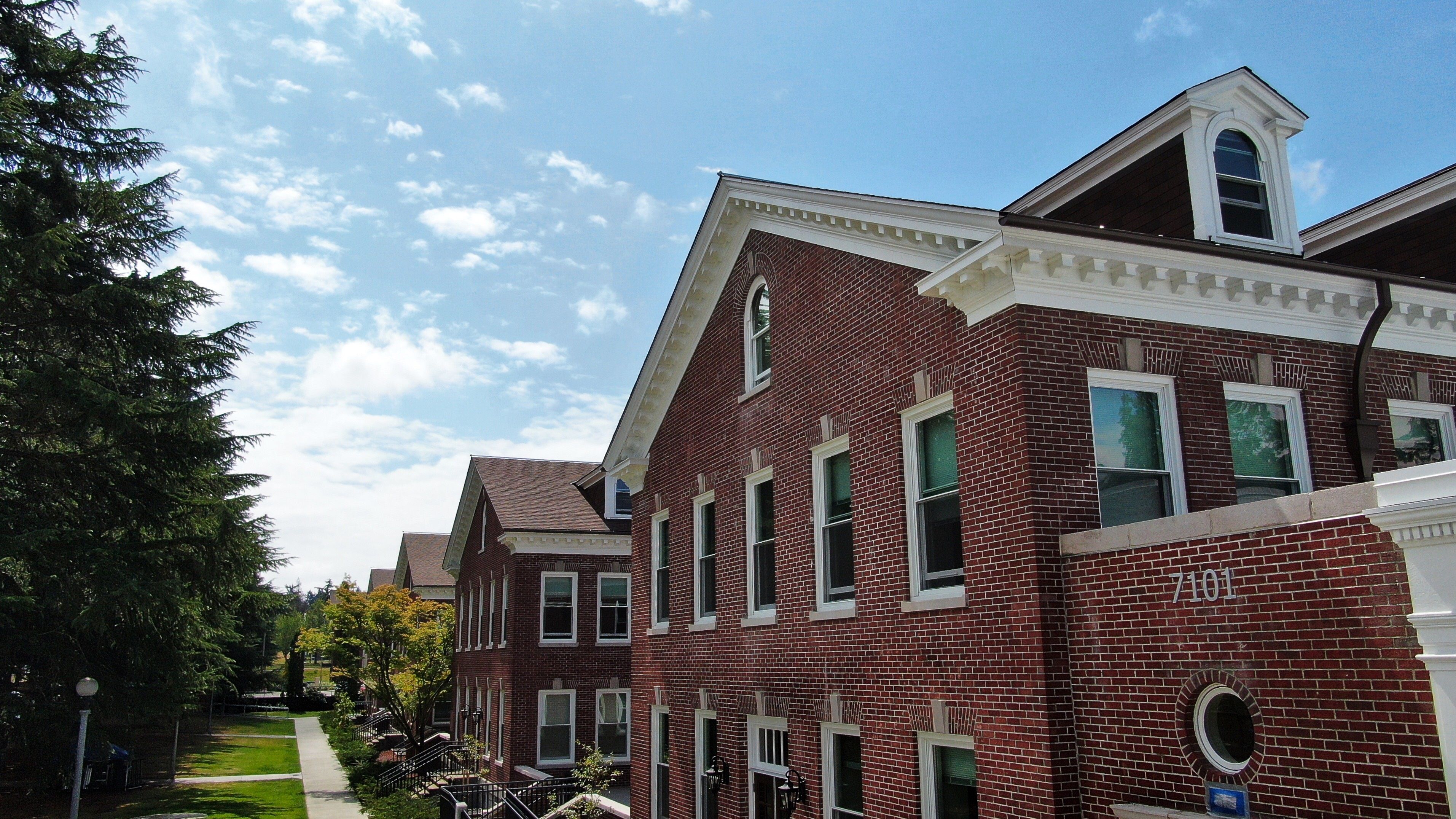
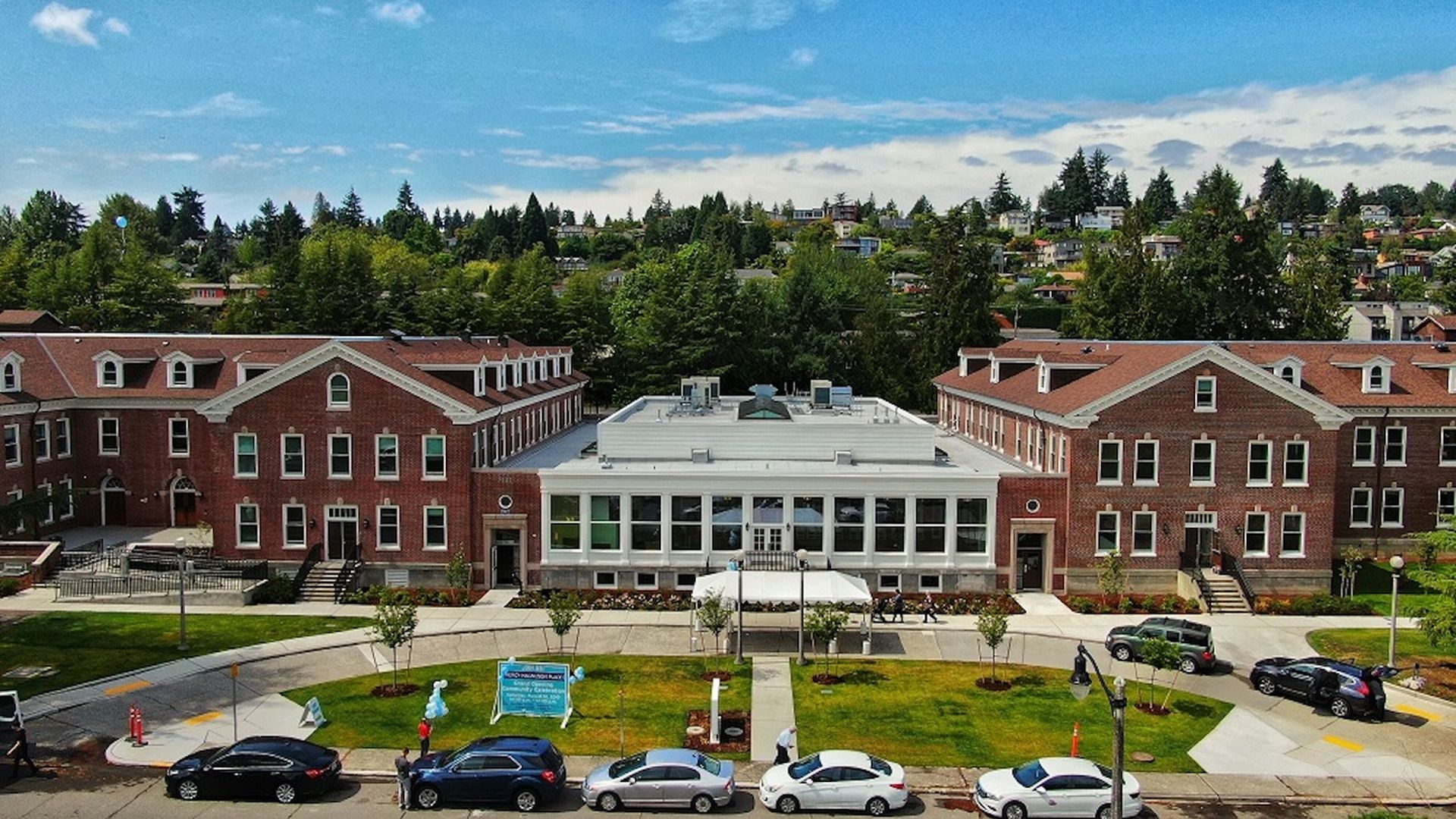
Once a Navy barracks, Seattle's Mercy Magnuson Place was redeveloped into 148 affordable housing units.
- The development didn't stop at housing; it includes on-site child care and a health clinic, demonstrating how adaptive reuse can create multi-functional spaces that address diverse community needs.
The breakdown: Capital One provided $13.5 million in construction financing and $34.6 million in tax credit equity, purchasing historic tax credits alongside low-income housing tax credits.
The benefits: Mercy Magnuson has helped combat homelessness by providing housing to veterans and low-income families in the Seattle area.
- It has also preserved the historic character of the property while transforming it into a modern community hub.
🏗️ Kingsland Commons: Revitalizing a hospital in Brooklyn
Kingsland Commons is an ongoing multi-phase redevelopment of the former Greenpoint Hospital campus, which had been closed for many years.
The deets: Capital One financed one of the new affordable housing buildings on the site, which will provide over 300 units of permanent housing for households earning between 30% and 80% of the area's median income.
- 93 of these units will be reserved for formerly unhoused individuals and families.
- The broader development will include community services space and a homeless shelter.
The strategy: Developers worked with Capital One and other lenders and partners to create a financing structure that included investments in three different types of tax credits and the credit enhancement of tax-exempt bonds.
🏘️ The takeaway: Adaptive reuse can offer a creative, community-focused solution when demand for affordable housing is at an all-time high.
These developments can help breathe new life into underutilized spaces and create affordable housing where it's needed most.
- "Adaptive reuse is an opportunity to respond to the changing needs of communities," says Francis. "We hear a lot about the need for affordable housing, and if you think about markets where land is scarce, you start to look for spaces that are underutilized to help meet housing needs."