Why investing in women’s sports media makes good business sense

A message from Ally
In 2022, Ally Financial, a digital financial services company with a Top 25 bank, made a revolutionary promise.
- The bank committed to reach equal spending on men's and women's sports media within five years with its 50/50 Pledge.
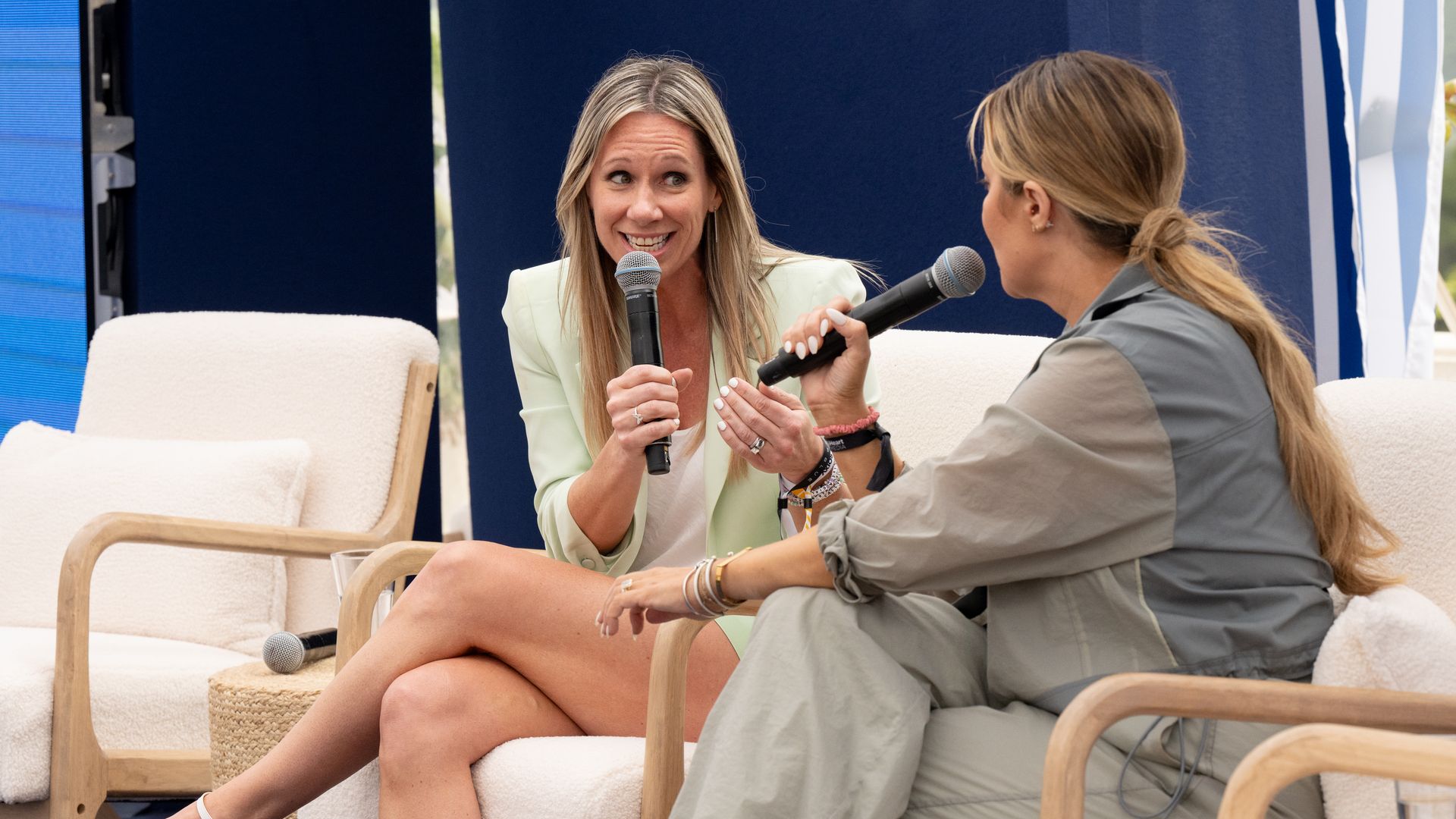
At Women's Sports House in Cannes, Deep Blue Sports + Entertainment founder and CEO Laura Correnti sat down for a conversation with Bridget Sponsky, executive director of brand and sponsorship marketing at Ally.
Sponsky updated the audience on the status of Ally's 50/50 Pledge, discussed the importance and impact of media equity, and shared actionable insights for brands that want to invest in women's sports.
1. First things first: How is Ally's 50/50 Pledge going? What impact have you seen?
Sponsky: We're around 45/55 right now, after recalibrating our spending in men's sports media and increasing our spending in women's by over 400%.
Women's sports has always been part of our ethos. This wasn't an afterthought — it was very intentional from day one.
- The National Women's Soccer League (NWSL) was one of our firsts in our sponsorship portfolio.
Since investing more in women's sports, we've seen double-digit growth across our brand health metrics like awareness, preference and likability.
- We've found people are six times more likely to convert to customers and at a much more efficient rate.
For us, investing in women's sports makes business sense.
2. Worth a mention: Ally Financial developed Team Ally, a group of elite athletes they work with to help develop their platforms and drive equity. What has surprised you most working so closely with these athletes?
Sponsky: A lot of what's surprised me has come from just listening to the athletes, hearing about the challenges they face every single day.
- We've heard a lot about athlete safety. For me, that was eye opening, especially in 2022 when all the scandals and abuse came to light.
- In addition to our NWSL partnership, we became the first brand to sponsor the NWSL Players Association for that specific reason — we wanted to better understand what was happening and to help. Who better to inform us than from the athletes themselves?
That's why media equity is so important. In women's sports, media is the biggest driver of revenue. It's captured by the leagues and trickles down to the teams, affecting the facilities and resources and the players' salaries.
As a bank, our remit is to positively affect the financial trajectory of peoples' lives, and we are doing that through our media investments. It's all intentional.
- Our recent partnership with the United States Golf Association (USGA) is a great example of this.
- Not only did our partnership help increase the purse for the 2024 U.S. Women's Open to $12 million — the highest in all of women's golf — but also our agreement included a commitment for a significant investment with NBC Universal to make sure the women's game continues to receive the top-tier broadcast coverage it deserves.
3. The challenges: Let's get a little nerdy and talk media. What does media equity actually mean, and what are some of the barriers to entry?
Sponsky: It means equal amounts of time and space on media outlets, dedicated to men's and women's sports.
We have faced a lot of challenges as we work toward equal spending on media. It was a difficult start for a couple of reasons.
- For one, media inventory in women's sports was extremely low, and what was available was low value, like off-peak time slots. We are a business and must be able to prove our spending has a return, so those options aren't ideal.
Financial services is also a very crowded segment, so we were also facing a lot of category exclusivity issues. Existing deals were largely driven by deals inherited from men's leagues, so these were not even deals women's leagues have negotiated on their own behalf.
- Historically, women's sports has been sold as an added value to men's sports. That's why the valuation is so off.
- When you're evaluating a sponsorship or contract, it's not a one-for-one value for men's and women's sports. It's completely off. You've got to take that into the equation.
To navigate through these exclusivity issues, we've worked to get rid of some of those exclusivity clauses in our own contracts.
- We've given up certain categories in the financial services space just so other brands and sponsors can come in and invest. We've done that purposefully.
- It's not a typical move for a brand, and there will be a time and place for category exclusivity in women's sports. But if we're going to create system change in the marketplace today, we have to find a way to open up room for more brand investment. It's going to take all of us to get this done.
4. The positive news: Ally's mission doesn't get more direct: Do it right. From a brand perspective, what is going really well in women's sports? What optimizations would you like to see on the league's media side to continue to promote growth?
Sponsky: As little as three years ago, women's sports were receiving less than 4% of media coverage. What's promising is seeing that number now at 15% — and realizing that number is increasing because of emerging media companies coming to market.
- Many of those companies are being stood up by women business leaders and former women athletes. These platforms are so important to the growth of women's sports and the increasing media coverage dedicated to them.
What keeps me up at night is the sustainability of these platforms, and how can Ally, as a brand, help?
- Fans are flocking to these platforms for narratives they can't get from broadcast or network coverage. And who better to share these narratives than former players themselves?
- But these platforms often get overlooked by brands because they don't pass the return-on-investment test. We must help them by investing our dollars and collaborating with the platforms to expand coverage and grow inventory.
Digital media is the real growth driver toward media equity.
5. The impact: In 2022, Ally partnered with CBS to ensure the NWSL final was in primetime. Why was that so important for not just the brand and the business but also access for the game?
Sponsky: That was monumental. That was the first time in the history of professional women's sports where a championship was broadcast live in primetime in the U.S.
- What we saw was the viewership went up 71% automatically. That's all it took.
The following year, we helped keep it in primetime, and moving forward primetime is non-negotiable. It's now a mainstay. It's that consistency that we need — but it also takes media partners to come to the table and make those commitments.
- I understand it might not pencil out today. But you have to think about the long-term benefit of the reach you're going to grow and these new audiences that are going to form.
7. Next steps: As a leader in this space, what would you tell marketers who are exploring but haven't yet made the leap to invest in women's sports?
Sponsky: You've got to fundamentally believe in the power of women's sports. It's a balance of art and science. It's not just about the numbers today. It's a long game. A lot of CEOs and CFOs want to see the numbers — they want to see the return today. That's not what it is.
- When you're invested in the long term, you get outsized returns.
Invest in women's sports media. It's easier now than it was two years ago. Put your money there. Make sure you're intentional about it. Make sure you're consistent. See it through.