AI is changing the industries that design and make, well, everything

A message from Autodesk
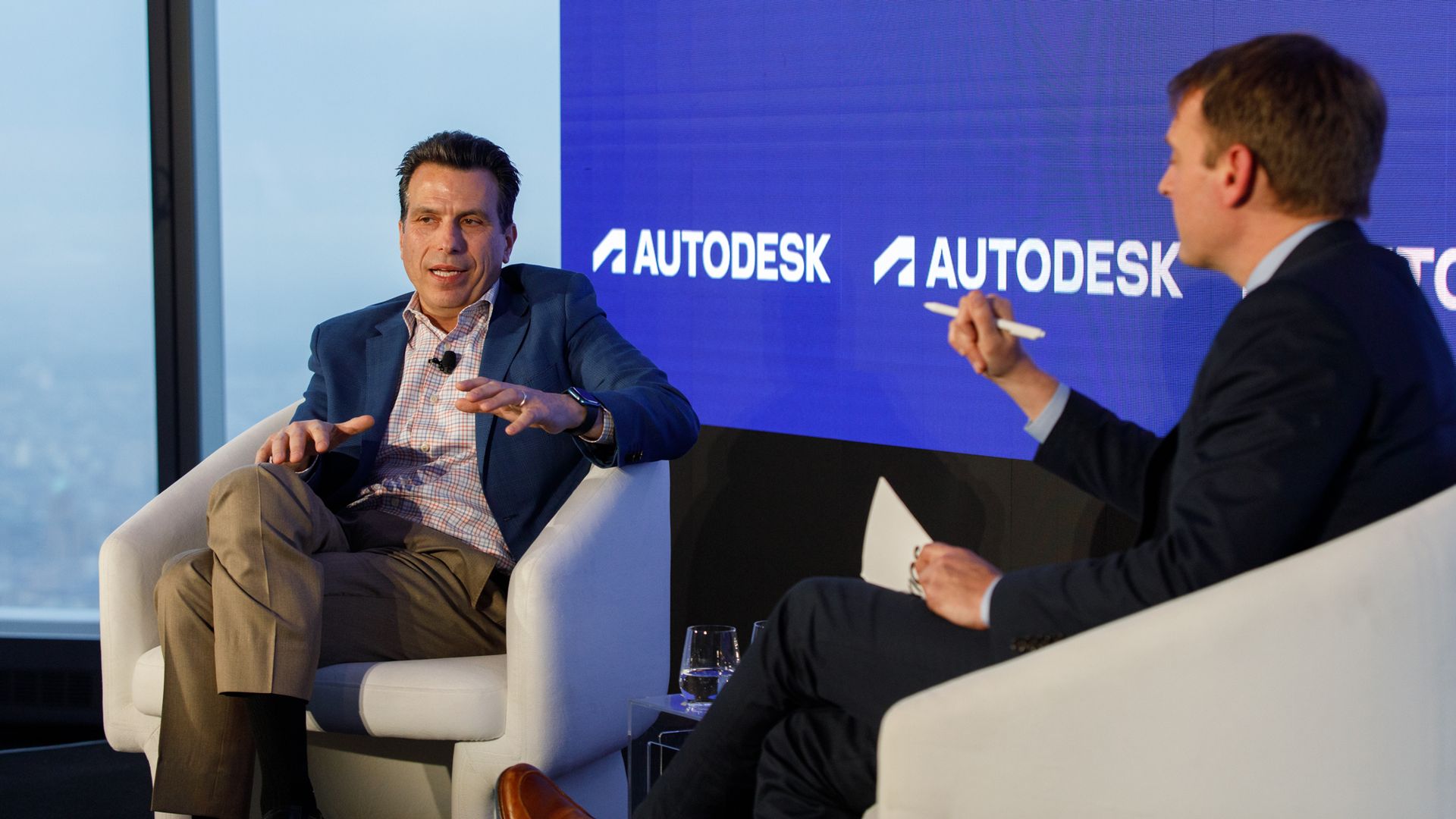
Innovations in AI are already changing how the world gets designed and made, and the impact is only expected to increase.
On April 10, Andrew Anagnost, president and CEO of Autodesk, a leading Design and Make technology company, explored the effects AI will have on Design and Make industries and the nearly 300 million people who work across them.
1. First things first: Why is this topic important to Autodesk?
Anagnost: We make technology for people that make things — whether they're built, manufactured or produced.
This very building we're sitting in right now was designed and built with our software. As a matter of fact, it was one of the first things designed and built with some of our most advanced 3D design software.
The cars you drive, the bridges you cross, the buildings you work in, the phone you use, the movies you watch and the video games you play all have one thing in common: they were designed and made with Autodesk's software.
- If you look at this at a super high level, this is a $30 trillion industry that we serve. It employs more than 295 million people worldwide. So, what happens in these Design and Make industries matters to all of you and to all your lives.
We're at the height of a lot of change. These industries are confronting AI. They're confronting sustainability issues. They're confronting all sorts of new issues around building and rebuilding infrastructure.
- We reached out to 5,400 of them and asked: How are you feeling about these opportunities?
2. The impact: Tell us about what kind of messages you received from those in Design and Make industries. What did they say?
Anagnost: 77% of them say they trust AI to do the work they do today.
- They're probably exploring off-the-shelf simplistic AI right now because deep AI that hits their everyday applications probably isn't there yet.
What's more interesting is that 66% of them say that in two to three years, AI is going to be imperative for them. It's going to be something they must do.
- They're already processing that the competitive advantage — the ability to actually win the bid and get the job done — is going to be dependent on AI.
3. Okay, but: How do you talk to people who think AI is coming for their job?
Anagnost: We have to be realistic. I want to attack some of the cynicism too — I think it's really important to do that.
Across industries, we serve architects, engineers, construction professionals, design and manufacturing professionals, as well as those in media and entertainment who Design and Make the movies and video games we know and love. AI is going to change the way all of these people work.
- There's no doubt that how they work, how they do their job, is going to get reconfigured in some profound way over the next 5 to 10 years.
- People are going to have to learn new skills. Some jobs will be displaced. There will absolutely be fewer people per project.
But there is a fundamental capacity problem in the industries we serve — and this is why we have to tell the flip side of the story. There is not enough money, material or people to build and rebuild everything that needs to be built and rebuilt in the world.
We have a lot to do. And right now, we don't have the capacity to do it. So, we must bring the conversation back to this capacity problem and what AI can do to unlock that.
- The total number of projects will go up. And frankly, we need them to, because we passed a great infrastructure bill; it is now today worth 30% less than it was when it was passed because of inflation.
And that wasn't enough money to fix everything that needs fixing. So, we need this capacity, and we need it now.
4. The solution: Are you already seeing AI solve for problems like sustainability, affordability and capacity issues?
Anagnost: I'll give you an example. We worked with an architecture firm and a modular construction firm to design affordable housing on a plot of land in the San Francisco Bay Area.
We built custom AI tools for them that allowed them to explore an unusually shaped plot of land. But with the constraints, we want to maximize the number of housing units, minimize the cost and increase sustainability.
We were able to offer the architects and engineers working on this project a whole set of options that solved for that. Even with park space, lighting requirements and all these things — processing tons of information.
- The architects were able to choose from that and figure out which one was going to work. The net result from the process is that they built 316 units in the Bay Area for half the cost and half the carbon footprint.
5. An expert take: You've written recently an op-ed calling for stricter regulation. Tell us a little bit about what your vision is.
Anagnost: For AI, we really like the risk-based approach that the Biden administration is taking, where we're putting a lot of heavy-duty guardrails on high-risk AI.
- Anything that impacts people's livelihood or biases, like someone's ability to get loans or get into schools.
But regulation also needs to help us unlock the potential of AI that does the things we're talking about, like opening up capacity problems.