A roadmap for stronger downtowns: Lessons from San Francisco

A message from: JPMorganChase
Downtown districts across the U.S. have experienced widespread business closures, empty spaces and reduced foot traffic.
- The pandemic accelerated long-term shifts that were already underway as e-commerce, remote work and changing consumer habits altered downtown economies.
Why it's important: These districts play an outsized role in community economies, serving as cultural and economic hubs that bring together jobs, residences, businesses, public spaces and anchor institutions.
- Their decline has created ripple effects across entire communities.
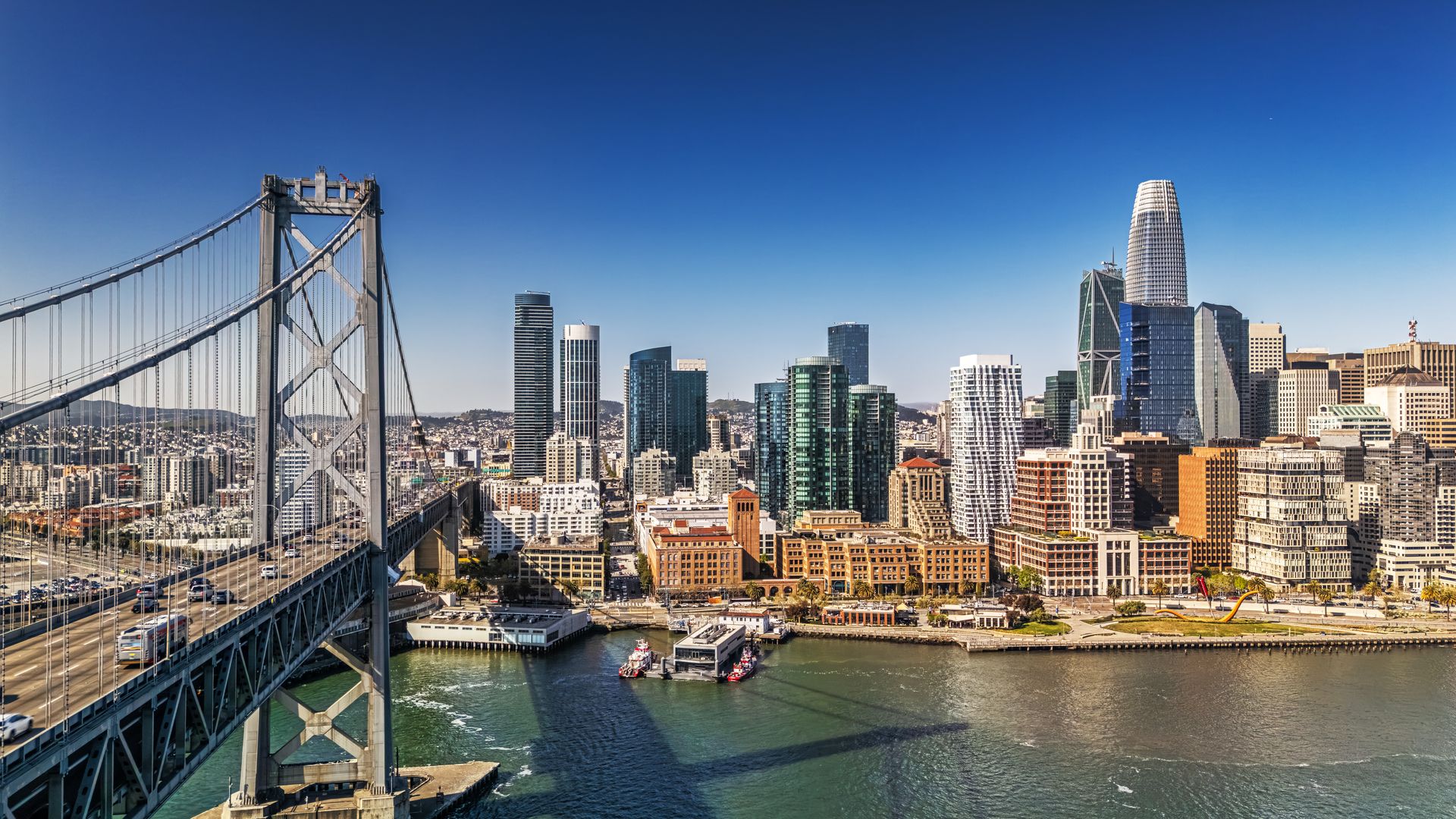
🔍 Zoom in: Downtown San Francisco has experienced some of the most severe impacts.
- The positive news: Recent signs — including declining crime rates and office vacancies — suggest that coordinated strategies are helping the city make a comeback.
The details: JPMorganChase has been supporting efforts to strengthen communities for more than a decade, including recent investments in expanding commercial corridors to revitalize downtown areas across the country — including in San Francisco.
In a new What Works report, JPMorganChase shares three insights from its work in San Francisco that can be used to help drive revitalization efforts in downtown districts across the U.S.
💡 1. Community Benefit Districts act as anchors for revitalization.
Community benefit districts (CBDs) — also known as Business Improvement Districts (BIDs) — are special-purpose districts where property owners agree to pay fees to help fund enhanced services beyond what local governments typically provide.
- Efforts include trash collection, safety patrols, lighting, beautification and events. They also create an important platform for collaboration that supports small businesses in local neighborhoods.
Successful CBDs in San Francisco:
✅ Address basic concerns like cleanliness and safety to help build a foundation for economic activity.
✅ Host programming and events to help bring more visitors and locals to the area.
✅ Build connections with peer organizations to provide access to effective replicable strategies, policy advocacy and professional development opportunities.
✅ Secure resources, establish budget frameworks and align spending with stakeholder priorities.
An example: The Downtown SF Partnership (DSFP) hosts Let's Glow SF in collaboration with community partners. The annual event transforms downtown with large-scale art projections and immersive programming.
- In December 2023, the event generated an estimated economic impact of over $8 million for downtown businesses, attracting nearly 67,000 attendees.
💡 2. Public-private partnerships revitalize neighborhoods with community-centered solutions.
Successful downtown revitalization requires formal coordination that align public and private interests. Public-private partnerships work best when state and local government provides infrastructure and coordination, while businesses contribute project management and operations expertise.
Successful public-private partnerships in San Francisco:
✅ Require formal coordination mechanisms and government structures that align with public and private interests.
✅ Involve strong city leadership and committed business champions who work in tandem to create the conditions ripe for revitalization.
✅ Collaborate with third-party organizations, such as research and policy institutes, to access key analyses, facilitate conversations between stakeholders and tap into unique expertise.
An example: The Union Square Alliance BID works closely with city agencies, the Mayor's office and a range of private businesses. This partnership has resulted in active support for public safety initiatives, streamlined permitting and zoning processes, and granted funding for key projects.
- Corporate partners often contribute expertise, financial resources and volunteers. JPMorganChase has worked with the Alliance to support destination marketing and event activations.
💡 3. Small businesses serve as the foundation for downtown economic recovery.
Small businesses employ approximately 46% of the U.S. workforce and created around 63% of new jobs between 1995 and 2021. In San Francisco, small businesses employ an estimated 360,000 workers, playing a central role in the local labor market.
To be successful, small businesses in San Francisco:
✅ Rely on streamlined processes that address inefficiencies in permitting, licensing and fee structures.
✅ Have access to affordable capital for technology upgrades, space modifications or marketing to reach new customer bases in the post-pandemic landscape.
✅ Benefit from programs that combine financing with technical assistance, networking opportunities and connections to customers.
An example: The Downtown San Francisco Vibrancy Loan Fund, launched in 2025 and funded in part by JPMorganChase, provides small businesses with below-market capital (at approximately 4% interest) to help them access commercial spaces.
- The goal is to help fill commercial vacancies and increase access to those who face barriers accessing traditional financing.
The takeaway: San Francisco's ongoing recovery underscores both the promise and complexity of revitalizing downtown districts.
- Significant challenges remain, but San Francisco's progress demonstrates that strategic investment, empowered local leadership and innovative cross-sector partnerships can make way for meaningful progress.
Read more in JPMorganChase's latest report.
📍 See how communities across the U.S. are reimagining the future.