8 startups join elite climate tech fellowship

A message from: Amazon Web Services
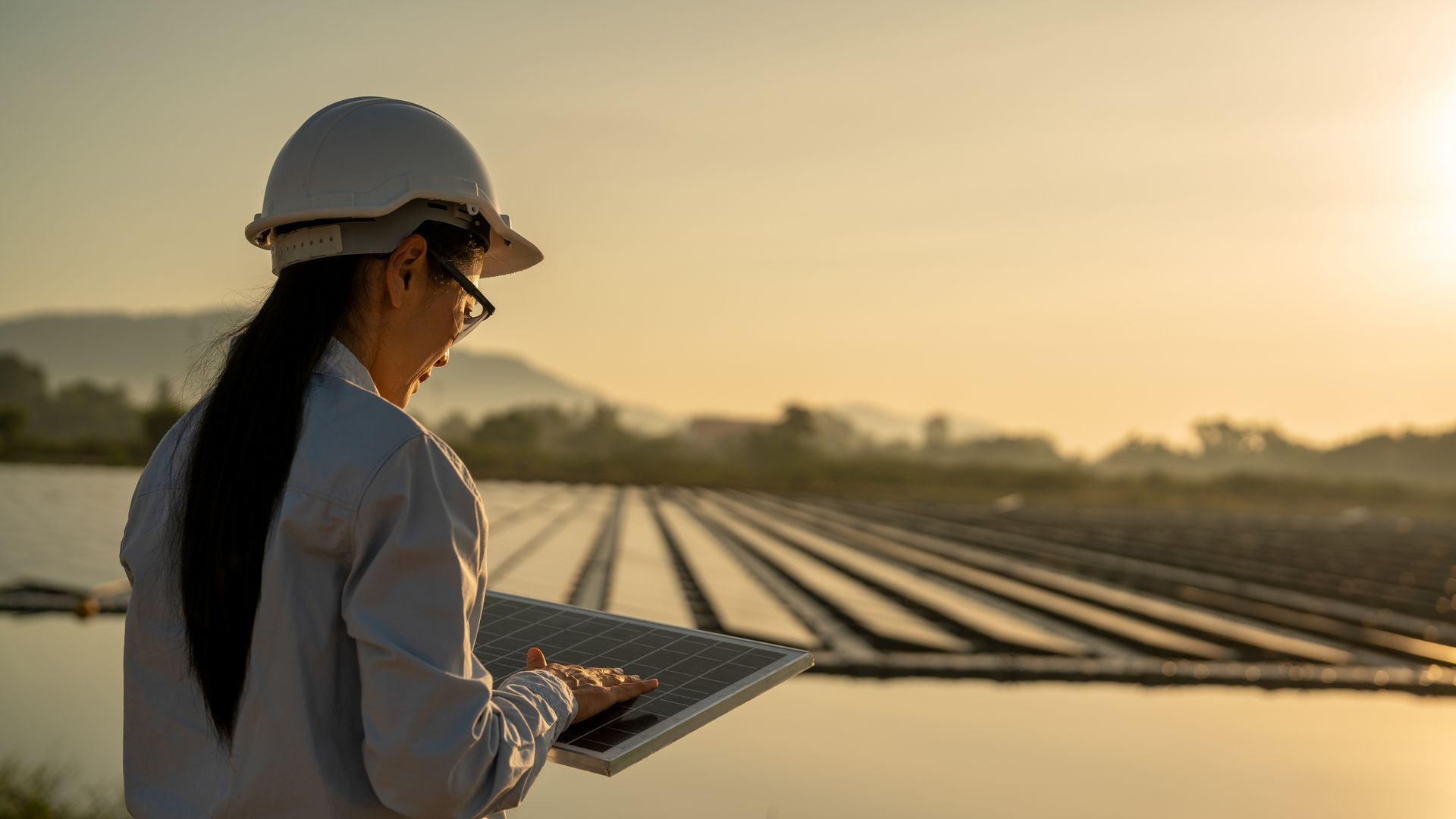
In a world grappling with extreme weather and food insecurity, Amazon Web Services (AWS) is betting big on climate tech startups to drive solutions.
Eight climate tech startups have been accepted into the second cohort of the Compute for Climate Fellowship, a joint initiative by AWS and the International Research Centre on Artificial Intelligence (IRCAI).
- This first-of-its-kind program funds proof of concepts for new ideas using advanced cloud computing to tackle climate change.
Why it's important: From extreme weather affecting 4.5 billion people to food insecurity, and the monumental task of transitioning the entire global economy to clean energy, the climate crisis presents some of the toughest challenges facing humanity.
"We are at a critical juncture, when generative AI is accelerating ways to solve the world's biggest challenges, including climate change," said Jon Jones, Vice President and Global Head of Startups at AWS."
"It is more crucial than ever that we support innovators who are bringing scalable solutions to life by pushing the frontier of what's possible with technology."
The challenge: Climate tech startups are building powerful solutions to address these issues, but the problems are so vast and complex that many must invent entirely new scientific and technological solutions. Speed is critical to addressing the climate crisis before even more damage is done.
- This requires more funding, increased time for research and development (R&D) and access to advanced computing power.
The Compute for Climate Fellowship aims to help climate tech startups accelerate R&D and create positive change. Launched in 2023, it's the first global program to fund groundbreaking proof of concepts that use advanced cloud computing to address the climate crisis.
The details: AWS will provide up to $1.5 million in total AWS credits for the second cohort, up from $1 million in 2023. Each company will spend two to three months building a proof of concept.
"The startups we selected for the Compute for Climate Fellowship represent big, bold, approaches to tackling some of the planet's most urgent challenges, from clean fusion energy, to better ways to track biodiversity, to sustainable textiles, and more," continued Jon Jones of AWS.
"AWS is honored to support these pioneers, equipping them with the latest in AI and advanced cloud computing to help turn their ambitious ideas into positive impact on our planet."
Startups will have access to technical resources, including:
- A team of advanced cloud computing, sustainability and ethics experts.
- High-performance computing (HPC) and quantum computing services.
- AI, generative AI and ML solutions.
- AWS Activate credits to cover the cost of the proof of concept build.
All proof of concepts will be designed under UNESCO's Ethics Impact Assessment for AI guidelines to ensure safe, trustworthy technology.
The four startups that were selected as the first Fellows include:
- Realta Fusion: Realta is developing compact magnetic mirror fusion energy systems to decarbonize industrial process heat and power.
- Phytoform: Phytoform utilizes a proprietary machine learning technology called CRE.AI.TIVE to target small changes in DNA sequences that will create maximum impact on crops.
- Coastal Carbon: Coastal Carbon uses AI models to quantify the amount of seaweed growing in certain regions based on satellite images. These models are then used by their customer seaweed farmers to claim carbon credits for their work.
- Xatoms: Xatoms harnesses the power of artificial intelligence to revolutionize the discovery of novel photocatalytic molecules. Its mission is to create a world where safe, clean, and sustainable water sources are accessible to everyone.
The eight startups in the second cohort include:
- Aigen: Solar-powered, autonomous robots for herbicide-free crop protection.
- Asoba: AI-driven platform for energy management in Africa.
- Brightband: AI-driven tools to improve extreme weather predictions.
- Cosma: Underwater micro-drones and AI for environmental surveys.
- Matter Intelligence: Hyperspectral and thermal imaging satellites for environmental monitoring.
- Lithos Carbon: Enhanced rock weathering for carbon capture in agricultural soils.
- Smartex: AI-powered fabric inspection for sustainable textile manufacturing.
- Thea Energy: Fusion energy systems for affordable, clean energy.
Next steps: Applications for the third cohort of the Compute for Climate Fellowship will open in Q1 2025. The program welcomes applications from startups worldwide dedicated to creating climate solutions across eight areas:
- Clean energy.
- Low-carbon transportation.
- Sustainable agriculture and food.
- Circular economy/manufacturing/industry.
- Sustainable buildings.
- Greenhouse gas accounting and sustainability management.
- Carbon removal.
- Environment (water, pollution, biodiversity) and climate risk.
Lisbeth Kaufman, Head of Climate Tech BD, Startups and Venture Capital at AWS, leads the initiative.
- She founded KitSplit.com, a sharing economy company, and is building a first-of-its kind energy efficiency retrofit program. She's also working on climate policy in the U.S. Senate and wrote a clean energy bill for farmers that passed into law.
Interested startups can visit the program webpage to apply for the 2025 Compute for Climate Fellowship cohort.