Scoop: FBI director threatened to resign amid Trump, Sessions pressure

Add Axios as your preferred source to
see more of our stories on Google.
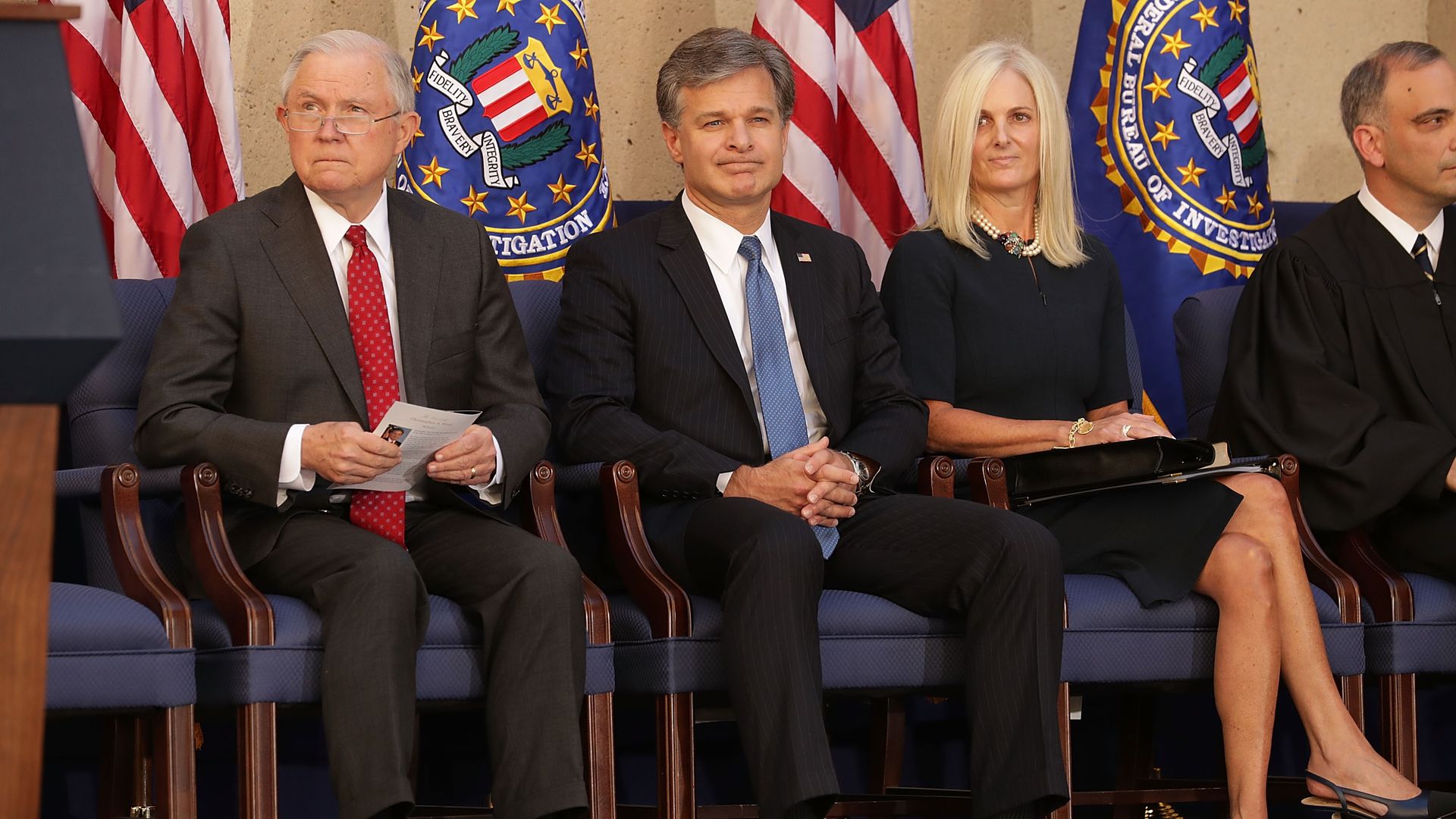
Sessions and Wray at Wray's installation as director. Photo: Chip Somodevilla/Getty Images
Attorney General Jeff Sessions — at the public urging of President Donald Trump — has been pressuring FBI Director Christopher Wray to fire Deputy Director Andrew McCabe, but Wray threatened to resign if McCabe was removed, according to three sources with direct knowledge.
- Wray's resignation under those circumstances would have created a media firestorm. The White House — understandably gun-shy after the Comey debacle — didn’t want that scene, so McCabe remains.
- Sessions told White House Counsel Don McGahn about how upset Wray was about the pressure on him to fire McCabe, and McGahn told Sessions this issue wasn’t worth losing the FBI Director over, according to a source familiar with the situation.
- Why it matters: Trump started his presidency by pressuring one FBI Director (before canning him), and then began pressuring another (this time wanting his deputy canned). This much meddling with the FBI for this long is not normal.
McGahn has been informed about these ongoing conversations, though he has not spoken with Wray about FBI personnel, according to an administration source briefed on the situation. Trump nominated Wray, previously an assistant attorney general under George W. Bush, last June to replace James Comey as director.
Trump has also tweeted negatively about other senior FBI officials who are allies of Comey, including the former top FBI lawyer James A. Baker who was recently “reassigned” after pressure from Sessions.
White House Principal Deputy Press Secretary Raj Shah said of Wray: “As we’ve said, the president has enormous respect for the thousands of rank and file FBI agents who make up the world’s most professional and talented law enforcement agency. He believes politically-motivated senior leaders including former Director Comey and others he empowered have tainted the agency’s reputation for unbiased pursuit of justice. The president appointed Chris Wray because he is a man of true character and integrity and the right choice to clean up the misconduct at the highest levels of the FBI and give the rank and file confidence in their leadership.”
As I reported last night, Sessions has adamantly urged Wray to make a "fresh start" with his core team.
Trump and other Republicans have been hammering McCabe — who was selected by the White House as acting director after the Comey firing — for months on Twitter.
- On July 26, Trump tweeted: "Why didn't A.G. Sessions replace Acting FBI Director Andrew McCabe, a Comey friend who was in charge of Clinton investigation but got...big dollars ($700,000) for his wife's political run from Hillary Clinton and her representatives. Drain the Swamp!"
The latest: The New York Times — and others — reported in December that McCabe "is expected to retire after he becomes eligible for his pension [in] early [2018]." But senior Justice officials are still not sure what McCabe plans to do.
The FBI declined to comment for this story. Justice Department spokeswoman Sarah Isgur Flores also declined to comment.
Get more stories like this by signing up for our weekly political lookahead newsletter, Axios Sneak Peek.
