Robots deployed to front line of coronavirus outbreak

Add Axios as your preferred source to
see more of our stories on Google.
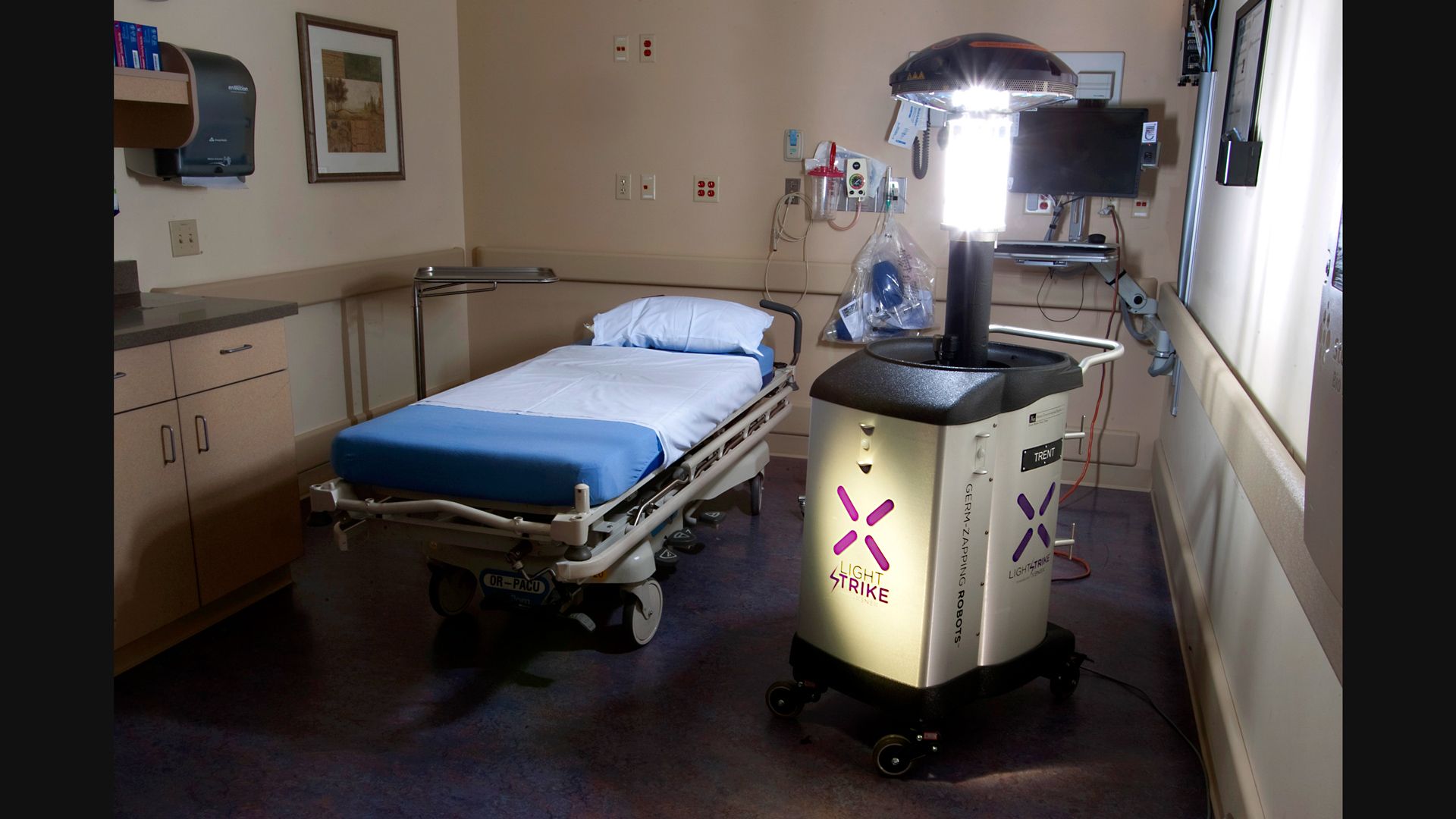
Xenex robot uses ultraviolet light to kill germs, such as coronavirus. Photo: Xenex
As coronavirus spreads across the globe, health care professionals are tapping germ-zapping robots and roving tele-doctors to help minimize human exposure to the virus.
Why it matters: Drones and other new technologies could potentially slow the spread of the illness and perhaps speed the delivery of medicines and other support where help is needed. But deploying them comes with a host of ethical questions.
What's happening: Hundreds of hospitals already use robots to disinfect operating rooms and kill MRSA and other pathogens that cause health care-associated infections. Now they want to turn them on coronavirus, too.
- A UV emitting robot from Xenex Disinfection Services is deployed in more than 500 hospitals worldwide, including ones in California and Nebraska where there are confirmed cases of coronavirus, to destroy germs and bacteria. (It still needs to be tested on the novel coronavirus.)
- GermFalcon, a UV robot that targets germs on airplanes, is fielding inquiries from multiple airlines, says co-founder Elliot Kreitenberg. Now he's developing a similar UV robot for hospitals.
- Vici, a device that looks like a tablet on wheels, enabled doctors to interact with the first U.S. coronavirus patient at a hospital in Everett, Washington, according to Forbes.
What to watch: Drones and unmanned aerial vehicles can now perform a variety of tasks that could be beneficial in fighting epidemics.
- Drones still face regulatory hurdles in the U.S. but if the FAA eventually permits them to fly longer distances, a network of distribution centers could quickly send vaccines via drone, says Justin Hamilton, a spokesperson for Zipline, a drone company that makes thousands of deliveries per day of blood and other medical supplies in Rwanda.
- The company is already working with the U.S. Department of Defense on a rapidly deployable drone system in case of a mass casualty humanitarian event.
Yes, but: The temptation during a humanitarian crisis might be to rush technologies to the scene before they're ready, even bending regulations to do so, which would be a mistake, disaster recovery experts warn.
- "You don't want to experiment on people and make things worse," says Robin Murphy of Texas A&M University.
- Patients in rural areas or foreign countries might not know how to interact with alien technology, creating frustration or fear, for example.
- Nor should robots be used to replace medical professionals or take needed jobs from those who are uninfected, Murphy added.
- Some researchers are working on tracking and surveillance tech that would use drones to identify people through their masks, and even take vital signs of individuals in a crowd, raising privacy concerns, she said.
- Another worry is spraying of disinfectants via unmanned drones. "Are they truly disinfecting or just practicing chemical warfare?"
