March 20, 2025


It's Thursday ... With recess wrapping up, we'll be back to our regular publishing schedule next week.
1 big thing: How Trump's FTC firings could reshape independent agencies
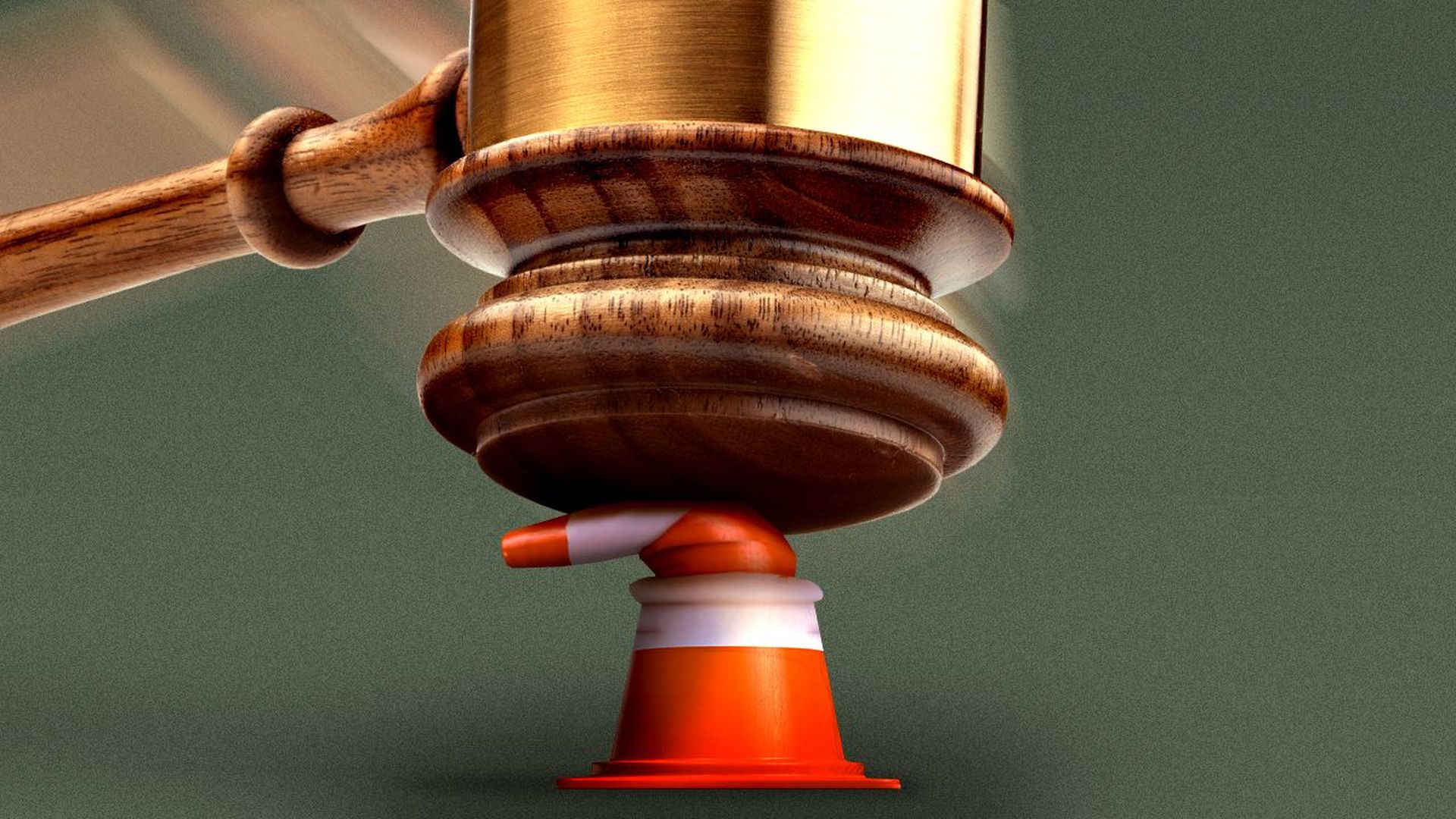
President Trump's move to fire the two Democratic FTC commissioners is calling the future of independent agencies into question, Ashley reports.
The big picture: For the tech industry, an FTC without Democratic commissioners under Trump may mean one thing: he's the one to negotiate with if they want a case dismissed.
Driving the news: The two ousted commissioners, Rebecca Slaughter and Alvaro Bedoya, pledged to fight for their jobs in court, arguing they are still Senate-confirmed officials who have been illegally removed.
- Their message: Without independent commissioners, there are no checks if the president urges the FTC chair to drop a case or reject an enforcement action.
- And with rich tech CEOs surrounding the president, they say there's reason to think he will.
- "The point of an independent agency is you're not working for the President. Donald Trump is basically the head of the FTC now," Douglas Farrar, former FTC chair Lina Khan's director of public affairs, told Axios.
What they're saying: Sens. Amy Klobuchar and Maria Cantwell led a letter signed by more than two dozen Democratic senators calling on Trump to reverse the firings, writing that "this action contradicts long standing Supreme Court precedent and undermines Congress's constitutional authority."
- "There is no valid justification, legal or otherwise, to remove these two excellent Commissioners. The American public deserves better," former DOJ antitrust chief Jonathan Kanter wrote on LinkedIn.
The other side: Neil Chilson, a Republican former FTC staffer, posted on X that "the Biden administration undermined this rationale [for independent agencies] by steering the FTC deep into explicitly political territory."
How it works: A quorum at the FTC, per definition, is a majority of members who are not recused from participating due to a conflict.
- Generally, at least three members vote out enforcement actions.
- The FTC has voted out an action with only two commissioners before. But it's not common, and could give companies under FTC enforcement a reason to legally challenge any decisions.
- Republican FTC commissioner nominee Mark Meador has not yet been Senate-confirmed.
The intrigue: As we previously reported, FTC chair Andrew Ferguson has been clear in his early days on the job that he doesn't plan to be easy on Big Tech.
- He also recently said having minority commissioners was a good thing, telling Bloomberg's Odd Lots podcast that the hundreds of pages of dissents he wrote as a minority commissioner under chair Lina Khan added value.
- But after Bedoya and Slaughter were fired, both Ferguson and Republican commissioner Melissa Holyoak said they trusted the president had the authority to do so. Ferguson said the FTC's mission has not changed.
Conservatives have been targeting a 1935 Supreme Court case, Humphrey's Executor, that has made it difficult to fire members of independent agencies. These firings can directly lead to a challenge of that.
- White House press secretary Karoline Leavitt said Wednesday the administration was prepared to defend the firings in court.
What we're watching: Slaughter and Bedoya have cited the case of Gwynne Wilcox, Democratic member of the National Labor Relations Board, who fought her dismissal and won.
- Whether Trump's firings hold up is probably going to be up to the Supreme Court.
2. What Trump's agency firings mean for the FCC
President Trump is pushing the bounds of the law with the firing of FTC Democrats and sparking questions over the future of the FCC, Maria reports.
Why it matters: Democrats in other agencies could be targeted and norms around having bipartisan commissions could be shattered, experts and former officials say.
Here's what to know about how this could play out at the FCC.
1. Quorums
- The 1934 Communications Act establishes the FCC's quorum as three members, regardless of party affiliation.
- No more than three members of the five can be from the same political party.
- That means Trump can nominate independents, Democrats or no one at all to fill vacancies.
2. Recusals
- The Communications Act does not have specific language about recusals. Conflict of interest law does require commissioners to divest where appropriate.
- FCC observers don't foresee any current commissioners or nominees as needing to recuse themselves.
- SpaceX lobbyist David Goldman, reportedly a top FCC nominee contender, would be more likely to need to divest.
Catch up quick: Trump has nominated longtime Hill staffer Republican Olivia Trusty to fill the vacant seat on the commission.
- Democratic commissioner Geoffrey Starks announced this week he is retiring, leaving commissioner Anna Gomez as the last Democrat.
What they're saying: Benton Institue senior fellow and public advocate Gigi Sohn said that this administration has "shown that norms" is a "meaningless term."
- In an X post reacting to the FTC firings, Gomez said, "We all have a duty to keep speaking truth to power and to stand firm in our beliefs."
The bottom line: Should Trusty be confirmed, chair Brendan Carr would have the votes he needs to advance his agenda, with or without Gomez.
3. Catch me up: Kids safety, NTIA and more
📱 Kids' online safety: House Energy and Commerce's Commerce, Manufacturing, and Trade Subcommittee will hold a hearing on Wednesday at 10am ET titled "The World Wild Web: Examining Harms Online."
- Read Maria's story from last week on the state of play for kids' online safety legislation here.
💼 NTIA update: President Trump has named Adam Cassady, a top aide to FCC commissioner Nathan Simington, as acting NTIA administrator.
🇪🇺 EU watch: "EU Pushes Ahead With Big Tech Antitrust Enforcement," the Wall Street Journal reports.
🚘 Lutnick boosterism: Tesla shares fell early today after Commerce Secretary Howard Lutnick used a TV appearance to urge Americans to buy stock in Elon Musk's car company, per our Axios colleague Ben Berkowitz.
✅ Thank you for reading Axios Pro Policy, and thanks to editors Mackenzie Weinger and David Nather and copy editor Bryan McBournie.
- Do you know someone who needs this newsletter? Have them sign up here.
View archive