October 29, 2024


It's Tuesday, Pros. This week, we're bringing you newsletters from Ohio, with on-the-ground coverage that explores the CHIPS and Science Act's progress in this key battleground state.
💼 Changed jobs recently? Let us know here, and we'll include you in our Friday newsletter detailing who's working where.
1 big thing: An Ohio rubber town goes green
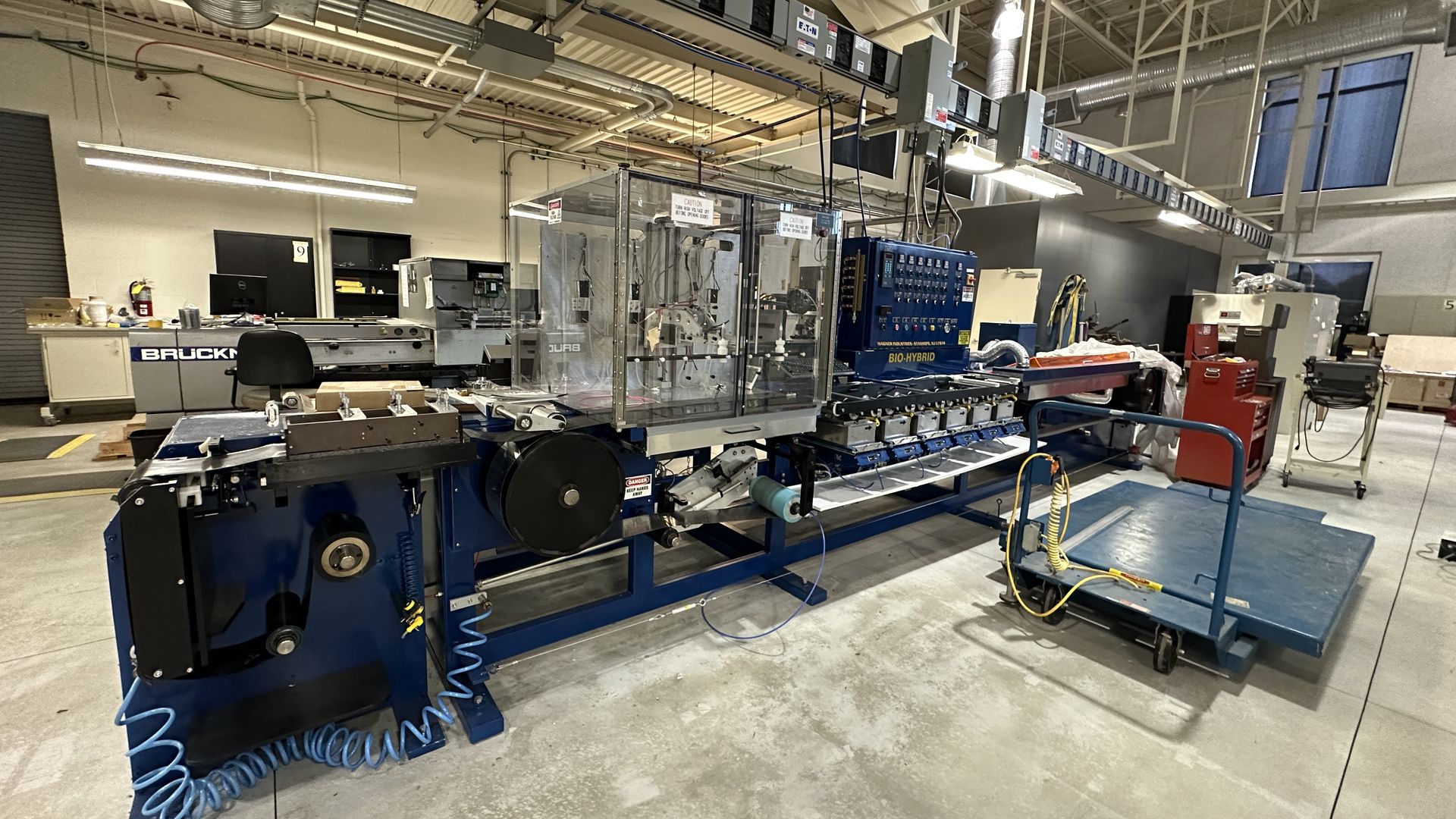
AKRON, Ohio — The CHIPS and Science Act is spurring dozens of organizations here to come together to fight the environmental harms of plastic and rubber, Maria reports.
Why it matters: The OECD estimates that greenhouse gas emissions from plastics will more than double between 2019 and 2060.
- Akron's Sustainable Polymers Tech Hub aims to slow down that trajectory, resulting in an overall reduction of 3.9 million tons of carbon emissions annually, according to the tech hub's grant application.
- That's the equivalent of taking nearly 1 million cars off the road.
The big picture: The hub was made possible by the CHIPS and Science Act, which poured billions of dollars across the country to spur tech manufacturing and innovation.
- The tech hub piece of the law targets regions in the U.S. that already have infrastructure but could use money to supercharge critical tech ecosystems.
- Two years after the bill was signed into law, and after lengthy application processes, projects are starting to come to life.
- University of Akron polymer science and engineering school interim director Mark Soucek said in an interview on campus the hub is "a very good start" for tackling the harms of oil-based plastics.
Zoom in: The university is No. 1 in the world for polymer science and a major player in the hub, with hundreds of instruments and pieces of equipment for testing and processing plastics and rubber.
- Researchers have been working toward sustainable polymers for decades, but there were few financial incentives for companies to transition from using fossil fuel-based polymers.
- $51 million in CHIPS grants will allow the university, companies, labor organizations and others to collaborate on scaling up the production of such products and train the workforce needed to support the industry.
The money is catalyzing companies to expand and change their business practices.
- Flexsys — a chemical manufacturer in Akron and the only U.S.-based supplier of 6PPD, which is toxic to the environment but necessary to stop tires from degrading — will use its grant to buy equipment and produce an environmentally-friendly replacement of the chemical, aiming to create 100 jobs in 10 years.
- Bioverde, a startup that makes renewable polymers and chemicals, is moving into Akron to service the budding local industry and ultimately impact global synthetic rubber supply chains.
- Akron's Full Circle Technologies plans to use its grant to scale up tire recycling, setting up 48 facilities across the U.S. and create 1,274 jobs in 10 years.
How it works: Making plastic and rubber more sustainable means completely removing the chemicals that come from oil or recycling.
- The tech hub in Akron is taking both approaches, so fossil fuels will still be part of the picture.
What they're saying: In order for there to be the most meaningful environmental impact "the petrochemical supply chain not only needs to be disrupted, it needs to be taken over by another chain," Soucek said.
- Bioverde CEO Dave Witte said that it's risky to scale up, and the grants are key for companies to prove their solutions work.
- "This is something both Republicans and Democrats can get behind because we're carbon neutral or negative and we're a third of the cost of oil," Witte said.
What's next: The hub is in its early stages, but Soucek is already looking to build on the research the university is doing.
- "Packaging is the frontier that I'm looking forward to," he said, referring to removing petrochemicals from the plastics used for packaging, which accounts for a huge amount of pollution.
2. Q&A with the University of Akron's Pailey Vitale

The University of Akron's $7.1 million workforce initiative for the sustainable polymers industry is just taking shape, but some students are already well on their way to filling jobs.
Why it matters: The U.S. is grappling with a massive workforce shortage and women, who historically have been underrepresented in STEM, could fill the gaps.
Maria sat down with Pailey Vitale, a 20-year old junior at the university. Vitale is among the first to major in polymer science and engineering, a track that was created her freshman year.
- The university's new workforce initiative aims to enroll 120+ students annually for certificate, two-year, four-year and graduate programs.
This conversation has been edited and condensed for clarity.
How did you end up here?
My father would push me towards summer camps around STEM or I would go to women in STEM events on Saturdays growing up.
- My dad wants me to be smarter than he was. I love my parents and it's always great to have the support in whatever I choose to do. He was originally in STEM and now he runs his own business.
Does the tech hub's environmental mission resonate with you, and is that something that you want to center in your own career?
That's definitely a factor that I want to consider whenever I'm looking for careers. If I decide to go into industry, then I always want to make sure the company has a sustainability focus.
What kind of career could this lead you to?
I'm more of an engineer than a scientist. I want to know how things are made and how things work, rather than forming chemical structures or coming up with a new polymer.
- I could go into paints or coatings or automotive; some companies are trying to do sustainability-focused projects. Then there's also companies that are focusing on the processing point of polymers.
Why do you think women in STEM is important?
It's good to have an array of perspectives that women can bring to the table.
- Seeing male dominance in executive positions in different companies, that's not always the best thing that us as women want to see.
- I typically have only seen women in a hiring manager position or HR or marketing, but I would prefer to see them in engineering roles.
3. Catch me up: Deep tech, outbound investment and more

🤖 Outbound investment curbs: The Treasury Department yesterday finalized its rule to crack down on U.S. investment in China, blocking certain investments in AI, semiconductors and quantum for national security reasons.
- Flashback: President Biden signed an executive order in August 2023 setting this final step in motion.
🔦 Intel insights: "How Intel Got Left Behind in the A.I. Chip Boom," per the New York Times.
💰 Deep tech cash: Reuters reports that the EU will invest €1.4 billion ($1.5 billion) next year "to support the region's deep tech research sector."
- That's nearly €200 million more compared to this year, and comes as Europe is trying to keep up with the U.S. and China on tech.
🗳 Japan election impact: "Japan's chip push loses key advocate after election defeat," Bloomberg reports.
✅ Thank you for reading Axios Pro Policy, and thanks to editors Mackenzie Weinger and David Nather and copy editor Bryan McBournie.
- Do you know someone who needs this newsletter? Have them sign up here.
View archive