
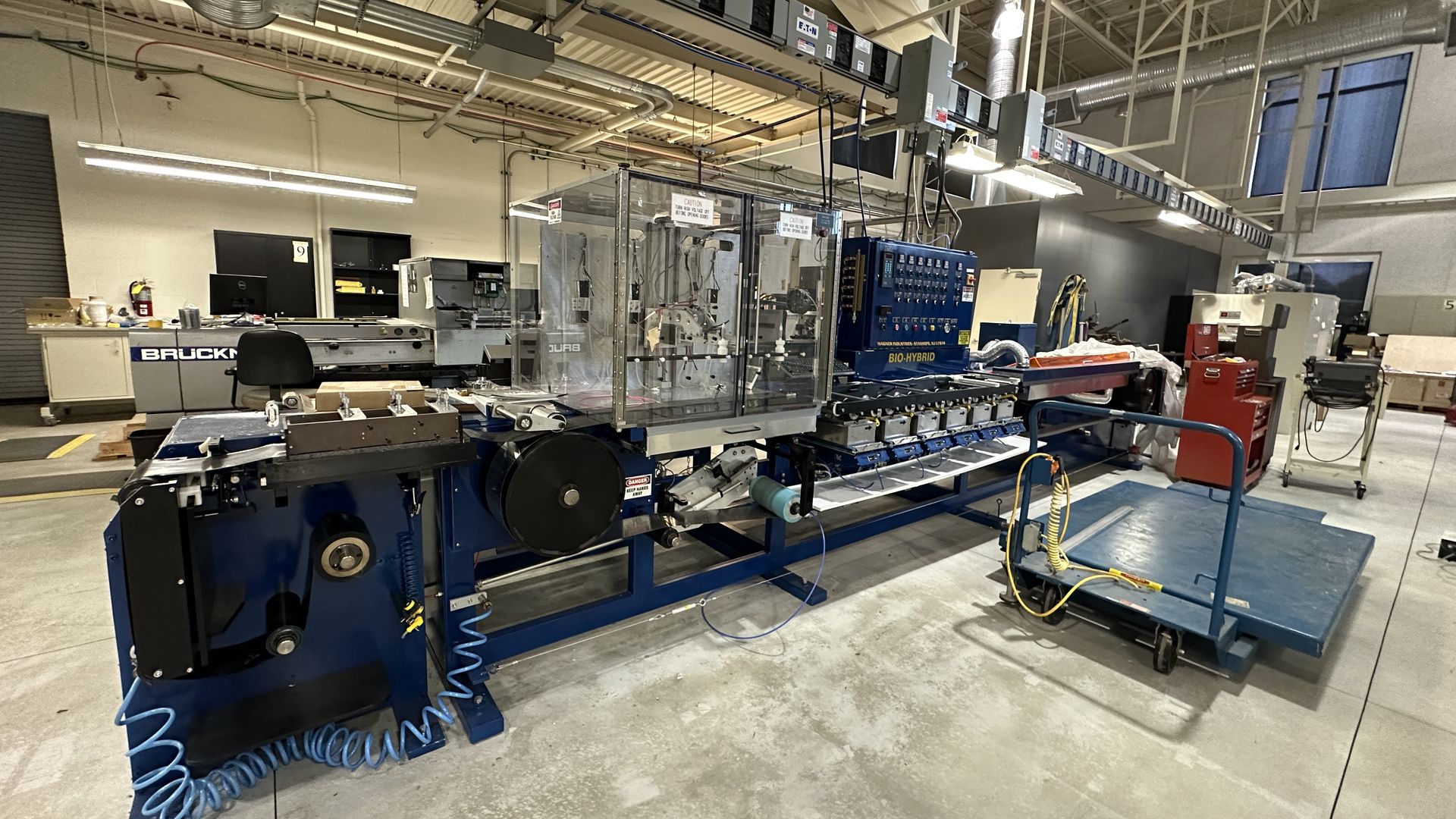
Polymer processing machines at the University of Akron. Photo: Maria Curi/Axios
AKRON, Ohio — The CHIPS and Science Act is spurring dozens of organizations here to come together to fight the environmental harms of plastic and rubber.
Why it matters: The OECD estimates that greenhouse gas emissions from plastics will more than double between 2019 and 2060.
- Akron's Sustainable Polymers Tech Hub aims to slow down that trajectory, resulting in an overall reduction of 3.9 million tons of carbon emissions annually, according to the tech hub's grant application.
- That's the equivalent of taking nearly 1 million cars off the road.
The big picture: The hub was made possible by the CHIPS and Science Act, which poured billions of dollars across the country to spur tech manufacturing and innovation.
- The tech hub piece of the law targets regions in the U.S. that already have infrastructure but could use money to supercharge critical tech ecosystems.
- Two years after the bill was signed into law, and after lengthy application processes, projects are starting to come to life.
- University of Akron polymer science and engineering school interim director Mark Soucek said in an interview on campus the hub is "a very good start" for tackling the harms of oil-based plastics.
Zoom in: The university is No. 1 in the world for polymer science and a major player in the hub, with hundreds of instruments and pieces of equipment for testing and processing plastics and rubber.
- Researchers have been working toward sustainable polymers for decades, but there were few financial incentives for companies to transition from using fossil fuel-based polymers.
- $51 million in CHIPS grants will allow the university, companies, labor organizations and others to collaborate on scaling up the production of such products and train the workforce needed to support the industry.
The money is catalyzing companies to expand and change their business practices.
- Flexsys — a chemical manufacturer in Akron and the only U.S.-based supplier of 6PPD, which is toxic to the environment but necessary to stop tires from degrading — will use its grant to buy equipment and produce an environmentally-friendly replacement of the chemical, aiming to create 100 jobs in 10 years.
- Bioverde, a startup that makes renewable polymers and chemicals, is moving into Akron to service the budding local industry and ultimately impact global synthetic rubber supply chains.
- Akron's Full Circle Technologies plans to use its grant to scale up tire recycling, setting up 48 facilities across the U.S. and create 1,274 jobs in 10 years.
How it works: Making plastic and rubber more sustainable means completely removing the chemicals that come from oil or recycling.
- The tech hub in Akron is taking both approaches, so fossil fuels will still be part of the picture.
What they're saying: In order for there to be the most meaningful environmental impact "the petrochemical supply chain not only needs to be disrupted, it needs to be taken over by another chain," Soucek said.
- Bioverde CEO Dave Witte said that it's risky to scale up, and the grants are key for companies to prove their solutions work.
- "This is something both Republicans and Democrats can get behind because we're carbon neutral or negative and we're a third of the cost of oil," Witte said.
What's next: The hub is in its early stages, but Soucek is already looking to build on the research the university is doing.
- "Packaging is the frontier that I'm looking forward to," he said, referring to removing petrochemicals from the plastics used for packaging, which accounts for a huge amount of pollution.
