February 29, 2024

Good afternoon … The House passed another CR to push shutdown deadlines to March 8 and March 22. The Senate could move it as soon as tonight.
- We'll get back to you when we hear what's in the actual spending bills they're looking to pass next week.
⚡️ Join Axios Pro Policy for an exclusive energy policy conversation with Energy and Commerce Chair Cathy McMorris Rodgers in D.C. on March 7. Register here.
1 big thing: Booker highlights AI equity
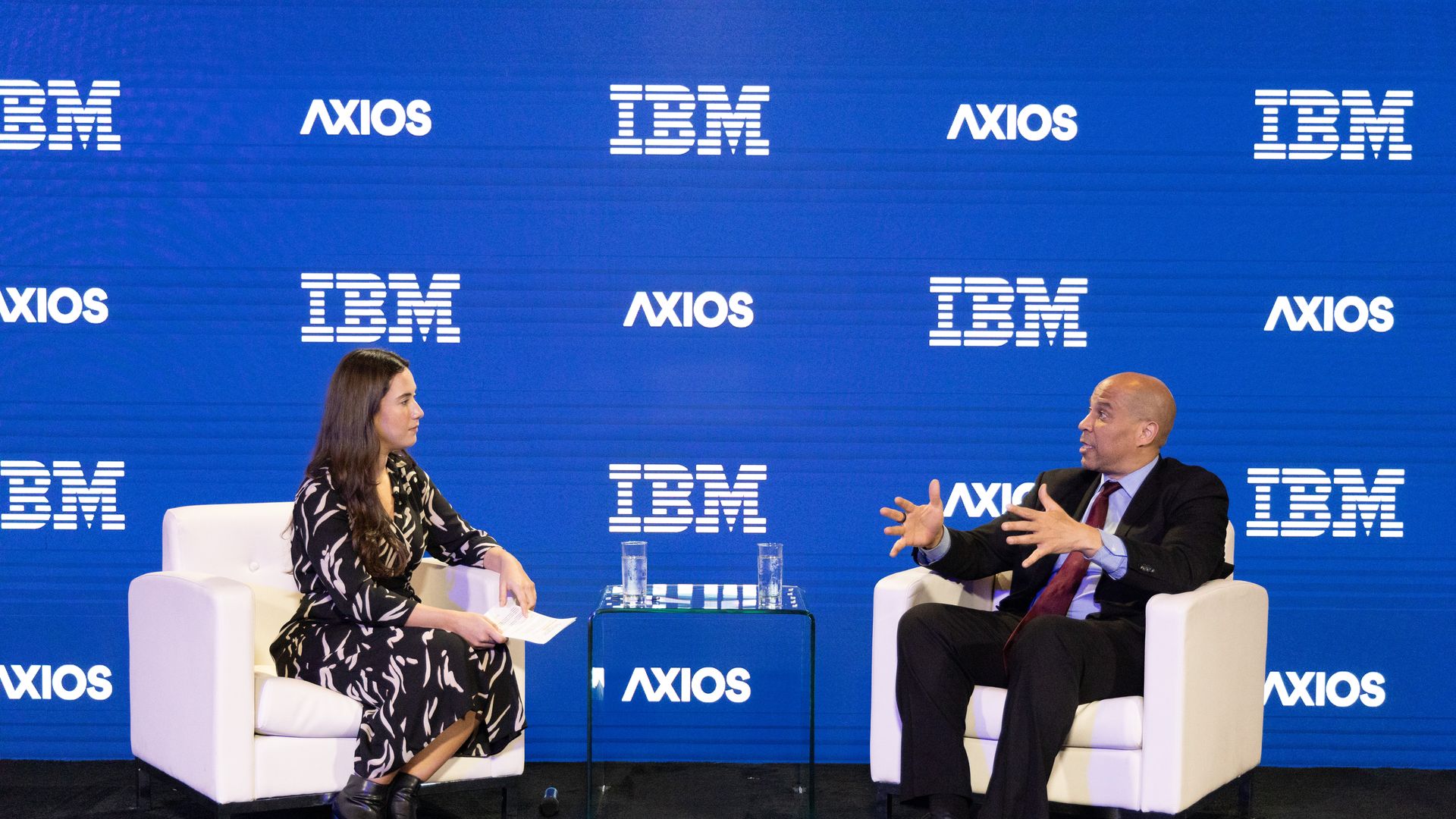
Maria and Sen. Cory Booker. Photo: Hector Emanuel for Axios
Sen. Cory Booker told Maria yesterday that he's confident the Senate's AI framework will reflect equity and civil rights discussions.
Why it matters: Congressional leaders are working to keep AI regulation efforts bipartisan, and a Senate report expected next month will give committees a roadmap for legislation.
- Civil rights and equity are featured in the Biden administration's AI executive order.
Catch up quick: Senate Majority Leader Chuck Schumer, with the help of a bipartisan group of senators, held AI Insight Forums last year that are informing the framework.
- Booker said he's "excited and encouraged" that in those discussions "there has been a real effort to include diverse voices, diverse input and to talk openly about these issues."
- "I feel confident that these issues will be brought to the table and I hope will be done in an inclusive manner, reflective of legislation that's already out there."
For example, the Algorithmic Accountability Act would require companies to conduct bias impact assessments and create a public repository at the FTC of those systems.
- Booker helped introduce the bicameral bill. Similar transparency efforts for social media companies have faced pushback.
- "Of course, large corporations often are going to resist reasonable regulation," Booker said. "But I think there's a movement of consciousness growing in our country that we need to regulate the space."
The CREATE AI Act, a bipartisan, bicameral bill Booker is also cosponsoring, would authorize the National AI Research Resource to boost participation in the technology's development.
- Booker: "What I really don't want to see happen is this concentration of power. Some of these models, to build them out, we're now talking trillions of dollars and large amounts of money that make AI research difficult to do in a democratic way.
- "That actually makes me fearful that we're going to lose out on, not just the diversity, but also getting the input of some of the brightest minds around the country that could help us think through these problems."
- Booker said he hopes the bill will pass, given its national security and competitiveness implications, which tend to garner broad support.
The big picture: Earlier Wednesday, the Congressional Black Caucus launched a policy series with a focus on equity and inclusion in the development and deployment of AI and its impact on Black Americans.
- Rep. Yvette Clarke, who was appointed to a separate House AI working group, is also helping lead the CBC series.
What's next: CBC members in the coming weeks will use the policy series to identify AI bias and discrimination issues and help shape bicameral legislation
- Rep. Steven Horsford pointed to key partners that will "ensure that the perspectives of the Black Caucus are taken into account with any policy that's advanced," including Minority Leader Hakeem Jeffries and Booker.
2. Rounds on what's next for AI policy
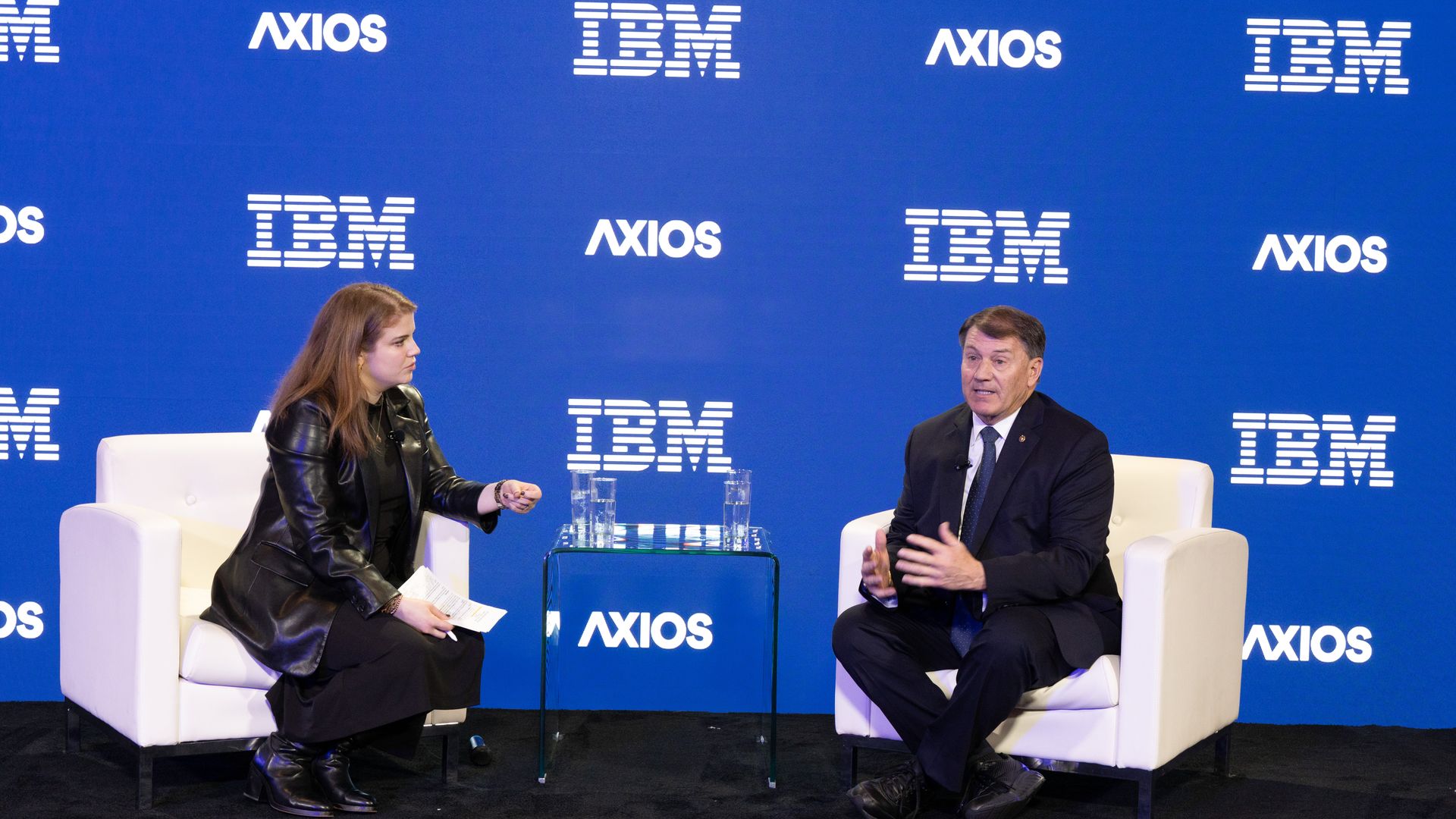
Ashley and Sen. Mike Rounds. Photo: Hector Emanuel for Axios
The bipartisan Senate AI working group plans to issue a report next month so that committees can start looking at legislation, Sen. Mike Rounds told Ashley at Axios' Responsible AI event yesterday.
The big picture: Rounds said the report will be a "profile of different ideas" shared with committee chairs and ranking members "to kind of lay out some ideas about what the different committees might want to take a look at."
State of play: "We're not so much telling everybody what to do, but what different areas of interest might be, and perhaps some pathways for consolidation for different committees," he said.
- As an example, Rounds named the health care and finance committees potentially working together to figure out how to pay for AI innovations in health.
- "The idea is to lay out very general guidelines … what we learned, what some recommendations are, some ideas for looking at different types of legislation."
- "We want to invite the committees to get active."
- Rounds also said he wants people to get excited: "I really think the American people have got to be shown that it's not all scary stuff and misinformation being put out by bad actors.… It's also quality-of-life improvements that AI can bring to our communities."
All Senate committees could end up being involved in crafting legislation, he said.
- One surprising thing Rounds gleaned from the AI roundtables last fall? "There was an understanding across the board … that we have to be as good or better than anybody else in the world, and the reason for that is in the defense of our own country, we can leave nothing to chance."
- Rounds also said the forums made him realize the importance of having individual privacy protections at the same time as having sophisticated datasets for AI to train on.
What's next: Asked if there would be an AI bill on the Senate floor before the presidential election, Rounds hedged:
- "You very well may … but they will take different forms and they'll be attached to different types of products that are moving through the NDAA."
- "You will see more [AI items] in the NDAA this year, and you may very well see some things in any type of appropriations bill."
- "Privacy and transparency for the upcoming election is an area where we very well might see some items to improve our capabilities to identify for the public what is misinformation."
3. What we're hearing: Lieu on the House AI working group

Illustration: Maura Losch/Axios
Rep. Ted Lieu told reporters he's meeting with House AI working group chair Jay Obernolte today to align their goals and set the schedule for meetings, Maria reports.
The big picture: Lieu, the working group co-chair, says they're planning for years of legislative work.
- "Jay and I have this view, which is, this is not one of those situations where it's one 5,000-page bill that's done one time and then we're done."
- "This is gonna be a multiyear process with different bills each year addressing different topics."
Catch up quick: Obernolte has also forecast a long timeline for legislation, telling Maria this month that it's going to take "years" to get the work done.
- Obernolte: "Obviously this is not the work of just a few months; this is going to be the work of years and years. But it's important that we get started. I think we're behind."
Our thought bubble: Legislation that addresses election-related AI concerns is likely to be a nearer-term goal as lawmakers on both sides of the aisle worry how it could impact them.
4. Catch me up: KOSA, broadband and more
Illustration: Tiffany Herring/Axios
✍️ Data EO: President Biden signed an executive order that aims to stop data brokers and other companies from selling Americans' data to organizations in adversarial foreign countries, including China and Russia, our Axios colleague Sam Sabin reports.
- Sen. Mark Warner: "While I welcome these steps, today's action does not assuage the need for comprehensive data privacy legislation. I urge my colleagues to come together on legislation that finally protects Americans' privacy online."
🌎 Standards bill: Sens. Warner and Marsha Blackburn introduced the Promoting United States Leadership in Standards Act to direct NIST and State to take action on international standards-setting for emerging tech, including establishing a pilot program to award grants to supporting AI standards meetings in the U.S.
📛 Council named: FCC Chair Jessica Rosenworcel appointed members to serve on the Technological Advisory Council, which will meet March 19.
📱 KOSA concerns: The ACLU says the revised legislation still needs some work, and is urging lawmakers "to continue to amend this bill so the government is no longer the one determining what content is or is not fit for children."
📡 Broadband letter: Nearly 70 groups wrote a letter urging the FCC to grant a "brief amnesty period" to communities covered under grants like the RDOF that wouldn't otherwise be eligible to receive BEAD funding.
📫 Critical technologies: Sens. Warner and Marco Rubio called on the Commerce Department "implement an export-control regime — as undertaken with the semiconductor industry — and impose controls on the sharing of American data."
🌐 ACP survey: The FCC released survey data on the Affordable Connectivity Program, with more than three-quarters of respondents saying that losing the benefit would disrupt their service.
- If Congress doesn't act, ACP funding will last only through April.
🤖 NTIA administrator on AI: "You're seeing government respond with a sense of urgency in a way that you rarely see in the tech space," NTIA's Alan Davidson told Ashley yesterday.
- "AI companies are hiring public policy staffers by the time they have 100 or 150 employees, and that is just one indication of the seriousness we're seeing."
✅ Thank you for reading Axios Pro Policy, and thanks to editors Mackenzie Weinger and David Nather and copy editor Brad Bonhall.
- Do you know someone who needs this newsletter? Have them sign up here.
View archive