November 28, 2023

It's Tuesday ... If you weren't able to attend the Axios AI+ Summit in D.C., we've got you covered with everything you need to know right here in this newsletter.
📍 Join us Dec. 7 for Pro Policy’s final happy hour of the year at Hawk 'n' Dove! Register here.
1 big thing: Klobuchar: OpenAI chaos signals need for regulation
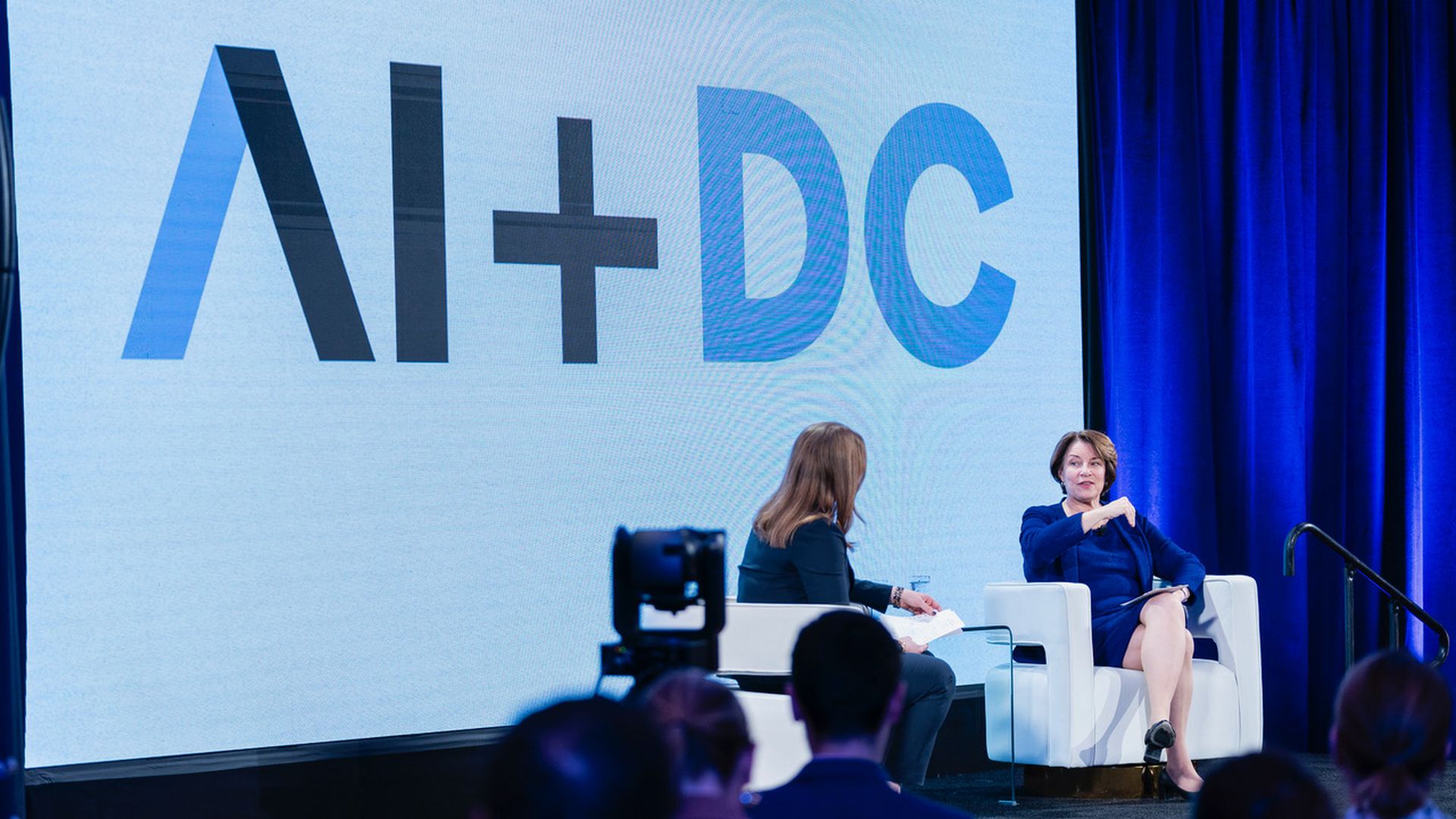
Klobuchar. Photo: Eric Lee/Axios
OpenAI's recent board drama shows that regulators need to set rules of the road for artificial intelligence, Sen. Amy Klobuchar told Ashley during the Axios AI+ Summit today.
Why it matters: Few lawmakers have weighed in on what the instability at the maker of the hugely popular ChatGPT means for the responsible and safe development of AI, Maria writes.
- "I think it shows how fragile all of this is.… There's also a need to have some guardrails because you never know at what moment who's going to be in charge of what, who's going to be making decisions about this incredibly powerful technology," Klobuchar said.
Zoom in: Klobuchar gave a nod to previous antitrust efforts that she said are "still relevant and maybe even more so" in the age of AI.
- The American Innovation and Choice Online Act would address the anticompetitive practice 0f "self-preferencing" that is exacerbated by AI because the technology makes it harder to know whose product is being unfairly promoted, Klobuchar said.
- The Journalism Competition and Preservation Act, meanwhile, would compensate journalists for their work that feeds AI models.
Of note: Klobuchar said she is gathering input on a discussion draft bill on intellectual property and people's rights to own their images. She's working on it with Sens. Marsha Blackburn, Thom Tillis and Chris Coons.
Klobuchar reflected on the "ferocious tech debates" around antitrust, during which millions of dollars were lobbied against her bills, saying of AI: "This time there is some legit meeting of the minds."
What's next: Senate Majority Leader Chuck Schumer will hold two more AI insight forums on intellectual property and defense issues "in the next week," Klobuchar said.
- Then legislation will be packaged, Klobuchar said, adding: "There may be some bills going off on their own just because we decide, boy, we have to get these done now."
- "The plan would be to work on them early in the year. We're obviously not going to do them in the next three weeks."
- Klobuchar pointed to her efforts around AI in elections: "If there's one thing we better get done soon, I think it's that."
2. CFPB's Chopra: AI could dangerously concentrate power
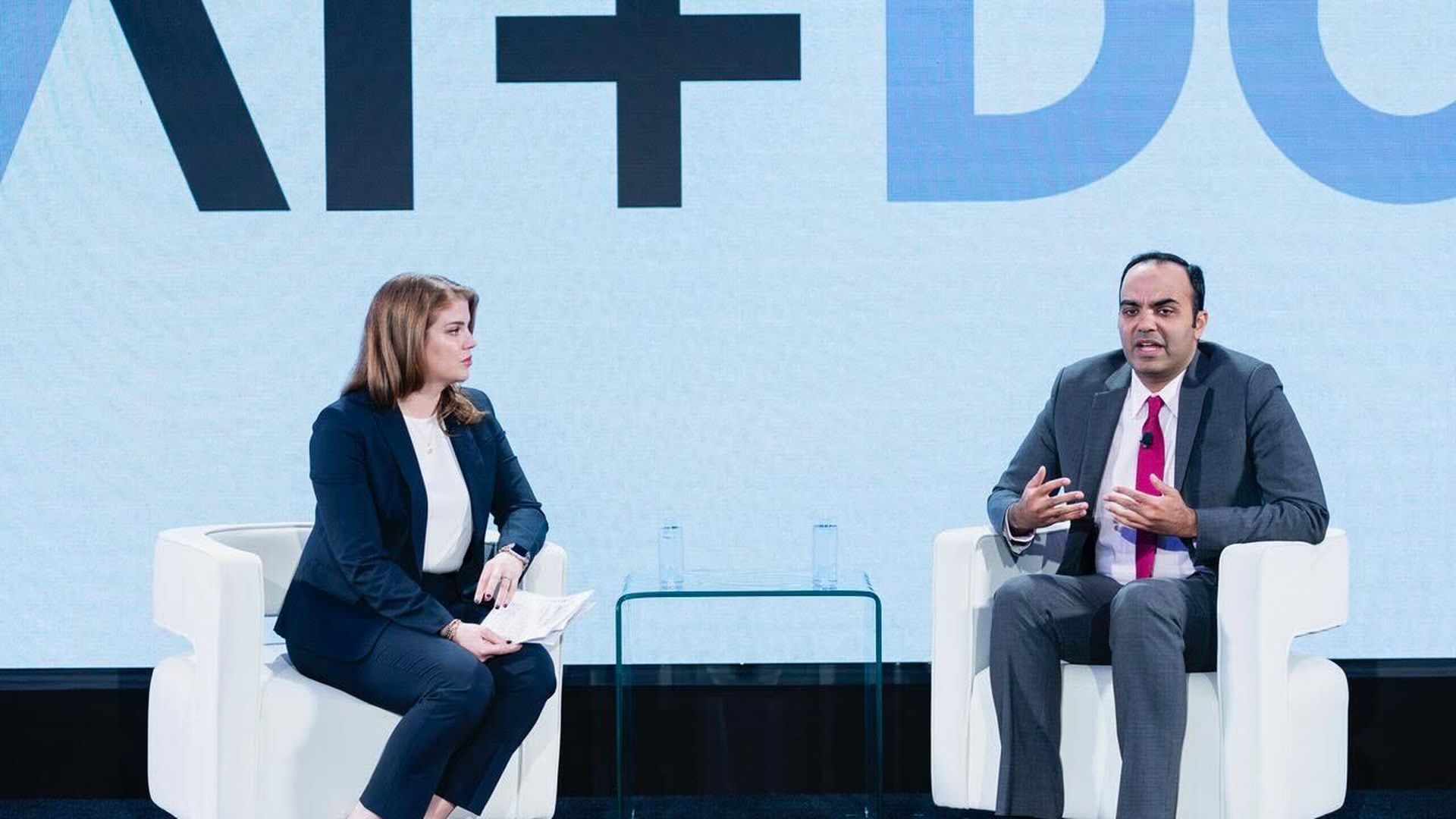
Ashley and Rohit Chopra. Photo: Eric Lee/Axios
Consumer Financial Protection Bureau director Rohit Chopra said today that he's concerned that a handful of firms and individuals could wield "enormous control over decisions made throughout the world" with advances in artificial intelligence.
Driving the news: Chopra spoke with Ashley, highlighting the way the massive aggregation of consumer data will alter the economy and impact Americans.
- Chopra shared his worries over AI's "winner take all" dimension, given its ability to "simulate human interaction in a way I don't think we've seen before."
- This elevates concerns over fraud, crime and abuse, particularly in functions of financial services like customer service and lending, he said.
- But Chopra noted that there are "long-standing laws on the books" that can address this, and "if those laws are changed" they should be put to use as well.
What they're saying: "Who really is in control of it? Who gets the gains from it? With lots of aggregations from data, much of the gains are not broadly distributed and they go to a handful of people," Chopra said.
- "You always want to be concerned when there's any type of market structure that quickly goes to just a few players," he said.
Of note: On antitrust, Chopra pointed out that pools of data are assets and that's a "huge question" for regulators.
- "I think there is existing antitrust law to deal with, but how the regulators can find out about them and address them, that's a big-ticket item," he said.
- "But there is this piece of this, are we ever going to put some of the genies back in the bottle? … This is a different type of warfare, a different type of human interaction. I really want to make sure whatever we do today, we can stop a lot of that."
What's next: Looking ahead, Chopra threw some cold water on the idea that there should be a new agency to regulate AI.
- "If you're gonna do that, you have to keep the existing ones too," he said, adding that "the challenge of regulating data is you're regulating everything."
- CFPB is one of the newest agencies, he pointed out, and it was formed because there was a lack of accountability for protecting consumers. Anyone who wants to add an agency needs to figure out what they want to achieve with it first.
- It's difficult to consolidate everything that AI will touch, including national security and mergers and acquisitions, into one agency, he said.
3. CDT's president on protecting elections from AI
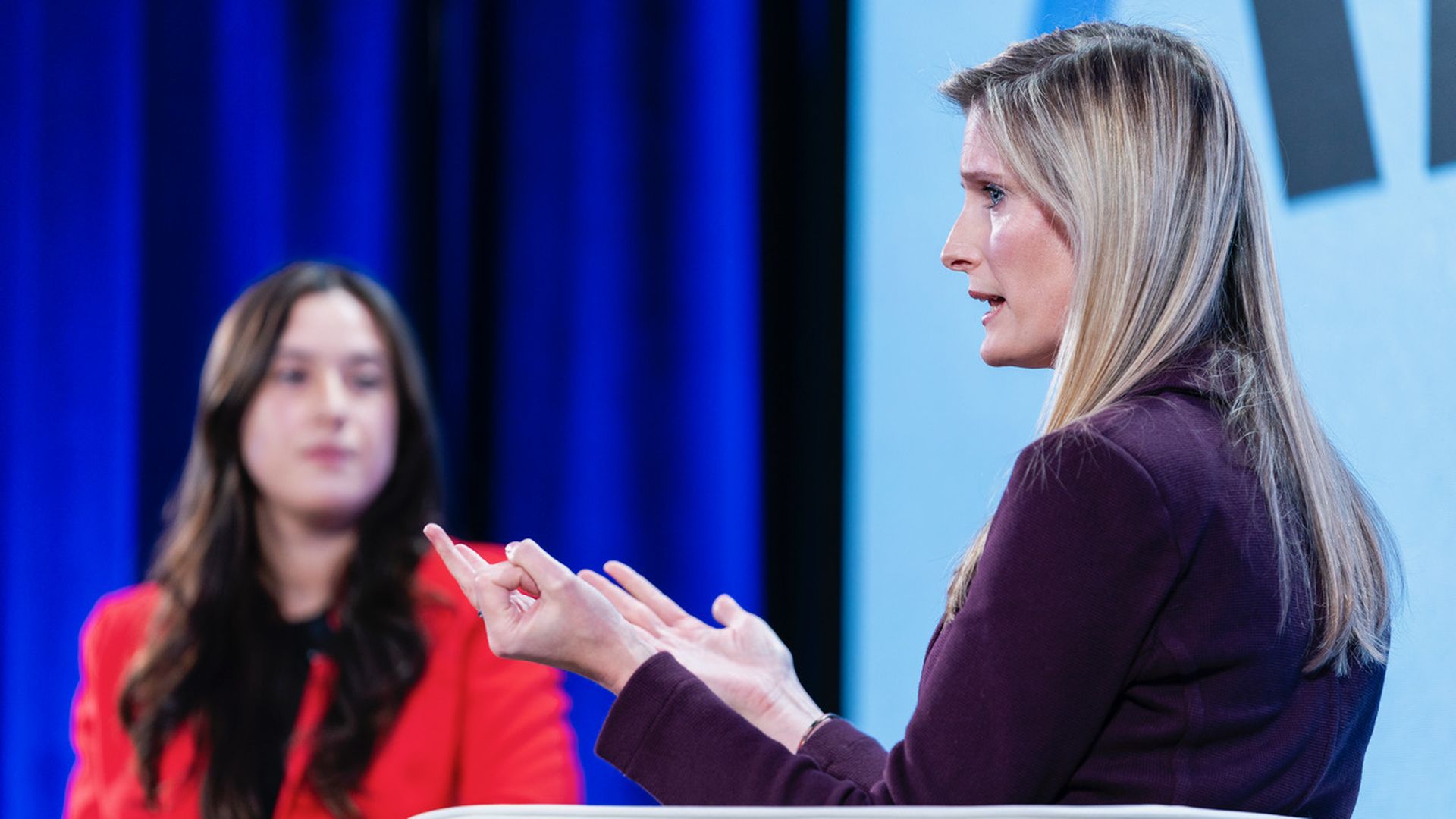
Alexandra Reeve Givens. Photo: Eric Lee/Axios
Alexandra Reeve Givens, president of the Center for Democracy & Technology, today called for companies and election officials "to start acting right now" to counter threats from AI before voters around the world head to the ballot box in 2024.
Driving the news: Reeve Givens, who spoke with Maria, warned that elections must be protected ASAP from AI.
What they're saying: "We can't sit and wait for Congress to act on this," she said.
- "We are seeing the biggest scale-back in investment in trust and safety in social media platforms since 2016."
- Companies need to do the exact opposite and boost their trust and safety teams, given rampant misinformation and disinformation, she added.
Threat level: Reeve Givens zeroed in on how to tackle deepfakes, noting that although "this isn't a new playbook," the problem demands action from generative AI companies, social media platforms and campaigns and candidates themselves.
- "Legislation is nice, but we need to look to the companies and election officials to start acting right now," she said.
Of note: Reeve Givens also pointed out that the Biden administration's AI executive order's "ambitious" elements" — engaging with long-term safety risks like threats to critical infrastructure or people's rights — will soon meet the reality of its deadlines and execution.
- "We want the agencies to be bold and really live up to the mandates of the EO" and ultimately shape private sector norms, she said.
- The other piece is how this EO survives beyond the Biden administration, she said: "It really matters that the norms that are being developed aren't just ideas floating around on paper, but really become the way of doing business."
4. What we're hearing: "Spicy memes"

Illustration: Allie Carl/Axios
So-called spicy memes were in the spotlight during a morning roundtable on deepfakes, disinformation and copyright concerns hosted by Maria and Axios technology editor Megan Morrone.
- "While we're talking about deepfakes, there's going to be spicy memes that take democracy down," said Atlantic Council Digital Forensic Research Lab's Graham Brookie.
- Chris Donahoe, head of AI strategy at Edelman Smithfield, responded: "First, I want to thank Graham for giving me a great insight, which is that maybe the solution is we just need to make more truth-based, spicier memes."
- "We need to educate the public about the capability of AI to mimic human behavior," said Center for AI and Digital Policy's Marc Rotenberg. "Not to be the same, but to be something other, which is not quite the same thing as being false or misleading or disinformation. It's a form of skepticism that allows people to think critically and assess ultimately what's the truth."
✅ Thank you for reading Axios Pro Policy, and thanks to editor Mackenzie Weinger and copy editor Brad Bonhall.
- Do you know someone who needs this newsletter? Have them sign up here.
View archive