June 12, 2023

Happy Monday, Pro readers!
1 big thing: Two years of Lina Khan at the FTC
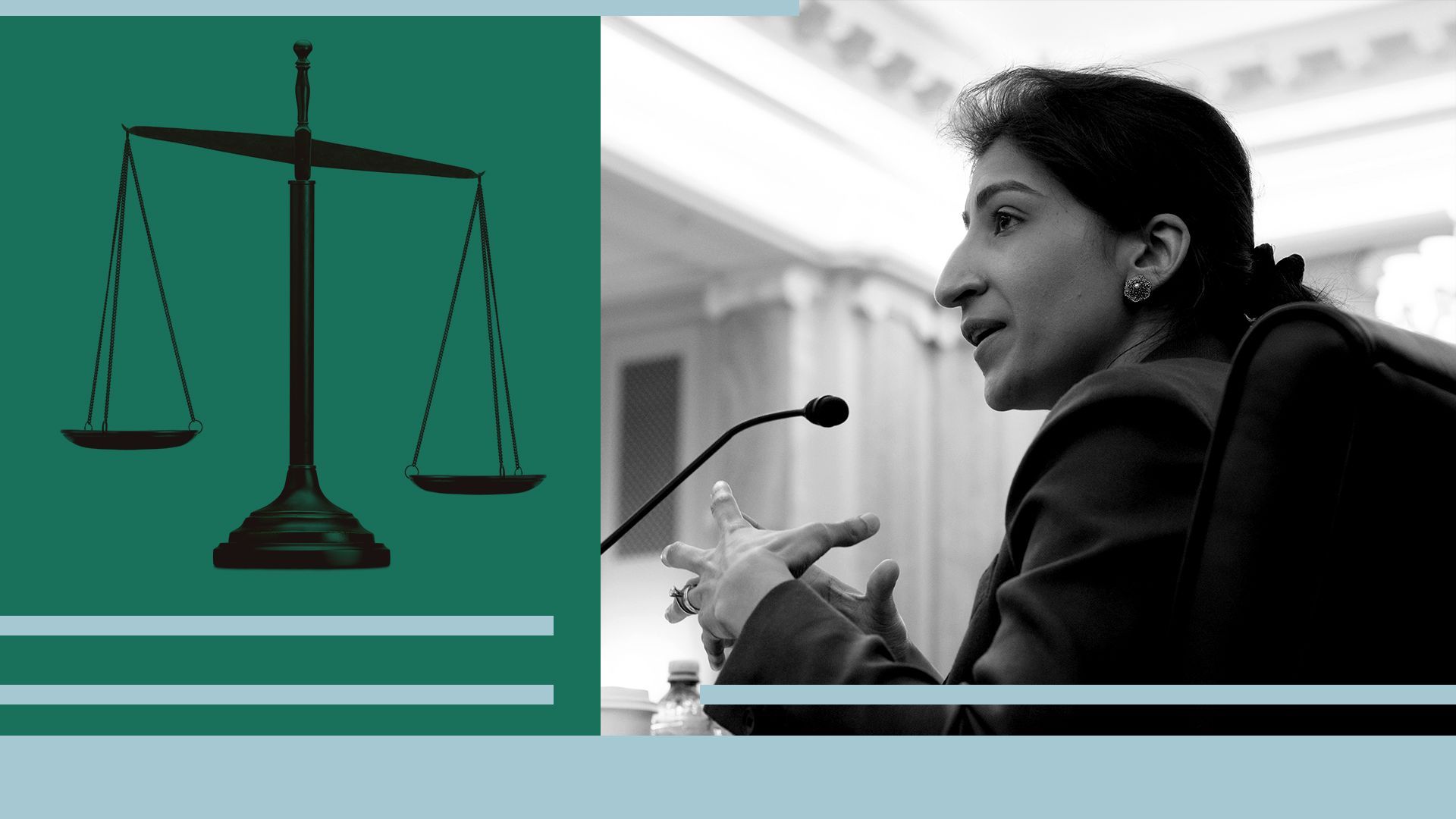
Photo illustration: Annelise Capossela. Photo: Saul Loeb/AFP/Bloomberg via Getty Images
It's been two years since FTC chair Lina Khan took the reins, and her track record on tech so far is inarguably historical and aggressive. Whether it's considered a success depends on whom you ask, Ashley writes.
Driving the news: Khan was sworn in to office June 15, 2021, and her term expires in September 2024. She currently enjoys a 3–0 majority at the FTC as Republicans drag their feet on nominees to fill out the agency.
- Noah Phillips resigned in October, and his fellow Republican, Christine Wilson, left in March after accusing Khan of an "abuse of power" and publicly railing against her.
Why it matters: If President Biden doesn't win re-election, Khan may have a very short timeline to complete some extremely ambitious items on her pro-competition and pro-consumer protection agenda for tech.
What they're saying: Industry watchers and former agency staffers say Khan has brought more attention and popularity than ever to the topic of tech antitrust.
- "Lina has made the FTC relevant again," Tim Wu, former White House adviser on tech and competition policy, told Axios. "She's doing the stuff that Congress should be doing: taking on privacy, noncompetes and AI."
- "And along with [DOJ antitrust chief Jonathan] Kanter and the White House, she's rebooted the antitrust law and managed, somehow, to make antitrust cool."
- Her detractors, including the U.S. Chamber of Commerce, say she's trying to ruin American business and entrepreneurship with onerous and unfair rules. Other pro-business groups point out attrition at the FTC under her tenure, alleging a bad work environment.
Yes, but: Khan could have an impact at the FTC even under a Republican president. She could stay on as a commissioner, along with fellow Democrats Alvaro Bedoya and Rebecca Slaughter, with a new Republican chair at the helm.
- Having no Republican commissioners at the agency may speed things up internally, but likely makes Khan a little more cautious around controversial measures, said Daniel Francis, a former FTC deputy director of the bureau of competition.
The intrigue: In the early days, Khan enjoyed some limited bipartisan Hill support, but that is mostly gone.
- The House Oversight and Accountability Committee launched an investigation into Khan early this month, using former commissioner Wilson's accusations that Khan has acted "in defiance of legal precedent" as a basis.
What to watch: The agency is expected to soon issue new merger guidelines in conjunction with the Justice Department, which are expected to inform how companies will evaluate mergers and acquisitions going forward and could change how courts interpret antitrust law.
- Generally, agency rule-makings take a very long time, and Khan's FTC is pursuing a proposed ban of employers' noncompete agreements and another rule that would keep companies from selling and sharing consumer data, looking to end "commercial surveillance."
- If Khan loses her top perch in 2024, the future of some of those rule-makings, which all run on slightly different timelines, is unclear.
- Khan has long been expected to bring an antitrust suit against Amazon, for which litigation would take years, but that hasn't happened yet. The FTC recently settled with Amazon for $30 million over alleged privacy violations by its Ring doorbell and Alexa home assistant.
Be smart: Khan's supporters at think tanks, nonprofits and in the Biden administration have long argued that the FTC wins even when losing when it tries to stop Big Tech companies from buying rivals or test out new legal theories or arguments, introducing new ideas about tech antitrust into the public and seeing if they stick.
- Khan has said she isn't afraid to go to court, previously telling Axios she would rather challenge alleged anticompetitive acquisitions than negotiate settlements.
- Ultimately, Khan's biggest enemy will be time. "It's a lot of fronts to be moving on under fire," Francis said.
2. Hill hearing watch

Illustration: Brendan Lynch/Axios
Here's what's happening this week on the Hill in tech policy.
1. AI and human rights: The Senate Judiciary panel on human rights and the law meets tomorrow at 2:30pm ET for a hearing on the impacts of artificial intelligence on human rights.
- Subcommittee Chair Jon Ossoff promo’d the hearing with an ad last week. The catch? The senator’s voice was impersonated by AI.
2. NDAA: Earlier tomorrow, at 11am ET, the House Armed Services subcommittee on cyber, information technologies, and innovation holds their open markup for the annual, must-pass defense policy bill.
3. Countering China: A Senate Appropriations panel convenes Wednesday at 10am ET on "enhancing American competitiveness" through the U.S. International Development Finance Corporation, the foreign aid agency established in 2019 largely in response to China's Belt and Road Initiative.
- DFC CEO Scott Nathan is set to testify.
4. BRI: The full House Foreign Affairs Committee gathers Wednesday at 2pm ET for a hearing assessing U.S. efforts to counter "China’s Coercive Belt and Road Diplomacy."
5. JCPA and Cooper Davis: The Senate Judiciary Committee holds a business meeting Thursday at 10am ET, and both bills are listed on the agenda for markup.
- The Journalism Competition and Preservation Act would require Big Tech companies to pay some local news outlets for their content.
- The Cooper Davis Act, which Chair Dick Durbin said last week is subject to "active negotiations," would require social media companies to report their users to the DEA for certain alleged illegal drug sales.
✅ Thank you for reading Axios Pro Policy, and thanks to editors Mackenzie Weinger and David Nather and copy editor Brad Bonhall.
- Do you know someone who needs this newsletter? Have them sign up here.
View archive