April 13, 2023

🌊 Good afternoon! Recess may be almost over — but we’re taking you to Europe first, with a deep dive on tech policy across the Atlantic.
- We’ll return to our regular publishing schedule next week once lawmakers are back in town.
1 big thing: Europe's busy tech agenda in 2023
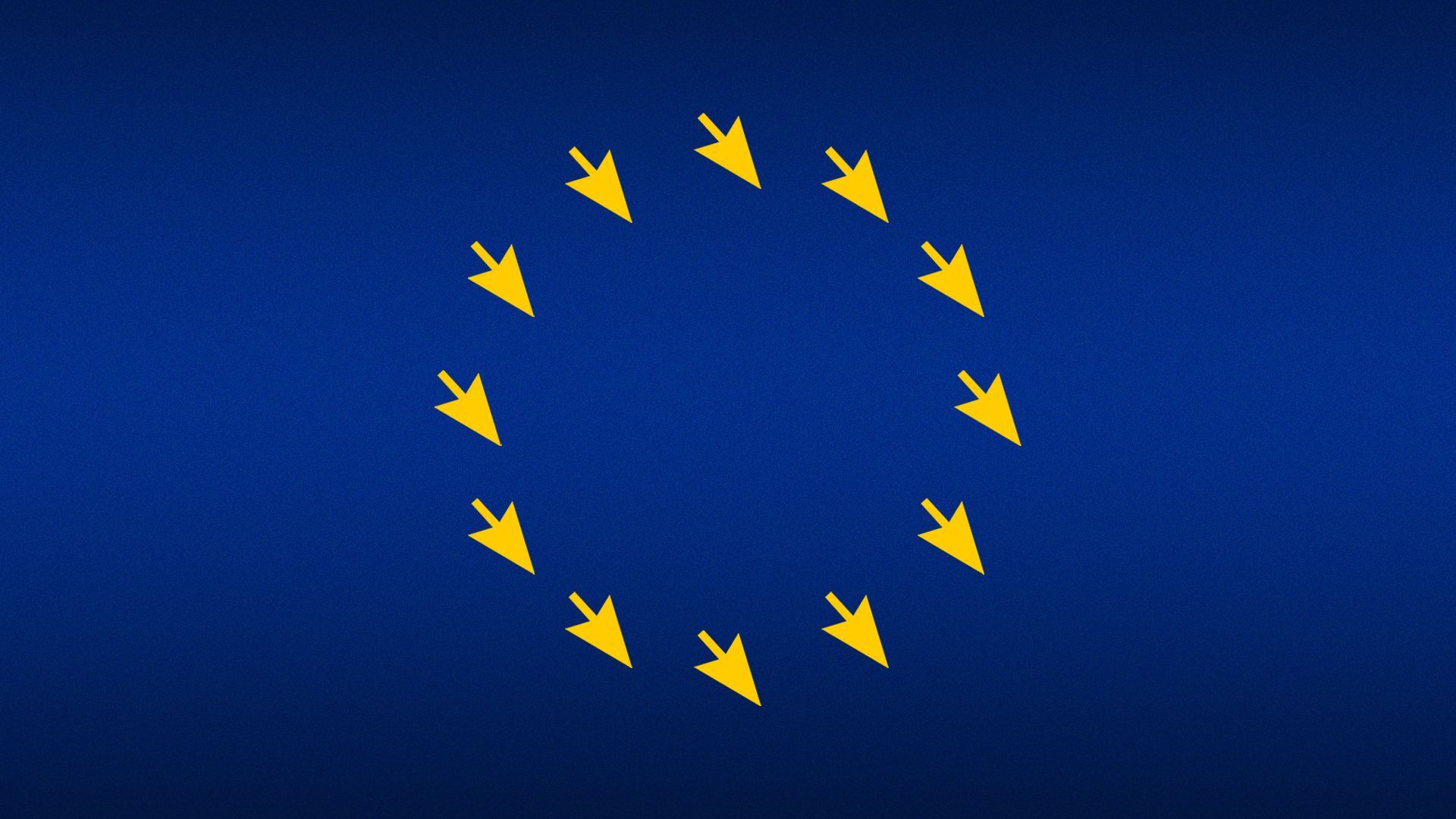
Illustration: Annelise Capossela/Axios
European policymakers are pursuing so many pieces of tech-related legislation with U.S. implications, it's difficult to keep up. Ashley is here to break down the top items and where they stand.
Why it matters: The U.S. talks a big game about regulating the tech industry, but Europe actually does it — and aggressively.
- Congress knows this and wants to make moves to lead these discussions on the global stage, but they haven't.
What's happening: As the U.S. continues to struggle toward semblances of tech regulation, the EU is looking to establish economic and digital sovereignty from the U.S.
- Tech groups are worried. “Europe and the U.S. are like-minded allies and we need each other more than ever. We need more collaboration and trade, rather than new barriers and friction," Christian Borggreen, senior vice president and head of CCIA Europe, told Axios.
- "Cutting itself off from world-leading technologies in the name of sovereignty would make Europe less sovereign and less safe."
Let's start with the Digital Markets Act and the Digital Services Act. As Axios has previously reported, these two laws will place new burdens and obligations on large tech platforms around competition and content.
- Per tech industry sources, companies are in the stage of figuring out if they are covered under the laws, and they're starting to come into compliance, with major deadlines happening by June and August.
- Both European and other global companies will fall under DSA compliance, but for the DMA, it's likely to just be U.S. companies and TikTok, tech sources tell Axios.
The AI Act: European regulators are almost done finalizing the AI Act, but some are calling for much stricter guidelines. On Thursday, Mozilla and others urged the EU to strictly regulate "general purpose AI," which includes ChatGPT and DALLE-2, currently not classified as "high risk" under the act.
- “The strength of Europe’s AI Act is its risk-based approach. What we see right now, however, is that certain EU lawmakers are considering all kinds of additions to the act,” Borggreen told Axios.
- “The actual risks or evidence don’t seem to matter much when it comes to general purpose AI, it seems, as some lawmakers want everything regulated as high risk by default.”
The Data Act: This one aims to regulate who can use and access data generated in the EU across all economic sectors, not just tech. It impacts many types of international data transfer and sharing, and some say it runs the risk of clashing with other EU laws.
- The U.S. Chamber of Commerce has called it "misguided" and that it would threaten companies' ability to transfer data out of Europe.
- An agreement on the text could come by June.
EUCS — Cloud Services Scheme: European regulators are setting forth new certifications for the cybersecurity of cloud devices, and tech groups fear it will be rolled out in a way that keeps U.S. cloud providers like Amazon, Microsoft and Google from servicing clients in Europe.
- If the agreement is approved, cloud services providers would have to locate their global headquarters and home offices in the EU and store and process all customer info in the EU.
- "Discriminatory requirements against U.S. cloud vendors would severely restrict competition and customer choice, but also undermine cybersecurity in Europe," said Borggreen.
Meanwhile: Last October, President Biden signed an executive order to implement the long-sought European Union-U.S. Data Privacy Framework, which generally guides data flows between the two continents.
- But it's not fully implemented yet, and European lawmakers are still warning it may not be enough, per Reuters.
2. Exclusive: Widespread sexual exploitation of minors found online

Illustration: Shoshana Gordon/Axios
One in three minors can expect an unwelcome sexual experience online, according to a ParentsTogether Action report shared with Maria and Ashley.
Driving the news: Protecting children online has gotten the attention of lawmakers, including Senate Majority Leader Chuck Schumer, who wants votes on kids’ online safety bills soon.
- Schumer is looking to hold a "kids online safety" week in the near future to push this effort forward as lawmakers scramble to reintroduce and hold markups for their proposals.
What they found: Sexual abuse was seen in every major social media platform, according to self-reported data from 1,000 parents across the country.
- YouTube and TikTok were named the most for exposure to inappropriate sexual conduct.
- Facebook, Instagram and Snapchat were named the most for sexually explicit requests to children and sextortion.
- Snapchat was the most named for where kids share sexual images of themselves.
The other side: Snap spokesperson Katie Derkits told Axios in a statement that "we’ve designed Snapchat to make it difficult for strangers to find and communicate with minors, and we routinely work with safety experts and law enforcement to help combat such crimes."
- Ivy Choi, a spokesperson for YouTube, said, “We remove sexually explicit content and content that targets kids and families but contains mature sexual themes” and “we age-restrict content that may not be appropriate for viewers under 18.”
What we're watching: Congress will be back in session next week, and we expect to start seeing the introduction of bills that would help address concerns with kids online, such as COPPA 2.0 and the ADPPA.
- In the meantime, ParentsTogether Action is offering a resource hub for families to deal with social media sexual exploitation.
✅ Thank you for reading Axios Pro Policy, and thanks to editors Mackenzie Weinger and David Nather and copy editor Sheryl Miller.
- Do you know someone who needs this newsletter? Have them sign up here.
View archive