April 05, 2023

☀️ It's Wednesday! Reading this newsletter from somewhere exciting since it's recess? Let us know — just reply to this email!
- We're on a reduced recess schedule this week. We’ll be back in your inboxes next week with a look at tech policy on the other side of the Atlantic (or earlier if there’s important news you need to know).
1 big thing: Sohn on why Dems must secure an FCC majority
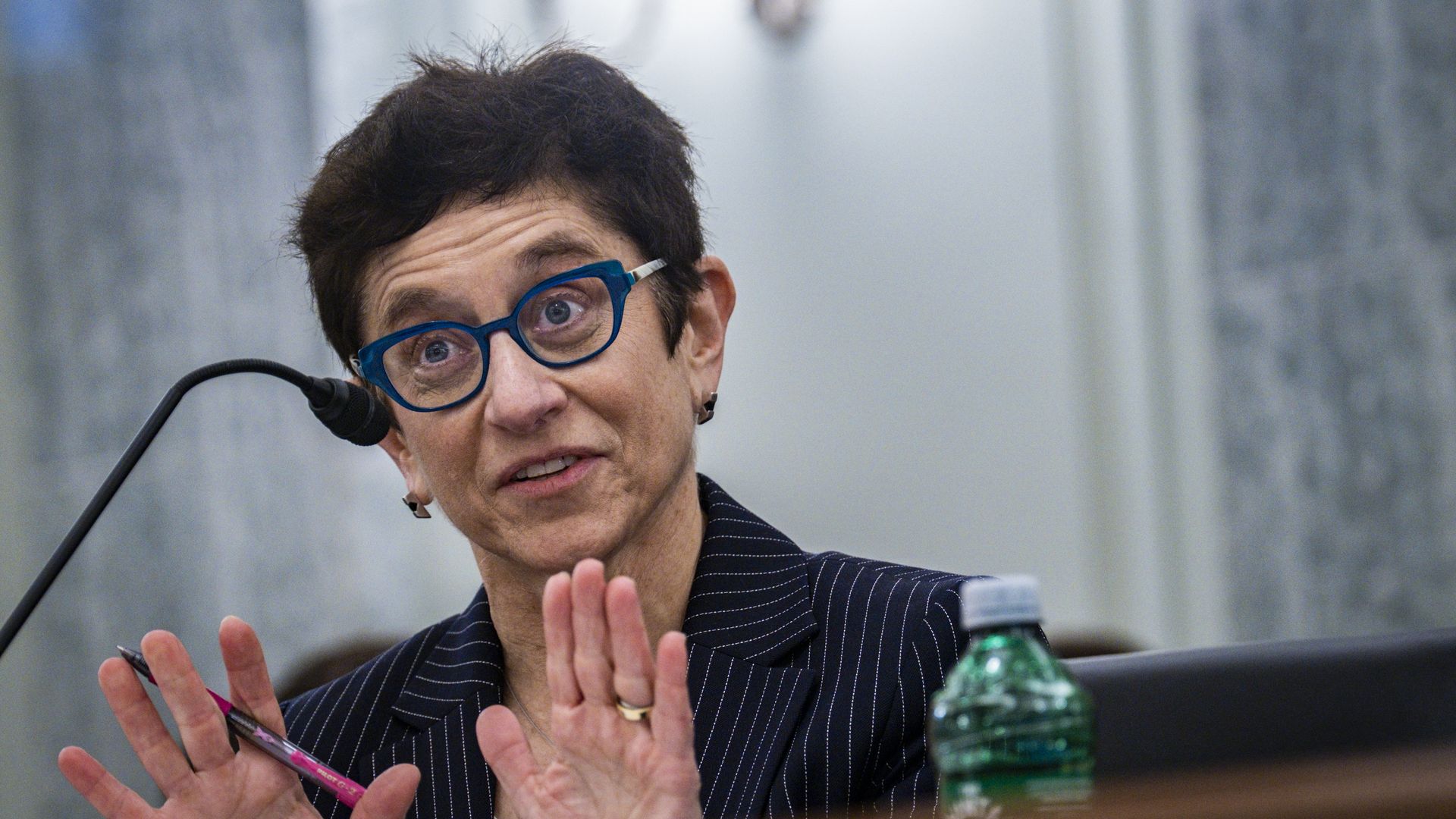
Gigi Sohn testifies at a Senate Commerce Committee hearing in February 2022. Photo: Pete Marovich-Pool/Getty Images
Consumers have been left unprotected as the FCC continues to operate without a Democratic majority, Biden's former nominee Gigi Sohn told Maria.
Driving the news: Sohn says she withdrew her nomination last month in part because Senate Commerce Democrats up for re-election in 2024 would not vote her out of committee without "assurance" she would be confirmed on the Senate floor.
- After more than a year of silence as she navigated the contentious nomination process, Sohn is now going on the record about why it's so important the commission gets a majority.
State of play: "It’s inconceivable to me that the agency that is charged with protecting consumers and competition can’t do so when it comes to the most important communications network of our lifetime," Sohn said, referring to the inability of the FCC to reinstate its authority over broadband.
- That affects the commission's enforcement power to levy fines on carriers if, for example, they mishandle user data or lie about their coverage, Sohn said.
- The commission's efforts to require broadband labeling and thwart exclusive deals between landlords and internet service providers also could have been stronger with a Democratic majority, Sohn said.
- "The FCC has had a lot of accomplishments, but most of them are ministerial, noncontroversial or accomplishments where the commission with a majority could have gone further."
How it works: Ultimately, it's on Congress and the administration — not Chair Jessica Rosenworcel — to get a majority at the agency. In the meantime, commissioners have focused on implementing pandemic-era programs to expand internet access.
- Sohn said the most important thing the FCC has done is implement the Affordable Connectivity Program, which now has more than 17 million households enrolled.
- Additionally, Sohn said, making sure broadband availability maps are "as accurate as humanly possible" should be a priority because they can be challenged by states, internet providers or consumers.
- NTIA is relying on the FCC's maps to announce how much money each state will get from the $42.5 billion Broadband, Equity, Access and Deployment grant program by June 30.
What they're saying: “The FCC was designed to operate with five Commissioners, and we look forward to the day that becomes a reality," an FCC spokesperson said in a statement.
- "Nonetheless, we haven’t let a 2-2 Commission keep us from making real progress closing the Homework Gap, expanding broadband access, and improving telehealth, mapping, and network security."
2. Bills to watch: Return of journalism competition and more

Illustration: Gabriella Turrisi/Axios
Let's take advantage of April recess to have Ashley catch us up on some tech policy bills that have been introduced or reintroduced in the past weeks.
1) The Journalism Competition and Preservation Act: This bill would allow news organizations to band together to negotiate for compensation when their content appears on large tech platforms like Google and Facebook. A similar bill is law in Australia.
- It's the fourth time this bill, led by Sens. Amy Klobuchar and John Kennedy, has been reintroduced in four years. It passed the Senate Judiciary Committee last Congress but faces many criticisms, and digital platforms and other groups have lobbied hard against it.
- And this Congress, there's not a lot of juice behind the companion House bill.
2) The AMERICA Act: Reintroduced for this session, this Sen. Mike Lee-led bill would require Big Tech platforms to divest parts of their ad business if they make more than $20 billion in digital ad revenue.
- The bill has many co-sponsors, and the idea that platforms should not be able to profit unfairly off of the ad platforms they run is bipartisan and popular.
- Still, don't expect much movement on this bill, and expect tons of lobbying against it.
3) The CALM Modernization Act: Now this is a funny one — a bill to update a 2010 law to limit the loudness of TV ads in the streaming age, introduced by Sen. Sheldon Whitehouse and Rep. Anna Eshoo.
- Honestly, it's hard to see who might oppose this one. No one likes to be shocked by a loud ad while streaming their favorite show. We'll be watching! (And holding our ears if it gets too loud.)
4) The DATA Care Act: Sen. Brian Schatz is leading the reintroduction of this online personal privacy bill, co-sponsored by 18 senators.
- According to Schatz's office, it would "require websites, apps, and other online providers to take responsible steps to safeguard personal information and stop the misuse of users' data."
- The legislation would impose a "duty of care" on internet platforms for securing personal data and give the FTC authority to make a rule for enforcing it.
- The "duty of care" idea is popular among proposals for protecting personal data online, but Schatz's effort is unlikely to be the frontrunner for a national data privacy law; that mantle goes to the American Data Privacy and Protection Act (still not reintroduced).
5) The PACT Act: Sens. Schatz and John Thune reintroduced this bill to update Section 230 last month.
- It would uphold the internet law while trying to enable more transparency about content moderation practices through various requirements for companies.
- It would also exempt enforcement of federal civil laws from Section 230 and give state attorneys general more power to prosecute platforms.
- It's hard to see Congress moving on this one unless the Supreme Court upends Section 230 and lawmakers are forced to respond. Then, it may be a viable option.
✅ Thank you for reading Axios Pro Policy, and thanks to editors Mackenzie Weinger and David Nather and copy editor Brad Bonhall.
- Do you know someone who needs this newsletter? Have them sign up here.
View archive