
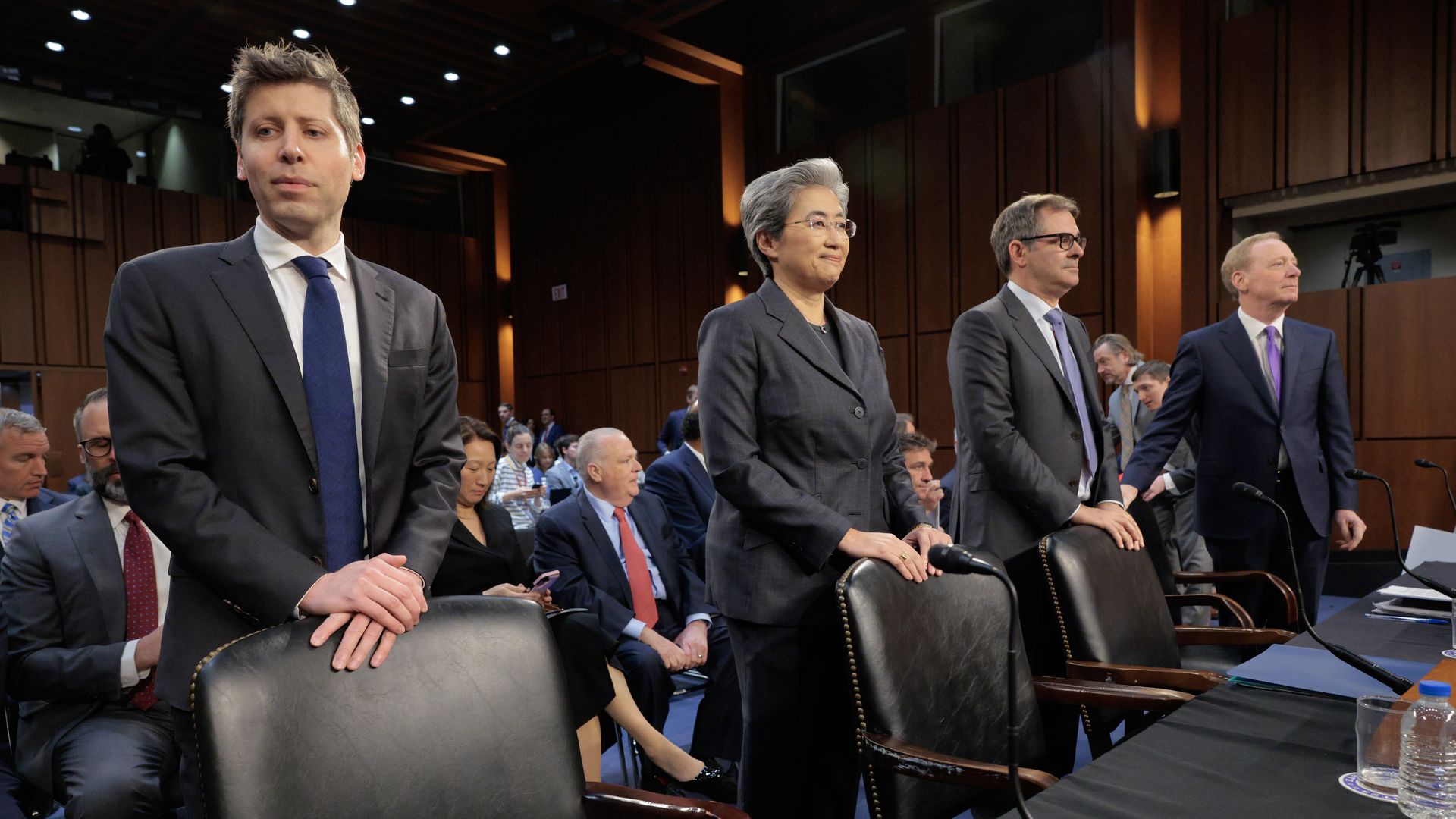
OpenAI CEO Sam Altman, AMD CEO Lisa Su, CoreWeave CEO Michael Intrator and Microsoft vice chair Brad Smith testify on Capitol Hill on May 8. Photo: Chip Somodevilla/Getty Images
Leaders of OpenAI, AMD, CoreWeave and Microsoft on Thursday pressed lawmakers for minimal regulation and maximum government support to ensure U.S. AI dominance against China.
The big picture: Two years after OpenAI CEO Sam Altman asked lawmakers to regulate emerging generative AI technology, the tone on Capitol Hill has shifted dramatically in favor of scant, if any, regulation.
- The Senate Commerce Committee hearing covered everything from how AI should interact with children to what chip export rules should be.
- It served an opening salvo of sorts for how this Congress is viewing AI — and how companies are shifting their postures as a result.
"I think some policy is good, but it's easy for it to go too far," Altman said, after being asked by Sen. Brian Schatz if he believes the AI industry can self-regulate at this point.
Context: Altman had been having meetings with lawmakers on the Hill ahead of the hearing, and on Wednesday he toured OpenAI's Stargate AI training facility in Texas.
What they're saying: "Are we who are working in this industry trying to build machines that are better than people, or are we trying to build machines that will help people become better? Emphatically, it is and needs to be the latter," said Microsoft's Brad Smith.
- Smith focused on the importance of export control rules, which the Trump administration is currently rewriting.
- "Whose technology is most broadly adopted in the rest of world, in this global market ... that is who wins the AI race. Whoever gets there first, it will be difficult to supplant. We need to export with the right rules," he said.
Case in point: Commerce Chair Ted Cruz repeatedly lambasted EU-style AI regulation and suggested even guidelines for AI could stifle development.
- "Standards is a code word for regulation," he said.
Democrats pressed the witnesses on how Trump's tariff and trade whiplash has impacted their businesses, along with their views on how DOGE cuts of federal research across the government hurts AI advancement.
- "Does anyone truly have confidence that had DOGE been around decades ago, they would not have cut the project that created the internet as an example of wasteful, publicly funded research and development?" Sen. Tammy Duckworth asked.
- Microsoft's Smith said keeping public-private partnerships for innovative research is key: "We should never take this for granted. It is the foundation for the country's technological leadership."
The bottom line: It's a new day for AI companies in Washington. Safety, civil rights and moving slowly are out; beating China, dissing Europe and leading the world are in.
