
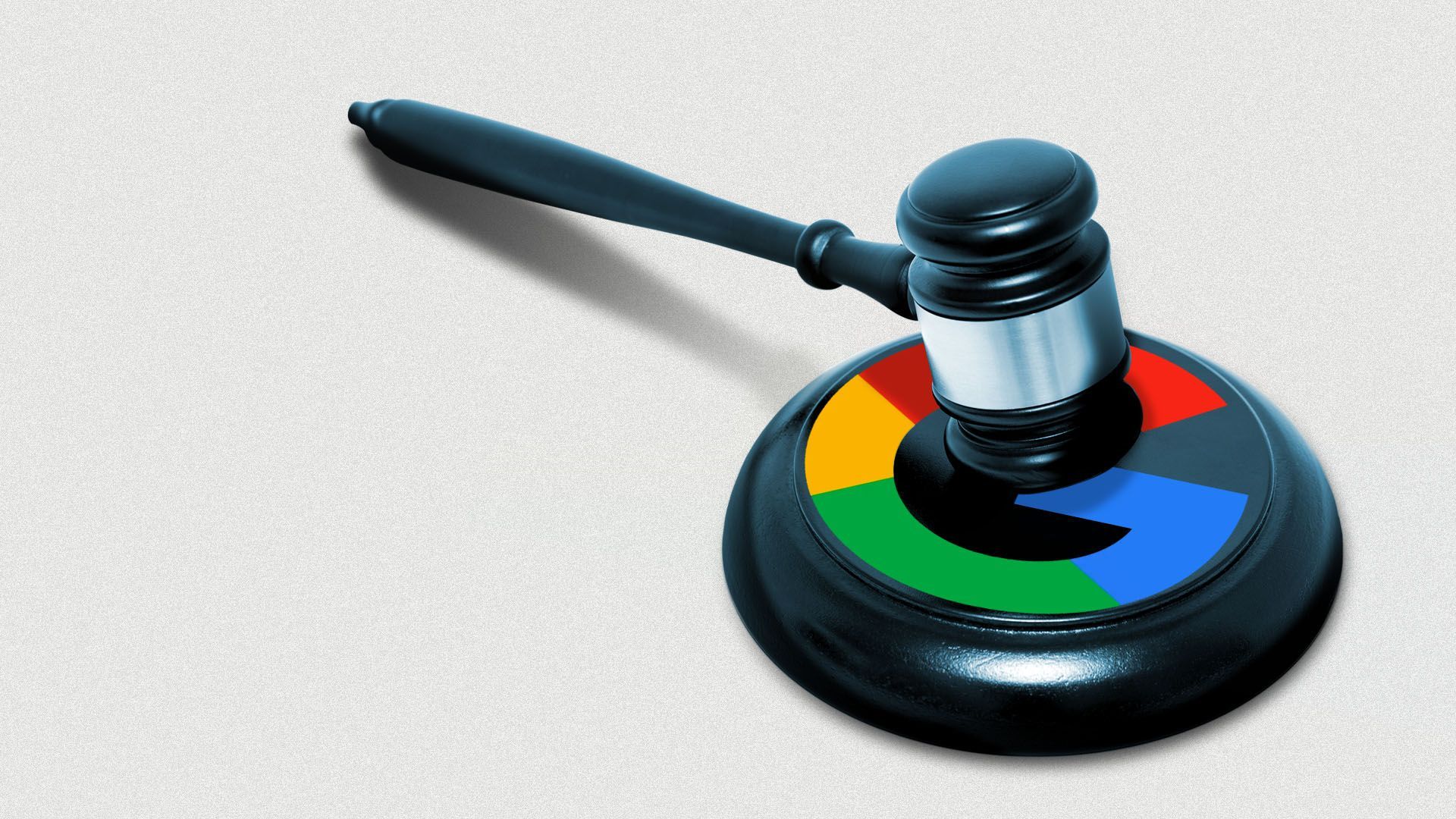
Illustration: Sarah Grillo/Axios
Google and the Justice Department on Monday will begin working out remedies for the loss in their search trial in D.C. District Court.
Why it matters: The remedies could have huge implications for Google's products, and the trial comes at a time when the tech giant just suffered yet another antitrust court case loss around online advertising.
- Federal judges have now ruled twice that Google acted illegally to maintain monopoly status.
- Google is still planning to appeal the search case's ruling overall, even as it continues in the remedies phase.
Context: Last August, Judge Amit Mehta ruled Google is a monopolist and has acted as one to maintain its monopoly status.
- The case was originally filed in President Trump's first administration.
What they're saying: "Google foreclosed the competitive process, deprived rivals of the scale and revenue needed to compete, discouraged rival innovation and entry, and charged text advertisers supra competitive rates for lower quality products," the Justice Department's pretrial brief reads.
- "The breadth, duration, and severity of these harms demand a robust remedy."
Those remedies could include contractual prohibition of Google "locking up" distribution on third-party devices, divesting the Chrome browser and possibly Android, and for Google to share more search and ads data with other parties.
- A proposed remedy from the Colorado attorney general would require Google to fund "a nationwide advertising and education program designed to inform user choices."
- Another proposed remedy would set up a compliance program.
The other side: Google's own remedies proposal calls the DOJ's plan "interventionist" and suggests the following:
- Allowing Google's browser partners like Apple and Mozilla more flexibility in their agreements via "multiple default agreements" across devices.
- Preloading Google apps without having to have Search or Chrome.
Its pretrial brief reads: "Plaintiffs' unprecedented array of proposed remedies would harm consumers and innovation, as well as future competition in search and search ads in addition to numerous other adjacent markets...
- "They bear little or no relationship to the conduct found anticompetitive, and are contrary to the law on antitrust remedies as expounded by the D.C. Circuit in the Microsoft cases two decades ago."
What's next: Witnesses from Microsoft, Mozilla, Perplexity, OpenAI, Yahoo, Anthropic and more are set to take the stand in this phase, along with Google executives, and academics and economists.
- Parties will be done arguing in this phase of the trial by May 9.
- Closing remarks will be on May 30, and a decision is expected by August.
